

TL;DR:
- Choosing the right denim fit and silhouette is essential, as it impacts your overall style more than color or wash.
- Investing in multipliers like belts, knits, and structured tops enhances denim looks on any budget by creating versatility and visual interest.
Denim is everywhere, yet it trips up even the most style-aware shoppers. The problem is rarely the jeans themselves. It is the mismatch between fit, proportion, and the frantic urge to buy whatever trend appears on the feed that week. Oversized jeans with oversized tops, mismatched washes, or a silhouette that fights your frame can make even expensive denim look like an afterthought. This guide gives you a clear, repeatable method for building denim outfits that look intentional, work across occasions, and stay easy on your budget.
Table of Contents
- What you need to get started: Denim essentials and affordable multipliers
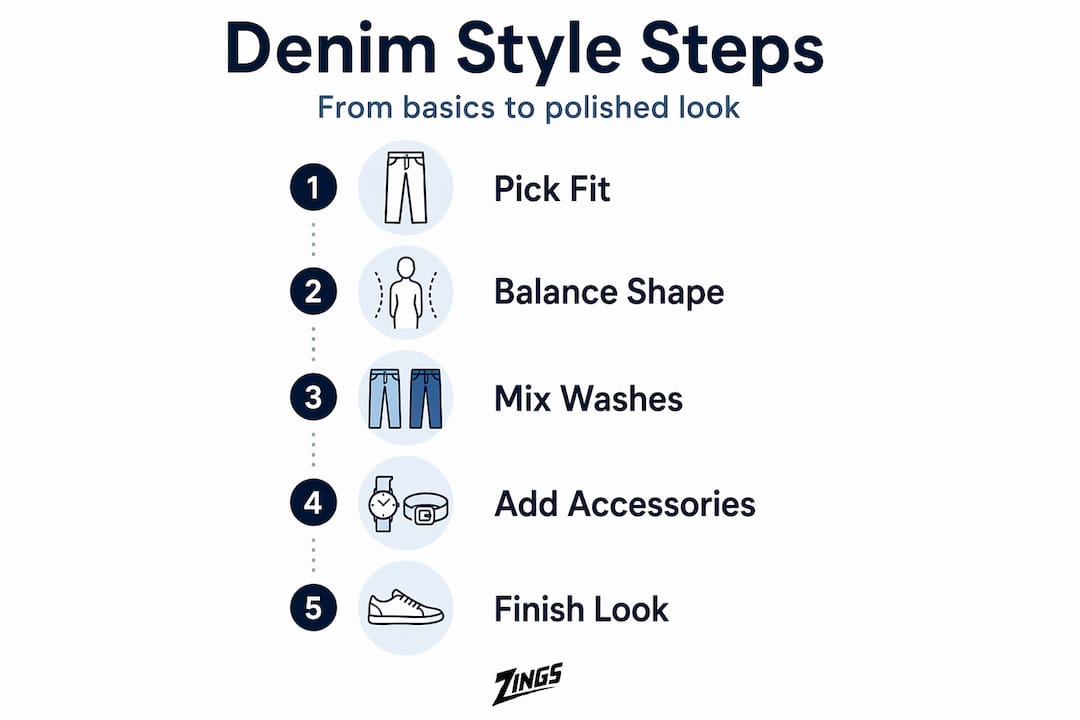
- Step 1: Choose the right fit and silhouette for your body and vibe
- Step 2: Balance proportions and define your waist for modern styling
- Step 3: Make denim-on-denim work for you: Intentional wash matching and mixing
- Step 4: Shoes, accessories, and layering: Finish your denim outfit with multipliers
- Perspective: The denim mistake most stylists won’t tell you: Chasing trends over fit
- Upgrade your denim wardrobe with affordable finds
- Frequently asked questions
Key Takeaways
| Point | Details |
|---|---|
| Start with fit | Choosing the right silhouette is the foundation for any stylish denim look. |
| Balance proportions | Use tucks, defined waists, and appropriate shoes to keep wide or straight-leg jeans flattering. |
| Mix denim purposefully | When mixing washes or pairing denim items, create intentional separation for a cohesive vibe. |
| Elevate with affordable multipliers | Accessories under $100 can transform your denim outfit without the need for new jeans. |
| Personal style over trends | Fit and individuality matter more than chasing fast-moving denim trends. |
What you need to get started: Denim essentials and affordable multipliers
Before you start constructing looks, you need the right building blocks. Think of these as your styling toolkit: items that work together rather than compete for attention.
Core wardrobe basics to prepare:
- Fitted tops in neutral colors (white, black, cream, gray)
- Denim in at least two silhouettes (one slim or straight, one relaxed or wide-leg)
- A leather or fabric belt in a neutral tone
- Clean, simple knits without heavy logos or distraction
- One structured piece: a blazer, trench, or neat jacket
- Simple accessories: stud earrings, a minimal bag, a clean watch
The real budget strategy here is understanding affordable fashion trends and what fashion insiders call “multipliers.” A multiplier is any single item under $100 that makes multiple outfits work better. Instead of buying five pairs of jeans in different washes, you buy one versatile pair and invest in the pieces around it. Polished basics under $100 like clean knits, structured tops, belts, and refined accessories elevate denim more effectively than the jeans themselves.
Here is a quick breakdown of multiplier categories and price ranges:
| Multiplier type | Examples | Typical price range |
|---|---|---|
| Belts | Leather, braided, chain | $15 to $45 |
| Knits | Ribbed turtlenecks, clean crewnecks | $20 to $65 |
| Structured tops | Button-downs, fitted blazers | $25 to $80 |
| Accessories | Bags, scarves, jewelry | $10 to $60 |
| Footwear upgrades | Loafers, ankle boots, mules | $35 to $95 |
Pro Tip: Before buying another pair of jeans, check whether a $30 belt or a fitted knit would do more visual work for your current wardrobe. Accessories often move the needle faster than new denim.
Step 1: Choose the right fit and silhouette for your body and vibe
Once your essentials are selected, your next move is picking the foundation: the right denim fit and silhouette. This is the single biggest decision in any denim outfit, and it matters far more than color or wash.
The core method used by stylists is simple: start with fit and silhouette, then layer in controlled contrast points such as wash variation, waist definition, and texture. Getting that first decision right makes everything downstream much easier.
Here is how the three main silhouettes break down:
| Silhouette | Best suited for | What to pair with |
|---|---|---|
| Wide-leg | Taller frames, athletic builds | Fitted or cropped tops, heels, chunky sneakers |
| Straight-leg | Most body types | Anything: tucked shirts, knits, blazers |
| Skinny or slim | Leaner or shorter frames, pattern mixing | Oversized tops, chunky footwear, layered jackets |
Follow this numbered process when choosing your denim fit:
- Identify your frame. Are you taller, shorter, lean, curvy, or athletic? Be honest, not aspirational.
- Choose a silhouette that balances your frame rather than mirrors it. A wide frame benefits from structure; a lean frame can carry extra volume.
- Check the rise. Mid-rise sits well on most bodies. High-rise elongates and defines the waist. Low-rise shortens the torso.
- Check the length. Jeans that hit at the ankle avoid the visual cut that shortens legs.
- Try straight-leg denim styles as your starting point if you are unsure. They are the most forgiving and versatile silhouette.
Denim trends cycle, so the safest method is to lock in a silhouette that matches your personal style, then adapt how you style it each season. Chasing every trend change leads to a closet full of jeans that felt exciting for two weeks and now collect dust.
Pro Tip: When shopping online, always check waist measurement, rise height, and inseam length in the size guide before adding to cart. Fit data is more reliable than size labels alone. For a versatile everyday option, stretch slim straight jeans offer comfort without sacrificing structure.
Step 2: Balance proportions and define your waist for modern styling
With your denim fit chosen, the next task is making sure your proportions, waist, and silhouette work together. This is where many people go wrong. They find a great pair of jeans and then pair them with a top that cancels out all the good work the fit does.
The core mechanics are straightforward. For wide-leg jeans specifically, balance is the key principle: pair loose or baggy denim with fitted or defined tops, often through a tuck or a cropped silhouette, and manage proportions with waist rise and shoe scale.
Practical proportion tools to use:
- The tuck. A front tuck or full tuck of your top into your waistband instantly defines your waist and prevents the look from reading shapeless.
- Cropped layers. A cropped jacket or sweater stops above the hip, which preserves the line of wide-leg or relaxed denim rather than hiding it.
- Waist definition. A belt worn over a tucked-in shirt or a fitted knit visually anchors the middle of the body.
- Footwear scale. According to Glamour’s styling guide, three levers consistently fix proportion issues: waist rise placement, top silhouette, and footwear scale. Chunkier or wider shoes counterbalance extra denim fabric.
- Shoe height. For wide-leg styles, a small heel, platform, or chunky sole prevents the hem from swallowing your foot.
Styling note: Volume on volume almost always reads as lazy rather than intentional. If your jeans are relaxed, your top should be fitted. If your top is oversized, balance it with slim or straight denim.
For everyday casual dressing, slim-fit denim trousers remove the proportion puzzle almost entirely because they read as a clean line from waist to ankle. When temperatures drop, denim outerwear adds a layered dimension without disrupting the proportion work you have already done.
Pro Tip: Use chunky sneakers or ankle boots to anchor wide-leg denim at the hem. This keeps the silhouette grounded and stops the look from reading as unfinished.
Step 3: Make denim-on-denim work for you: Intentional wash matching and mixing
Now that you have mastered fit and proportion, it is time to tackle denim-on-denim styling. Double denim has a complicated reputation, mostly because it is easy to do accidentally and hard to do well. The difference between intentional and accidental always comes down to one thing: decisions.
The denim-on-denim approach has two clear paths. You either match your washes for a clean, unified effect, or you mix washes with deliberate separation tools. Both work. The middle ground, where washes are close but not identical and nothing creates visual separation, is where outfits fall apart.
Follow this process for double denim:
- Decide on your approach first. Match or mix. Make the choice before you get dressed, not after.
- If matching, choose the same wash from top to bottom. Light-light or dark-dark reads as clean and modern.
- If mixing, use a belt, a contrasting tee layered underneath, or a scarf to create visible separation between your denim pieces.
- Check the silhouette. A denim jacket with slim jeans works because you have a fitted top half and a fitted bottom half. A wide-leg denim trouser with a denim shirt works if the shirt is tucked and belted.
- Add one non-denim texture. A knit, a leather belt, a cotton tee. This keeps the outfit from reading as one-note.
Here is a simple wash-matching decision table:
| Wash combination | Effect | Best separation tool |
|---|---|---|
| Light top, light bottom | Clean, summer-ready | Belt in contrasting color |
| Dark top, dark bottom | Polished, near-monochromatic | White or neutral inner tee |
| Light top, dark bottom | High contrast, editorial | Minimal accessories |
| Dark top, light bottom | Casual, relaxed | Chunky footwear |
For the outerwear piece in your denim-on-denim look, a washed denim jacket in a clearly lighter or darker tone than your bottoms makes the wash variation feel deliberate. A classic denim jacket in an indigo or mid-blue pairs cleanly with black jeans for a look that avoids the “accidental” trap entirely.
Pro Tip: Never mix two washes that are close but not identical with no separation between them. It reads as an error. Either commit to matching or create a visible break between the two denim pieces.
Step 4: Shoes, accessories, and layering: Finish your denim outfit with multipliers
The denim-on-denim effect is just the beginning. Here is how to finish every denim outfit so it looks polished and versatile, not like you grabbed the first clean items from your closet.
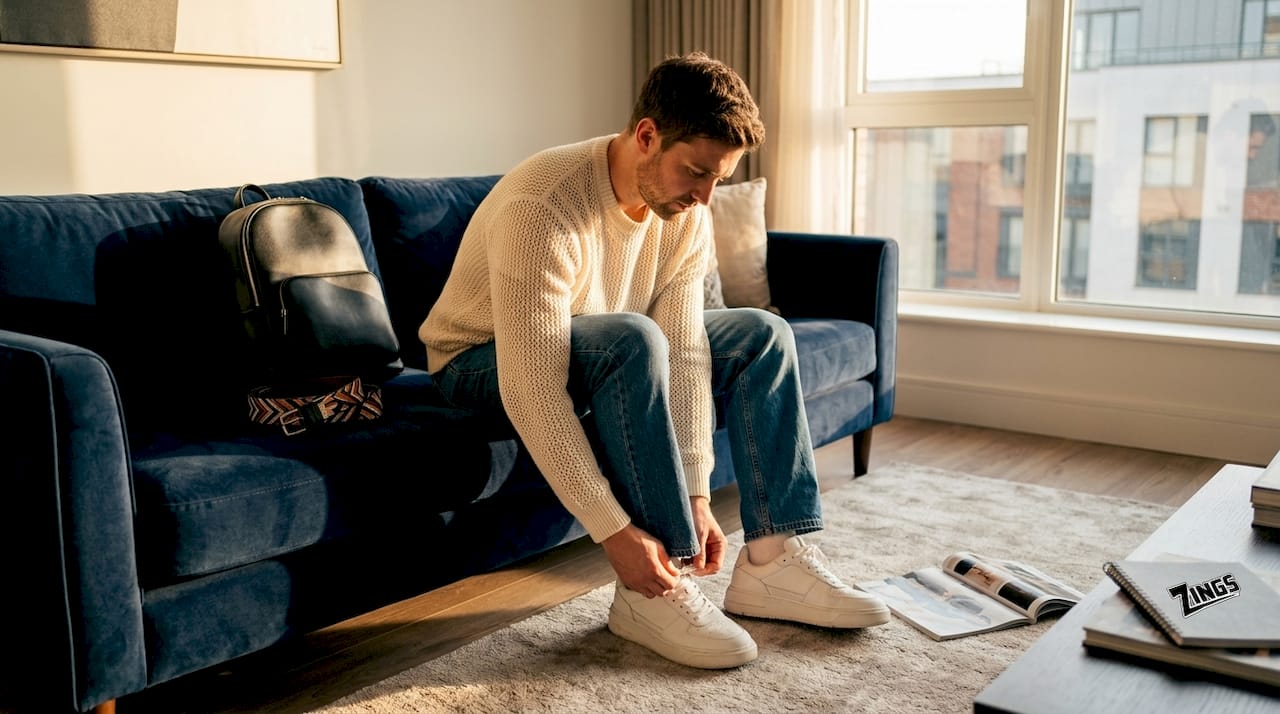
Shoes carry enormous styling weight. According to Glamour UK’s straight-leg guide, straight-leg jeans operate on a wearability baseline and then shift their entire vibe based on shoe choice, tucks, and layering structure like blazers or coats. The same pair of jeans can read casual with clean sneakers, smart-casual with loafers, or dressed up with ankle boots.
Shoe-to-denim pairing guide:
- Chunky sneakers: Best with wide-leg or relaxed fits. Grounds the look and adds a contemporary edge.
- Loafers: Work with straight-leg and slim fits. Instantly moves the look toward smart-casual.
- Ballet flats: Best with straight-leg or slightly cropped styles. Feminine and effortless.
- Ankle boots: Universal across silhouettes. Work with almost every denim fit.
- Mules or slides: Casual and warm-weather friendly. Best with straight-leg or relaxed fits.
Affordable layering pieces that multiply outfit options:
- Oversized blazers in neutral tones (cream, black, camel)
- Lightweight knit cardigans in solid colors
- Scarves worn as neck ties or loosely draped
- Trench coats for transitional weather
Accessories that do consistent heavy lifting:
- A structured mini bag or tote in a neutral
- Simple gold or silver jewelry (hoops, a chain necklace, a stud)
- A leather belt that ties the waist and adds finish
For more straight-leg outfit ideas, the versatility of this silhouette makes it the easiest canvas for experimenting with multipliers. The denim dynamo collection is worth exploring for pieces that bridge the gap between casual denim days and more put-together looks.
Pro Tip: Pick one standout accessory per outfit. A bold belt, a structured bag, or a statement earring. Stacking too many at once dilutes the impact of each. One well-chosen piece does more than three competing ones.
Perspective: The denim mistake most stylists won’t tell you: Chasing trends over fit
Here is something worth saying plainly. The fashion industry earns money when you buy new things. Every season, editorial content tells you a new silhouette is in, a new wash is the must-have, and last season’s jeans are already dated. Most of that is noise.
Denim trends cycle on a predictable loop. Wide-leg was everywhere five years ago, disappeared, and came back stronger. Skinny jeans were declared dead and now they are reappearing on runways. Chasing each shift costs money, fills your closet with things you eventually discard, and rarely produces a wardrobe that feels authentically yours.
The real insight is this: fit and silhouette are personal, not editorial. When you find the shape that genuinely works for your frame and your lifestyle, it stays relevant regardless of what is trending. The styling formula changes. The foundation does not.
This is also why multipliers outperform new jeans as a budget strategy. A pair of jeans that fits you well and has strong construction will carry a hundred different outfits over several years. A trendy pair bought for a specific moment serves one aesthetic window and then sits unused. Invest in fit first, then spot trends selectively to layer in what genuinely appeals to you rather than what is simply loud this season.
The most stylish denim looks tend to be the most intentional, not the most current.
Upgrade your denim wardrobe with affordable finds
Building a strong denim wardrobe does not require spending heavily on new jeans with every season change. The most effective upgrades are the layering pieces and outerwear that multiply what you already own.
At ZINGS 365, the catalog is built around exactly this kind of versatile, affordable wardrobe building. For men, casual windbreaker jackets and puffer jackets with hoods give structured outerwear options that pair cleanly with both straight-leg and wide-leg denim. For women, wool coats add a polished finishing layer that instantly elevates any denim base. Browse the full catalog at ZINGS 365 to find multipliers that work for your current wardrobe without requiring a complete overhaul.
Frequently asked questions
How do I choose between wide-leg and straight-leg jeans for my body type?
Wide-leg jeans suit taller or more athletic frames paired with fitted tops, while straight-leg jeans work across most body types and transition easily from casual to polished occasions.
What are affordable ways to elevate denim outfits without buying new jeans?
Add under-$100 multipliers such as belts, clean knits, structured tops, and minimal accessories, which do more visual work than a new pair of jeans in a different wash.
Is it okay to mix different denim washes in one outfit?
Yes, mixing washes works when you separate them intentionally with a belt, contrast tee, or accessory so the combination reads as a choice rather than an oversight.
What shoes work best for wide-leg and straight-leg jeans?
Chunky shoes balance wide-leg denim at the hem, while straight-leg jeans pair well with boots, loafers, or ballet flats depending on the overall vibe you want to create.
Should I prioritize current denim trends or my own style?
Always prioritize fit and personal style. Denim trends cycle predictably, and building around your own silhouette preference produces a more consistent, cost-effective wardrobe than reacting to each seasonal shift.
