

TL;DR:
- A chaotic wardrobe causes decision fatigue, low outfit success, and excess spending, despite having many clothes.
- Organizing, rotating, and editing your wardrobe help maximize what you own, reducing clutter and increasing style confidence.
Your closet is full, yet you stand there every morning convinced you have nothing to wear. That feeling is more common than most people realize, and it rarely comes from owning too few clothes. The real culprit is usually wardrobe chaos — mismatched pieces, forgotten staples, and a collection that has grown without direction. The good news is that a wardrobe refresh does not require a shopping spree. This guide walks through practical, affordable strategies that actually work for everyday casual style.
Table of Contents
- Why updating your wardrobe matters more than you think
- The smartest ways to refresh: rotation, editing, and intentional upgrades
- Capsule wardrobes: less clutter, more style
- Value for money: how selective upgrades beat trend splurges
- How to avoid wardrobe chaos: moving from overwhelm to clarity
- What most people get wrong about updating their wardrobe
- Refresh your style with affordable closet staples
- Frequently asked questions
Key Takeaways
| Point | Details |
|---|---|
| Decision fatigue matters | Refreshing your wardrobe can make daily dressing easier and less stressful. |
| Capsules beat clutter | A small, carefully chosen wardrobe creates style with less overwhelm and more flexibility. |
| Rotation before replacement | Restyling and rotating what you own often works better than buying new clothes every season. |
| Value-driven upgrades | Investing in durable basics and versatile pieces gives better style returns than trend chasing. |
| Wardrobe audits solve chaos | Regularly auditing and organizing your wardrobe helps you make the most of your style and avoid ‘nothing to wear’ syndrome. |
Why updating your wardrobe matters more than you think
Leaving your wardrobe untouched for too long creates problems that go beyond looking dated. The first is decision fatigue, which is the mental drain that comes from making too many low-value choices early in the day. When your closet is packed with pieces that do not coordinate well, you burn through mental energy before you even leave the house.
Research in personal productivity consistently shows that reducing daily micro-decisions frees up focus for things that actually matter. Your wardrobe is one of the biggest sources of those micro-decisions.
The other issue is what stylists call the illusion of scarcity. You see a packed closet and still feel like you own nothing useful. That is not a shopping problem — it is a coordination problem. Many people own more than enough clothing to build strong outfits, but the pieces are scattered, seasonal items are mixed in with year-round basics, and there is no clear system for putting looks together.
Getting more from what you already own starts with wardrobe intelligence tips that focus on organization and coordination rather than volume. Wardrobe coherence — the idea that your clothes work together as a system — builds real confidence because you spend less time second-guessing yourself and more time moving through your day.
Key reasons why an outdated or chaotic wardrobe actually costs you:
- More decisions, less energy. Disorganized closets force daily mental effort that drains you before work even starts.
- Low outfit success rate. Without coordination, most combinations just do not look intentional.
- Wasted money. Buying new items without a strategy means you keep repeating the same problem.
- Reduced confidence. Wearing something you are unsure about affects how you carry yourself.
The smartest ways to refresh: rotation, editing, and intentional upgrades
Once you understand what an outdated wardrobe actually costs you, the next step is knowing how to fix it without spending a lot. Wardrobe rotation and styling changes are consistently more effective — and more affordable — than frequent buying.
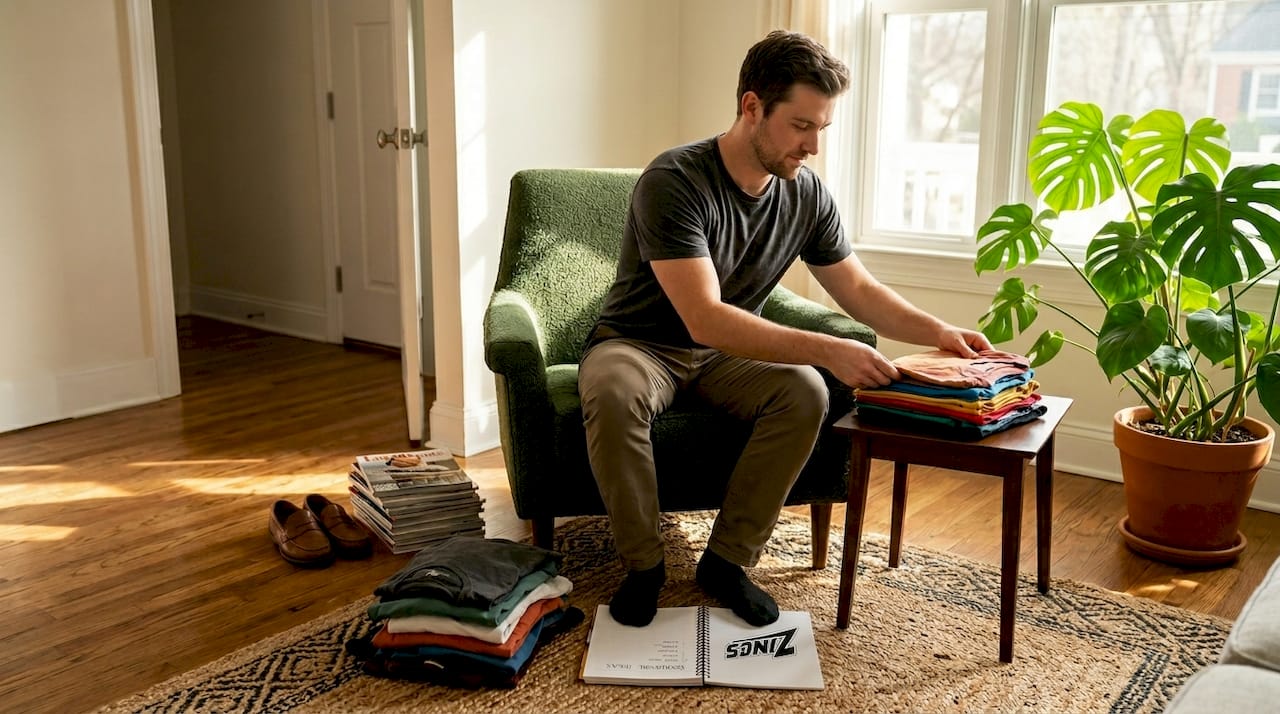
Start with a full inventory of what you actually wear. Pull everything out and sort it into three groups: items you reach for regularly, items you rarely wear, and items you never wear. Most people are surprised to find that the “rarely worn” group is larger than expected. These are your hidden refresh opportunities.
Follow this step-by-step process to inject fresh life into your existing wardrobe:
- Audit first. Lay out every piece from your casual wardrobe. Identify your top 10 to 15 most-worn items. These are your real staples.
- Restyle the forgotten pieces. Take three items you have not worn recently and look for new ways to combine them. A jacket worn over a hoodie, pants styled with a tucked-in tee — small changes make a visible difference.
- Rotate by season. Store out-of-season pieces and bring seasonal items forward. Checking out seasonal collections before each season shift helps you spot the one or two pieces that would genuinely upgrade your existing rotation.
- Adjust your layers. Layering changes the visual weight and feel of an outfit without buying anything new. A light jacket over a simple tee reads completely differently than wearing the tee alone.
- Buy only when there is a gap. After the audit, you will know exactly which types of pieces are missing. A cardigan jacket might be the layering piece that ties three other outfits together. Buy with purpose, not impulse.
Pro Tip: Add accessories to rotate your look without touching your core wardrobe. Even small changes like switching cap styles can shift an outfit’s tone entirely. Check out practical cap styling for variety to see how much variety one accessory can create.
The rotation method works because it treats your wardrobe as a live system rather than a storage space. Most style improvements come from using what you have more creatively, not from constantly replacing it.
Capsule wardrobes: less clutter, more style
A capsule wardrobe is a small, curated set of versatile clothing items that coordinate easily with each other. The goal is not to own the minimum possible — it is to own the right pieces in the right quantity. Fashion editors recommend building around a core of timeless staples and refreshing seasonal items rather than chasing trends across your entire wardrobe.
For casual wearers, a capsule typically includes neutral basics, one or two statement layers, go-to denim, comfortable pants, and a few versatile tops. Every item should work with at least three others. If a piece only goes with one outfit, it is taking up space without earning it.
Here is how a capsule wardrobe compares to other approaches:
| Approach | Number of items | Outfit options | Decision fatigue | Cost over time |
|---|---|---|---|---|
| Capsule wardrobe | 20 to 30 | High (mix and match) | Low | Lower |
| Trend-chasing wardrobe | 60 or more | Moderate | High | Higher |
| Large, unedited wardrobe | 80 or more | Low (poor coordination) | Very high | Highest |
The data above makes one thing clear: more items do not produce more outfit options. Coordination does.
Key capsule staples for casual everyday wear:
- Neutral tees in white, gray, and black
- One pair of well-fitted essential denim jackets for layering
- Two or three pairs of versatile casual pants that work with multiple tops
- A lightweight outer layer for transitional weather
- One or two accessories that elevate basics instantly
Accessories deserve special mention here. A classic cap worn consistently across different outfits ties a casual wardrobe together and adds a finishing touch that makes everyday looks feel more intentional.
Value for money: how selective upgrades beat trend splurges
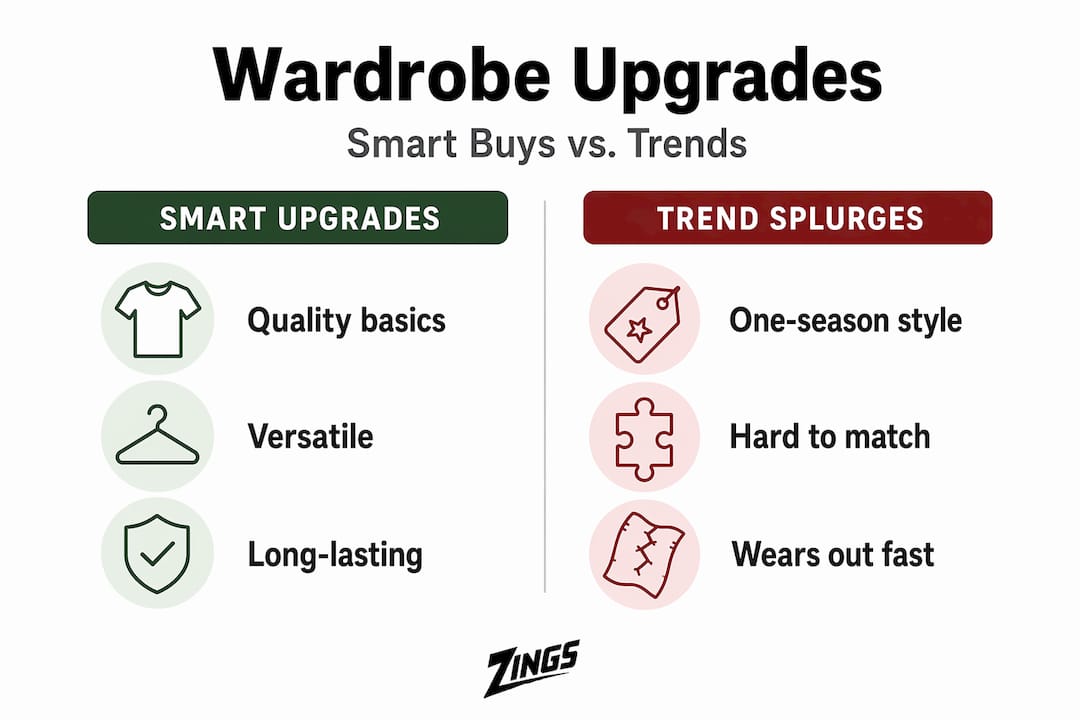
Cost-per-wear is a simple but powerful concept. Divide the price of an item by the number of times you actually wear it. A $15 trend piece worn twice costs $7.50 per wear. A $60 quality basic worn 80 times costs $0.75 per wear. The math consistently favors versatile, durable items over cheap trend buys.
| Item type | Price | Times worn | Cost per wear |
|---|---|---|---|
| Trend-only piece | $20 | 3 | $6.67 |
| Basic quality tee | $35 | 70 | $0.50 |
| Versatile jacket | $65 | 90 | $0.72 |
| Seasonal trend top | $25 | 5 | $5.00 |
The cost-per-wear principle is not about spending more upfront. It is about directing spending where it actually pays off. The pieces worth upgrading are the ones you reach for most: basics, layering items, and anything that bridges multiple outfit formulas.
How to spot which items deserve an upgrade:
- High frequency. If you reach for it more than twice a week, it earns an investment.
- Versatility. Items that work across multiple occasions and outfit combinations return more value.
- Visible wear. A staple that is looking tired pulls every outfit down with it.
- Gap filling. If its absence creates a coordination gap in your wardrobe, it is worth buying well.
Pro Tip: Before buying any new piece, ask yourself how many outfits in your current wardrobe it would work with. If the answer is fewer than three, it is probably a trend piece, not a wardrobe asset. You can apply the same logic to accessories by reviewing durable accessory value to see how long-lasting items save money over time.
The pitfall of trend-driven shopping is not the trends themselves. It is buying items that only work in one specific context, only in one season, or only with pieces you no longer own. Single-use purchases are wardrobe clutter in disguise.
How to avoid wardrobe chaos: moving from overwhelm to clarity
“Sometimes the real problem is not that you do not have enough clothes. It is that your wardrobe is so chaotic it creates too many decisions and too little coordination.”
That observation is backed by real experience. Wardrobe overwhelm comes from disorganization, not scarcity. The fix is a practical audit-and-edit process that you can run in under two hours.
Follow these steps to move from chaos to clarity:
- Empty your closet completely. Yes, all of it. You need to see everything at once to make useful decisions.
- Sort into three piles. Keep (worn regularly), consider (worn occasionally), and remove (not worn in a year or more).
- Coordinate the “keep” pile. Organize by type: tops, bottoms, layers, outerwear. Check that items coordinate across categories.
- Build three go-to outfit formulas. Choose three combinations you know work and photograph them for reference. This is your personal outfit bank.
- Identify the real gaps. After this process, any missing piece becomes obvious. Maybe you need a transitional layer, or one more pair of versatile pants. Check seasonal layering pieces to fill specific gaps rather than buying broadly.
- Schedule a quarterly review. Wardrobe clarity is not a one-time fix. A quick check every three months keeps chaos from building back up.
The “go-to outfit formula” concept is particularly useful. Instead of deciding what to wear from scratch each morning, you work from a small bank of combinations you already know look good. It removes the guesswork entirely and makes getting dressed fast and reliable.
The difference between needing a refresh and just needing a re-alignment is also worth noting. If your basics are solid but you feel bored, a few new additions will help. If you feel overwhelmed every morning, that is an organization problem — and no amount of shopping will fix it until the underlying chaos is addressed.
What most people get wrong about updating their wardrobe
Most people treat wardrobe updates like a shopping task. The closet feels stale, so they buy new things. But two months later, the same feeling returns. The new items get absorbed into the existing chaos, and the cycle starts again.
The real fix is not shopping. It is editing. When you remove the pieces that are cluttering your decisions and pulling your style down, the pieces you love get more air. They become visible. You actually wear them. That is when a wardrobe starts working for you instead of against you.
Capsule thinking, creative layering, and selective upgrading are the tools that make a lasting difference. A well-chosen stand-collar jacket for business-casual layering adds more value to a wardrobe than five cheap trend pieces bought without a strategy. It creates multiple outfit opportunities and elevates the basics around it.
The same applies to accessories. Choosing between timeless and trendy accessories is a real decision with real consequences for how long an item stays useful. Timeless pieces earn their cost-per-wear over years. Trend-only pieces earn nothing after one season.
The most stylish people you know are probably not the ones who buy the most. They are the ones who have figured out a small set of combinations that consistently work and stick to them. That is a skill worth building — and it starts with editing, not spending.
Refresh your style with affordable closet staples
Ready to put these strategies into practice? ZINGS 365 carries the affordable, versatile basics that make wardrobe refreshes practical rather than expensive.
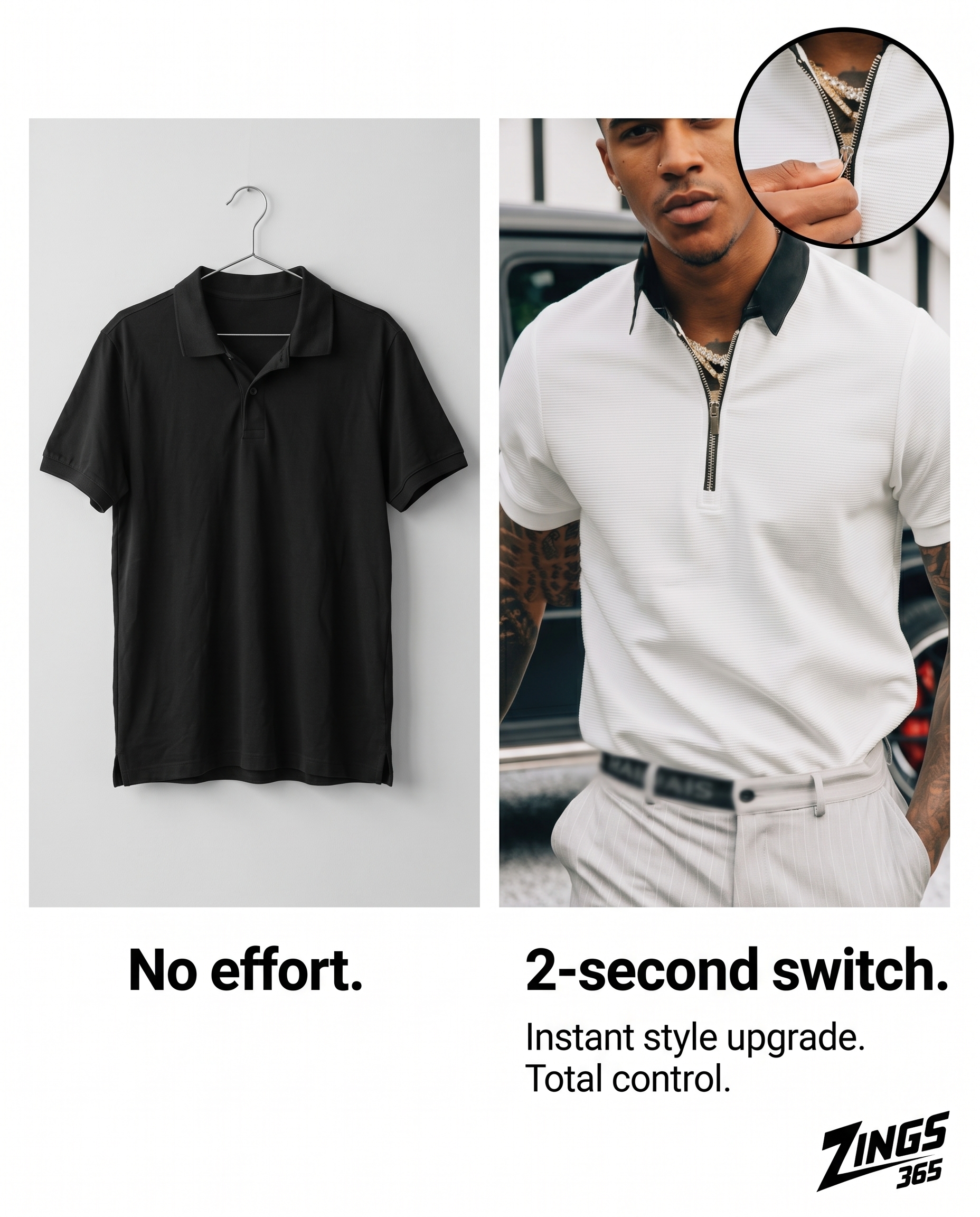
Start with the pieces that do the most work: quality core t-shirt styles in neutral tones anchor any casual wardrobe and work across dozens of combinations. For women looking for an easy layering or standalone option, women’s casual v-necks offer clean, versatile styling at an accessible price. Browse the full catalog at ZINGS 365 to find exactly the pieces your wardrobe is actually missing.
Frequently asked questions
How often should I update my casual wardrobe?
Aim to refresh key pieces seasonally, but focus on rotation and occasional editing rather than frequent full overhauls. Fashion editors recommend building around versatile staples and refreshing specific seasonal items rather than replacing everything at once.
What’s the most affordable way to refresh my style?
Start by inventorying and rotating existing pieces, then selectively upgrade high-use basics for the biggest impact. Rotation and styling changes are consistently more cost-effective than frequent buying.
How do I avoid decision fatigue when getting dressed?
Adopt a capsule wardrobe of versatile staples to minimize choices and streamline your morning routine. Capsule wardrobe edits are specifically designed to reduce daily decision-making by ensuring every piece coordinates easily.
Should I follow every trend when updating my wardrobe?
Focusing on timeless, versatile pieces usually delivers better results and long-term value than chasing every trend. Evaluating items by versatility and durability consistently outperforms buying quickly outdated, single-use trend garments.
What if I still feel like I have ‘nothing to wear’ after updating?
If the feeling persists, the issue is likely a lack of coordination and outfit formulas rather than a shortage of clothes. Wardrobe chaos creates too many decisions and too little coordination — decluttering and building go-to outfit formulas usually resolves it quickly.
