

TL;DR:
- Trend spotting in casual fashion requires analyzing multiple data sources like social media, search behavior, and retail sales to identify genuine signals. Combining evidence across domains helps distinguish long-term trends from short-lived spikes, with human judgment and regional validation vital for accuracy. AI tools enhance speed and pattern recognition, but analyst expertise remains essential for reliable forecasting and decision-making.
Separating a lasting trend from a short-lived spike is one of the hardest challenges in casual fashion marketing. In 2026, the pace of content creation and social sharing means a style can look dominant one week and disappear the next. For fashion marketers and trend analysts working in the casual and affordable clothing space, the cost of getting this wrong is real: overbuying inventory, missing a genuine shift, or chasing noise instead of signal. This guide walks through each stage of the trend spotting process, from gathering early signals to validating adoption across markets, with practical tools and evidence-backed steps at every stage.
Table of Contents
- Understanding signals: Where trend spotting starts
- Interpreting and structuring insights from raw signals
- Leveraging AI and analyst expertise for accurate forecasting
- Validating and benchmarking your trend direction
- Our perspective: Why intuition and validation still win over algorithms
- Explore trend-driven casual styles at ZINGS 365
- Frequently asked questions
Key Takeaways
| Point | Details |
|---|---|
| Multi-domain signals matter | Trend spotting works best when signals are sourced from catwalks, social, retail, and search data. |
| Human judgment is essential | AI speeds signal detection, but analysts must validate to avoid mistaking fads for lasting trends. |
| Validate before scaling | Always benchmark predictions against consumer adoption, especially across different regions and markets. |
| Pattern recognition drives insight | Spotting emerging patterns in images and data leads to actionable, measurable trend directions. |
| Regional adoption varies | Casual and affordable clothing trends must be tested locally before assuming global reach. |
Understanding signals: Where trend spotting starts
Trend spotting does not begin with a single viral post. It begins with systematic observation across multiple domains at once. A signal is any data point that suggests a style, silhouette, color, or fabric is gaining traction. Signals come from catwalks, social media platforms, retail sales data, and search behavior. No single source is enough on its own.
Trend-spotting methodology for fashion begins with observing early signals across multiple domains. The reason this matters is bias reduction. If you only monitor Instagram, you will overweight what performs well in visual-first environments. If you only track search volume, you will miss visual culture shifts that have not yet translated into typed queries. Combining sources gives a fuller picture.
For casual and affordable clothing specifically, the most relevant signal sources include:
- Social media platforms: Short-form video, image posts, and creator content showing real people wearing affordable styles
- Search behavior: Rising queries around specific garments, colors, or fits tracked through keyword tools
- Retail sales data: Units sold, return rates, and category growth from your own catalog or third-party retail data
- Catwalk and trade show imagery: Early indicators of direction, even if the runway version is not the retail version
- Street style and micro-influencer content: Often closer to actual consumer behavior than editorial fashion
Multi-domain trend observation helps reduce the risk of acting on surface-level hype. A single viral moment is not a trend. A signal becomes meaningful when it appears consistently across at least two or three unrelated domains within a short window.
For example, casual t-shirt signals often appear first in street style photography before moving into search volume increases and then retail reorders. Watching all three stages simultaneously gives you lead time. Similarly, trend signals in stretch pants tend to emerge through fitness and lifestyle content before spreading to mainstream casual wear categories.
Signal sources compared at a glance:
| Signal source | Lead time | Reliability | Best for |
|---|---|---|---|
| Catwalk imagery | 12 to 18 months | High for direction | Silhouette and color forecasting |
| Social media | 1 to 6 months | Medium, volume dependent | Emerging styles and micro-trends |
| Search behavior | 1 to 3 months | High for consumer intent | Demand validation |
| Retail sales data | 0 to 2 months | Very high | Confirming traction |
| Street style | 2 to 8 months | Medium | Real-world adoption |
The key takeaway here is that signals are not equal. Catwalk data tells you where designers are pointing. Retail data tells you what consumers are actually buying. Both matter, but they answer different questions.
Interpreting and structuring insights from raw signals
With signals in hand, it is time to turn them into useful insights for decision makers. Raw signal data is not actionable on its own. You need a structured process to convert observations into trend hypotheses that can guide buying, marketing, and product development decisions.
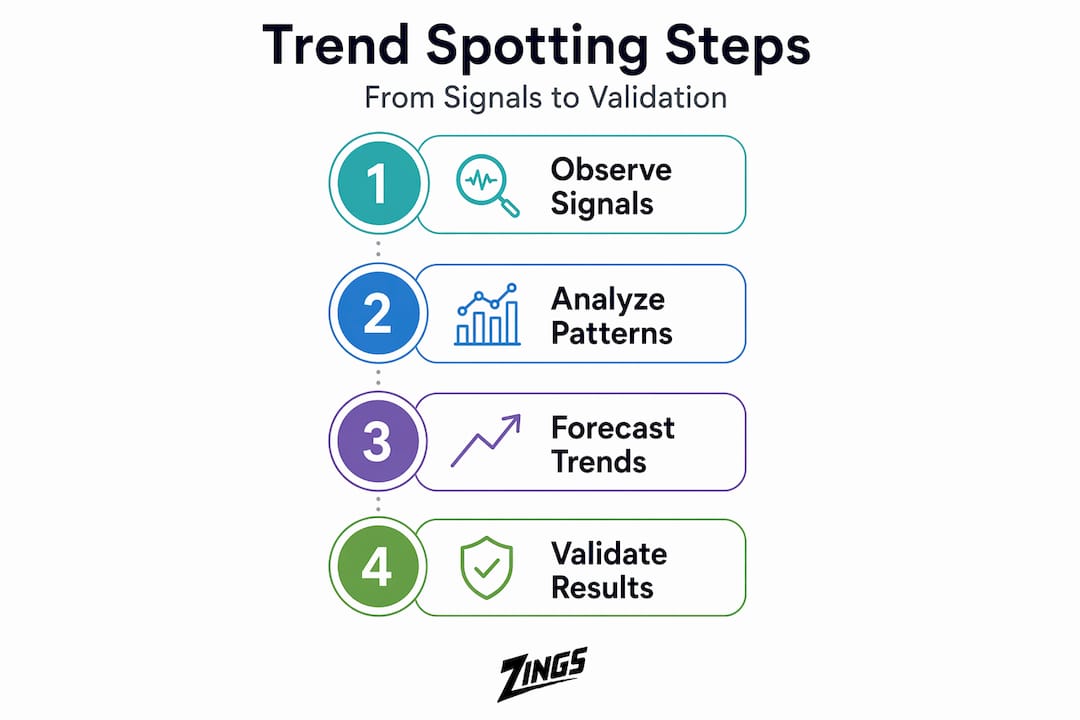
The intelligence process converts signals into structured insight, framing trend directions for strategic decisions. Here is a practical step-by-step approach:
- Collect and tag signals by category, source, and date. Use a shared document or dedicated trend tracking tool so the full team can see incoming data.
- Group signals by theme. Look for recurring patterns across sources. If relaxed-fit trousers appear in three separate signal streams, that grouping is worth flagging.
- Assign a confidence score. Rate each grouped theme by how many domains it appears in and how sustained the signal is over time.
- Write a trend hypothesis. State clearly what the trend is, who it is for, what price tier it fits, and what the expected adoption timeline looks like.
- Identify validation gaps. Note what evidence you still need before committing to a buying or campaign decision.
Edge cases include distinguishing long-term trends from short-lived spikes and validating hypotheses with multiple evidence streams. A common mistake is treating a spike in one channel as confirmation. A style that surges on short-form video but shows no corresponding search growth or retail movement is almost certainly a fad, not a trend.
Trend validation challenges are especially real in affordable fashion because the consumer base is broad and diverse. What resonates in one demographic or region may not transfer to another.
For casual sportswear, retail traction signals are particularly useful at this stage. If a style is moving in units at the retail level, that is strong confirmation that a hypothesis is correct. For outerwear, denim jacket trend analysis benefits from combining social signal data with search volume to separate seasonal spikes from genuine multi-season growth.
Pro Tip: Always combine quantitative analytics with experienced analyst judgment. Numbers tell you what is happening. Experienced eyes tell you why, and whether it matters for your specific customer.
Leveraging AI and analyst expertise for accurate forecasting
Once insights are structured, technology helps forecast, but human expertise still matters. AI has become a significant part of the trend forecasting toolkit in 2026, and understanding both its strengths and its limits is essential for accurate predictions.
AI models like WGSN’s TrendCurve combine multiple evidence streams and require analyst judgment to reach up to 94% accuracy. That number is impressive, but the qualifier is critical. Without analyst input, the same models produce significantly lower accuracy. AI accelerates signal detection and pattern recognition at scale, but it cannot replace contextual human judgment.
Retailers use AI systems that fuse input types to spot rising trends earlier and shorten decision-to-delivery timelines. For casual and affordable clothing, where margins are tight and speed to market matters, this kind of acceleration is genuinely valuable.
Here is how AI tools are currently being used in trend forecasting:
| AI application | What it does | Limitation |
|---|---|---|
| Image recognition | Scans social and runway imagery for recurring visual elements | Misses cultural context behind the image |
| Purchase pattern analysis | Identifies rising SKUs and category shifts | Lags behind early-stage social signals |
| Search trend modeling | Predicts demand curves from query data | Cannot account for sudden cultural events |
| Social listening | Tracks volume and sentiment around styles | Struggles with irony, parody, or niche communities |
For AI-driven V-neck trends, image recognition tools can flag rising frequency of a neckline style across thousands of posts in hours, something no human team could do manually. For AI spotting in track suits, purchase pattern analysis helps identify which colorways and fits are gaining traction before they become obvious to the broader market.
AI-driven insights for retail are most effective when analysts use them as a starting point, not a final answer. The best practice in 2026 is a hybrid model: AI handles volume and speed, analysts handle nuance and judgment.
Statistic callout: AI trend models that incorporate analyst review consistently outperform fully automated systems, with accuracy improvements of 15 to 20 percentage points reported across major forecasting platforms.
Pro Tip: Do not let AI outputs bypass your review process. Build a step where an experienced analyst checks every AI-generated trend flag before it influences a buying or campaign decision.
Validating and benchmarking your trend direction
With forecasts in place, it is vital to test and measure how trends perform in real markets. Forecasting is not the end of the process. Validation is where you confirm that a trend hypothesis holds up against actual consumer behavior across different regions and price points.
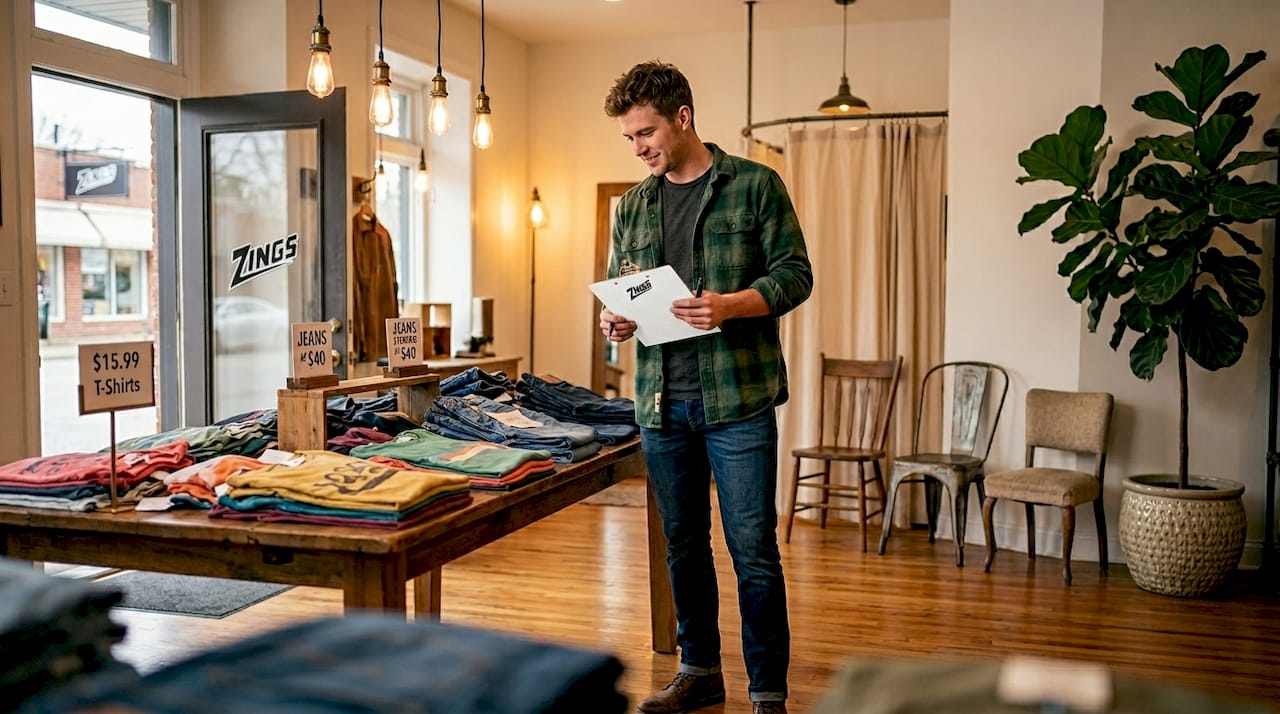
Casual and affordable clothing trend decisions in 2026 should be tested against consumer adoption signals across regions and markets. A trend that performs strongly in Western European markets may behave very differently in Southeast Asia or North America. Assuming global uniformity is one of the most costly mistakes in affordable fashion.
Heuritech benchmarks forecasts across European markets and maps trends to visibility months with growth rates benchmarked against the previous year. This kind of structured benchmarking gives you a baseline to measure your own trend adoption data against.
A practical validation checklist for casual clothing trends:
- Check adoption across at least three distinct regional markets before committing to a major inventory decision.
- Compare growth rate to the previous season to determine whether a trend is accelerating, plateauing, or declining.
- Test at small scale first. Run a limited product drop or targeted campaign before scaling production.
- Monitor return rates. High return rates on a new style signal a mismatch between expectation and reality.
- Track repeat purchase behavior. Customers who buy a trend item and return for more are a strong signal of genuine adoption.
“Not every runway trend translates to retail, and not every retail trend translates across all price points. Validation is the step that keeps forecasting honest.”
For trend adoption in dresses, regional validation is especially important because silhouette preferences vary significantly by market. For regional benchmarking trousers, comparing sell-through rates across different markets helps identify where a trend is genuinely gaining ground versus where it is stalling.
Ecommerce adoption signals such as add-to-cart rates, wishlist additions, and time-on-page for product listings are also useful validation tools for online-first retailers. These behavioral signals often precede actual purchases and can give early warning of whether a trend is resonating with your specific audience.
Our perspective: Why intuition and validation still win over algorithms
Having explored the verification stage, let us look at the practical wisdom often overlooked in fast-moving trend analytics. There is a real temptation in 2026 to let AI tools do the heavy lifting and trust the output. The data is fast, the dashboards are clean, and the confidence intervals look reassuring. But the track record tells a more complicated story.
Prediction is not certain and analyst judgment plus multi-channel validation is needed to avoid confusing fads with long-term trends. We have seen this play out repeatedly. An algorithm flags a color or silhouette as a rising trend based on social volume, buying teams act on it, and six weeks later the spike has vanished. The model was not wrong about the data. It was wrong about the meaning.
Human pattern recognition works differently. An experienced analyst looking at the same signal will ask: Is this being worn by real people in real contexts, or is it a styling moment created for content? Is the adoption spreading organically, or is it being pushed by paid partnerships? Those questions do not have numerical answers, but they are often the difference between a smart buy and a costly mistake.
The most effective trend spotters we observe use a simple rule: validate across at least three independent evidence streams before acting. If a trend appears in social data, search volume, and retail movement simultaneously, that is a genuine signal. If it only appears in one place, hold off.
For trend validation lessons, the same principle applies at the product level. A dress style that sells well in one colorway does not automatically validate the silhouette as a trend. Dig deeper before scaling.
The practical wisdom here is straightforward. Test before you scale. Build validation into every stage of the process. And treat AI outputs as one input among several, not as a final answer. The brands that get trend spotting right in 2026 are not the ones with the most sophisticated models. They are the ones with the most disciplined review processes.
Explore trend-driven casual styles at ZINGS 365
Trend analysis is most useful when it connects directly to real product decisions. At ZINGS 365, the catalog is updated continuously to reflect genuine shifts in casual and affordable fashion, making it a practical reference point for marketers and analysts tracking real-world adoption.
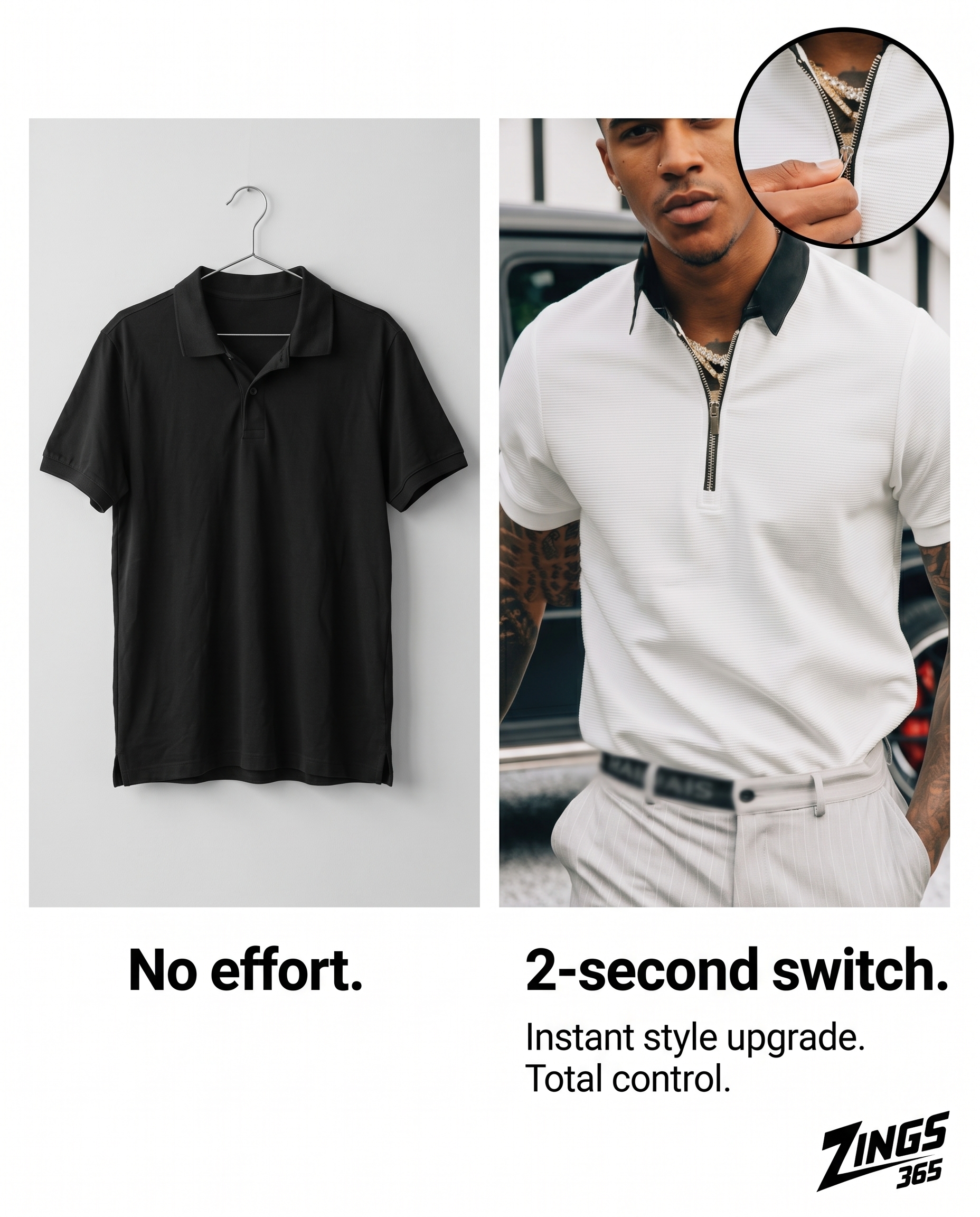
Browse the casual jackets and women’s sportswear ranges to see how current trend directions are showing up in actual product offerings. The sweatshirts and casual tops section reflects current signal data across color, fit, and fabric categories. For analysts benchmarking affordable fashion trends, ZINGS 365 provides a live view of what trend-driven casual clothing looks like at the retail level, updated with new arrivals regularly.
Frequently asked questions
What are the most reliable sources for early trend signals in 2026?
Catwalk imagery, social media, retail sales, and search behavior are the best for early signals, especially when used together. Trend-spotting methodology for fashion begins with observing early signals across multiple domains for the most reliable results.
How can I distinguish a fad from a lasting trend?
Lasting trends show sustained growth across multiple channels and regions, while fads spike temporarily in one channel only. Edge cases include distinguishing long-term trends from short-lived spikes and validating with multiple evidence streams.
What is the role of AI in fashion trend spotting?
AI helps spot emerging trends early by analyzing imagery, purchasing, and social data, but analyst input is crucial for accuracy. AI models like WGSN’s TrendCurve combine multiple evidence streams and require analyst judgment to reach high accuracy.
Why do casual clothing trends need regional validation?
Consumer adoption varies by region, and trends may not transfer directly from runway to retail, so validation ensures accuracy. Trend decisions for casual and affordable clothing in 2026 should be tested against consumer adoption signals across regions.
What is the biggest mistake in trend spotting for affordable fashion?
Relying on single-channel evidence or assuming all runway trends work for affordable retail is the most common mistake. Edge cases and limits of trend spotting include validating hypotheses using multiple approaches and not relying solely on runway-to-wardrobe assumptions.
