

TL;DR:
- Choosing the right jeans fit depends on accurate measurements of your waist, hips, rise, and inseam to ensure comfort and style.
- Understanding denim features like rise, leg shape, and fabric stretch helps match jeans to your body type and activity level.
Choosing the right jeans fit means knowing your body measurements and understanding how denim features like rise, leg shape, and fabric stretch work together. The industry term for this process is “fit selection,” and it covers everything from waist circumference to inseam length to fabric composition. Most people pick jeans based on size labels alone, which explains why so many pairs end up unworn. This guide gives you a practical, measurement-driven approach to finding jeans that look good and feel comfortable all day.
How to choose jeans fit: start with the right measurements
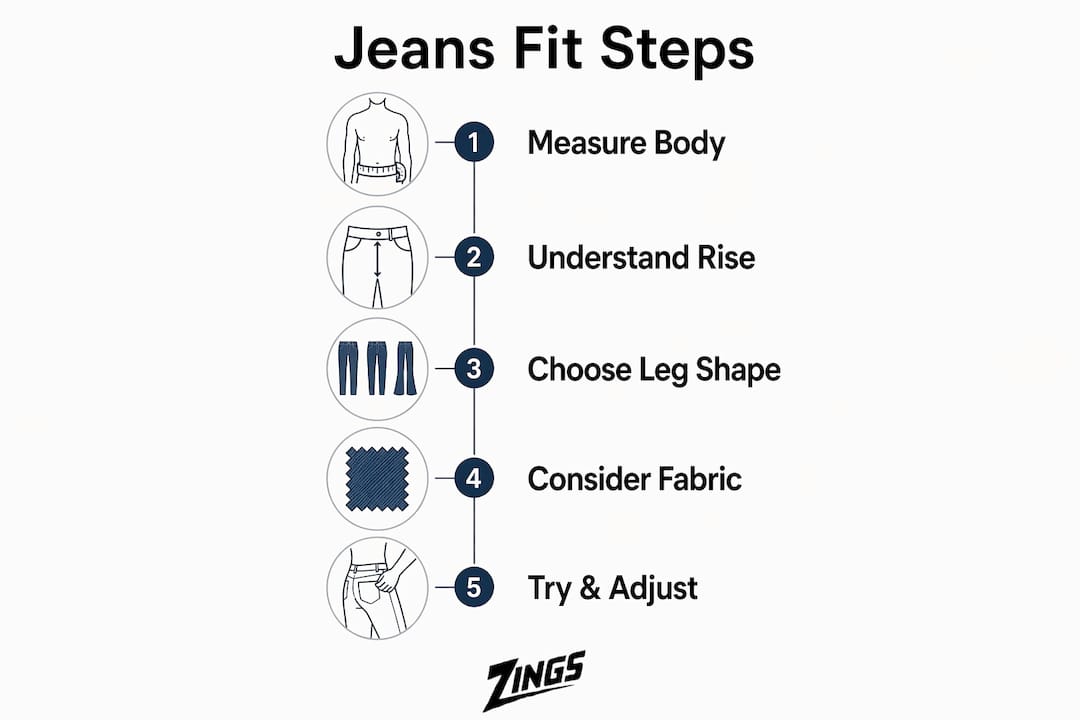
The most important step in any jeans fit guide is taking accurate body measurements before you shop. Four numbers define your fit: waist, hips, rise, and inseam. Getting these right removes most of the guesswork.
Here is how to measure each one correctly:
- Waist: Wrap a flexible tape measure around the narrowest part of your torso, typically one inch above your navel. Keep the tape snug but not compressed. This number is your true waist, not the size printed on your current jeans.
- Hips: Measure around the fullest part of your hips and seat, usually 7 to 9 inches below your natural waist. This measurement matters most for fit through the seat and thighs.
- Rise: Stand straight and measure from the top of your waistband down through your crotch to the bottom of the seam. Rise measurement tells you where jeans will sit on your body and directly affects comfort when sitting.
- Thigh and knee: Wrap the tape around the fullest part of your thigh and again at the knee. Thigh and knee width are critical to overall fit comfort, and most buyers overlook these dimensions, which leads to jeans that feel restrictive or look baggy.
- Inseam: Measure from the crotch seam down to the ankle bone. This number determines leg length and whether you need a hem adjustment.
Pro Tip: Sizing inconsistencies between brands mean you should always focus on your actual measurements rather than the size label on the tag. A size 32 at one brand can fit like a 34 at another.
What denim features actually affect how jeans fit
Once you have your measurements, the next step is understanding the features built into the jeans themselves. Rise, leg shape, fabric content, and wash all change how a pair fits and looks on your body.

Rise types and what they do
Rise determines where jeans sit on your body. Low-rise jeans measure below 8 inches and sit on the hip. Mid-rise jeans measure 8 to 9.5 inches and sit at or just below the natural waist. High-rise jeans measure 10 inches or more and sit at or above the natural waist. Matching rise to your torso length improves proportion. Long torso individuals generally prefer high-rise jeans, while shorter torsos look more balanced in mid or low-rise styles.
Leg shape comparison
| Leg Shape | Opening Width | Best For |
|---|---|---|
| Slim | 30 to 35 cm | Lean builds, tucked-in or layered looks |
| Straight | 35 to 40 cm | Most body types, versatile casual wear |
| Bootcut | 38 to 42 cm | Balancing wider hips or thighs |
| Wide-leg | Over 40 cm | Relaxed style, taller frames |
| Flare | Over 42 cm | Pear and hourglass shapes |
Leg opening size directly impacts silhouette. Slim jeans draw the eye inward, while wide-leg and flare cuts add visual balance below the hip. Note that leg shape terminology varies by brand. Labels like “slim,” “tapered,” and “relaxed” are inconsistent across brands, which means you need to try jeans on to confirm the actual fit rather than relying on the label alone.
Fabric stretch and wash
Denim with 1 to 3% elastane or spandex significantly improves fit and comfort by conforming to your body shape throughout the day. Stretch denim is the better choice for active wear or all-day use. Rigid denim, with no elastane, holds its shape but requires more break-in time. For wash, darker denim reads as more formal and slimming, while lighter washes work best for casual, relaxed settings.
Best jeans fit for body type: matching cut to shape
Knowing your body type helps you narrow down which rise and leg shape will look most balanced. Five body types cover most fits: hourglass, pear, apple, rectangle, and inverted triangle.
- Hourglass: Your waist is significantly narrower than your hips and shoulders. High-rise straight or slim jeans work well because they follow your natural curves without adding bulk. Avoid low-rise cuts, which can create a gap at the back waistband.
- Pear: Your hips are wider than your shoulders. Bootcut and flare jeans balance the silhouette by adding width below the knee. Mid to high-rise cuts prevent the waistband from sitting uncomfortably on the widest part of your hips.
- Apple: Your midsection is the widest point. High-rise jeans with a straight or wide leg create a clean line from waist to ankle. Avoid low-rise styles, which can emphasize the midsection.
- Rectangle: Your waist, hips, and shoulders are close in width. Straight-leg and relaxed-fit jeans add visual shape. Bootcut styles with a mid-rise also work well by creating the appearance of curves.
- Inverted triangle: Your shoulders are wider than your hips. Wide-leg and flare jeans add visual weight below the waist to balance broader shoulders. Avoid slim or tapered cuts, which can make the upper body look disproportionately wide.
When off-the-rack jeans fit well through the hips and thighs but gap at the waist, tailoring for waist and hem adjustments is a practical solution. The standard advice is to size up to fit your largest measurement, then have the waist taken in by a tailor. This approach works for any body type and gives you access to styles that might otherwise not fit correctly. For more on matching styles to your shape, the jeans styles guide at Zings365 covers rise and cut options in detail.
How to try on jeans and fix common fit problems
Trying on jeans correctly is as important as measuring. Most people stand in front of a mirror and decide. That test only tells you half the story.
Follow these steps when trying on any pair:
- Check the waistband first. Use the two-finger rule: slip two fingers inside the waistband. If two fingers fit snugly, the waist is correct. If your whole hand fits, the waist is too loose. If you cannot fit two fingers, size up.
- Sit down in the fitting room. Jeans should be tested sitting and moving. Discomfort or gapping when seated indicates a poor fit. Many jeans fit standing but fail when you sit.
- Bend your knees and squat slightly. This tests the rise and thigh fit. If the fabric pulls across the thighs or the waistband dips at the back, the rise is too low or the thighs are too narrow for your measurements.
- Walk a few steps. Check that the fabric does not bunch at the knees or drag on the floor.
- Check the seat. The seat seam should sit at the base of your seat without sagging or pulling tight.
Pro Tip: Stretch denim buyers should choose a snug fit at purchase because the fabric relaxes with wear. Rigid denim does not stretch, so buy the size that fits comfortably from the start.
Common fit problems and their fixes:
- Thigh tightness: Size up and have the waist tailored, or switch to a relaxed or straight-leg cut.
- Waist gap at the back: Choose a high-rise style or have the waistband taken in by a tailor.
- Too long in the leg: Hem the jeans rather than folding them. A tailor charges very little for this.
- Baggy seat: Try a slimmer cut or a higher rise that sits closer to the natural waist.
For a deeper look at how to coordinate your jeans with the rest of your wardrobe, the denim styling guide at Zings365 covers fabric and proportion matching in practical terms.
Key takeaways
Choosing the right jeans fit requires accurate body measurements, an understanding of rise and leg shape, and a fabric choice matched to your activity level and comfort needs.
| Point | Details |
|---|---|
| Measure before you shop | Take waist, hip, rise, thigh, and inseam measurements with a flexible tape for accurate fit. |
| Match rise to torso length | High-rise suits long torsos; mid or low-rise suits shorter torsos for better proportion. |
| Choose stretch for comfort | Denim with 1 to 3% elastane conforms to your body and stays comfortable all day. |
| Test fit in motion | Sit, squat, and walk in the fitting room to confirm comfort before buying. |
| Tailor when needed | Size up to fit your largest measurement, then adjust waist and hem with a tailor. |
Why I stopped trusting size labels entirely
I spent years buying jeans based on the number on the tag, and I was wrong almost every time. The shift that changed everything was measuring my actual rise and thigh before shopping, not just my waist. Those two numbers explain more about fit than any size label ever will.
The most common mistake I see is people choosing a cut based on what looks good on a hanger or a model. A wide-leg jean that photographs well on a tall, lean frame can look completely different on someone with a shorter inseam or fuller thighs. The only reliable test is movement. If you cannot sit comfortably in the fitting room, you will not wear those jeans past the first hour.
Stretch denim changed my daily experience with jeans more than any style choice. A pair with even 2% elastane moves with you in a way that rigid denim simply does not. I now buy stretch denim for anything I plan to wear for more than four hours at a stretch.
My honest advice: ignore the size, know your measurements, and always sit down before you buy. If the fit is close but not perfect through the waist, a tailor can fix that for less than the cost of a coffee. The cut and wash you love should not be abandoned just because the waist is slightly off.
— TONY
Complete your look with casual wear from Zings365

Finding jeans that fit well is only part of the equation. The shirt or jacket you pair with them shapes the whole outfit. Zings365 carries a range of casual options built to work with denim, including the Fall Men’s British Casual Fashion Shirt, which pairs cleanly with straight-leg or slim-fit jeans for a put-together casual look. For cooler weather, the Men’s Casual Jacket adds a layer that works across most denim styles. Browse the full catalog at Zings365 to find casual pieces that complement whatever fit you land on.
FAQ
How do I know what jeans fit is right for me?
Start with your body measurements: waist, hips, rise, thigh, and inseam. Match those numbers to the rise type and leg shape that suits your body proportions, then test the fit by sitting and moving in the fitting room before buying.
What is the two-finger rule for jeans?
The two-finger rule means you should be able to slip exactly two fingers inside the waistband when the jeans are fastened. If two fingers fit snugly, the waist size is correct. If your whole hand fits, the waist is too large.
Should I size up or down in stretch denim?
Size slightly snug in stretch denim because the fabric relaxes with wear and molds to your body after a few hours. With rigid denim, buy the size that fits comfortably from the start since it will not stretch.
What rise is best for my body type?
High-rise jeans suit long torsos and apple or hourglass body types. Mid-rise works for most body types and is the most versatile option. Low-rise suits shorter torsos and rectangle or inverted triangle shapes.
Can I fix jeans that don’t fit perfectly off the rack?
Yes. Size up to fit your largest measurement, typically the hips or thighs, then have a tailor adjust the waist and hem. This approach works for any body type and costs very little compared to the price of the jeans.
