

TL;DR:
- Affordable fashion now offers quality, inclusivity, and environmental consideration beyond just saving money. Supply chain changes and cost-per-wear principles enable smarter, more practical clothing choices that build confidence and style. Responsible consumption involves careful planning, maintenance, and understanding the true impacts of garment materials and purchase habits.
Affordable fashion carries a reputation it no longer deserves. For years, “budget clothing” meant disposable quality, forgettable design, and a style compromise you quietly accepted. That story has shifted. The reality of why affordable fashion makes sense today goes well beyond saving money. It touches how supply chains work, how personal style actually develops, and how your buying habits affect both your confidence and the environment. This article unpacks all three dimensions so you can make fashion choices that are informed, practical, and genuinely satisfying.
Table of Contents
- Key takeaways
- Why affordable fashion works on a real budget
- Style, inclusivity, and the quality shift
- The environmental picture: honest and complicated
- Making smart affordable fashion choices
- My honest take on affordable fashion’s real value
- Build a smarter wardrobe with Zings365
- FAQ
Key takeaways
| Point | Details |
|---|---|
| Cost per wear beats sticker price | A $20 item worn twice costs more per use than a $60 piece worn regularly across a year. |
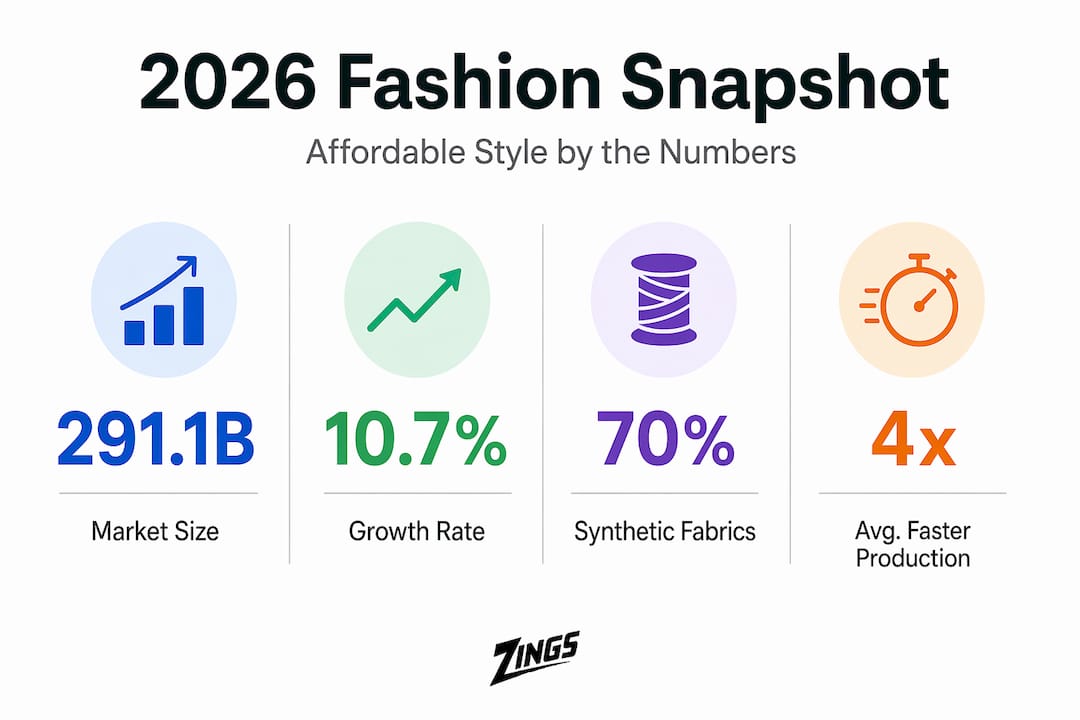
| Supply chain shifts drive real savings | Direct-to-consumer models cut traditional 4x to 8x retail markups, lowering prices without cutting quality. |
| Style and size inclusivity are growing | Affordable brands now offer broader size ranges and earn genuine editorial recognition for design quality. |
| Environmental impact needs honest assessment | Synthetic fiber dominance and textile waste make sustainability habits more important than brand price tags. |
| Smart buying maximizes your budget | Auditing your wardrobe, identifying gaps, and mixing affordable basics with select quality pieces stretches every dollar. |
Why affordable fashion works on a real budget
The assumption that low price equals low quality misses how modern fashion pricing actually works. Traditional retail operated on markups of 4x to 8x the production cost, layering in distributor margins, showroom rent, and brand licensing fees. When you bought a $120 shirt from a mid-market department store, you were often paying for real estate, not fabric.
Direct-to-consumer brands changed that math. By manufacturing and selling through their own channels, they removed the middlemen and passed that margin back to the buyer. Searches for terms like “affordable dresses” and “fashion under $30” increased over 40% year-over-year, which reflects genuine demand, not just trend chasing.
Understanding cost per wear
The most useful tool for evaluating any fashion purchase is cost per wear. It is simple arithmetic with real consequences for your wardrobe spending. Divide the purchase price by the number of times you actually wear the item. A $20 fast fashion piece worn 3 times costs $6.67 per wear. A $200 blazer worn 100 times costs $2 per wear. The expensive item wins by a wide margin.
Here is what that means for budget fashion buyers. The goal is not to spend the least. The goal is to buy affordable pieces you will actually reach for repeatedly. A well-cut $35 pair of chinos you wear twice a week for a year has a cost per wear under $0.35. That beats most designer alternatives with no effort.
Pro Tip: Before purchasing any item, estimate realistically how many times you will wear it in the next 12 months. If the number is under 10, reconsider the purchase regardless of the price.
| Purchase | Price | Wears per year | Cost per wear |
|---|---|---|---|
| Trendy fast fashion top | $18 | 4 | $4.50 |
| Affordable quality basic tee | $30 | 40 | $0.75 |
| Affordable stretch trouser | $45 | 60 | $0.75 |
| Premium denim | $180 | 90 | $2.00 |
The fast fashion market is projected to reach $291.1 billion by 2032 at a CAGR of 10.7%, with production lead times cut by up to 50%. That production speed creates both opportunity and risk. When brands use speed to offer fresher, better-fitting designs at lower prices, buyers benefit. When they use speed to cut fabric quality, buyers absorb the real cost through shorter garment lifespans.
Style, inclusivity, and the quality shift
Affordable fashion’s relationship with style has improved considerably. Brands that once offered one-size-fits-most silhouettes now stock XS through 3XL and beyond as standard. That shift is not charity. It is market intelligence. A broader size range means more buyers, which drives volume, which enables lower per-unit costs.
The editorial world has noticed. Affordable fashion brands now appear in magazine features alongside luxury labels. That recognition reflects something real. When a $28 dress earns a Vogue mention, it means the design and fabric quality met a bar that price alone could not explain.
Younger consumers are particularly tuned into this shift. Millennials and Gen Z increasingly justify $150 for artisan-crafted items rather than spending $5,000 on heritage luxury brands. The mid-price tier has become a values signal, not a compromise. The benefits of budget fashion here are less about price and more about proving that thoughtful spending and personal style can coexist.
“Clothing confidence matters more than clothing cost. Research shows that individuals who feel good in their clothes are less likely to avoid social situations, reducing stress and isolation regardless of what the items cost.”
There are practical style benefits to building from affordable fashion choices too. When you are not protecting a $600 investment piece, you wear clothes more freely. You experiment more. You find your actual style rather than performing someone else’s. Learn to spot fashion trends early and you can act on them without the fear that comes with expensive mistakes.
A versatile wardrobe built on affordable fashion staples, quality basics, well-fitting trousers, clean shirts, and layering pieces, does more with less. That is not a consolation prize. That is efficient dressing.
The environmental picture: honest and complicated
This is where the conversation about why you should buy affordable fashion gets genuinely complex. Sustainable choices and low prices do not always align. The reality needs honest handling.
About 70% of all textile production uses synthetic fibers like polyester, which are cheaper to produce but non-biodegradable. They shed microplastics in every wash cycle. They sit in landfills for centuries. The global fashion industry generates approximately 92 million tonnes of textile waste annually, and fast fashion contributes heavily to that number.
Pro Tip: Wash synthetic garments in a microplastic-catching laundry bag to reduce fiber shedding. It is one of the most effective individual actions you can take without changing your wardrobe.
| Fashion practice | Environmental impact | Budget impact |
|---|---|---|
| Buying cheap, discarding often | High waste, microplastic pollution | Short-term savings, long-term cost |
| Buying affordable, keeping longer | Moderate impact, reduced waste | Strong long-term value |
| Buying secondhand affordable items | Low impact, diverts textile waste | Best budget and sustainability outcome |
| Buying luxury fast-worn pieces | Lower environmental impact per item | High cost, unpredictable value |
Sustainability in fashion is not solved by spending more. Understanding which clothing materials matter helps you make better choices at any price point. The average wardrobe contains 50 unworn items, which means most people already have the clothes they need. The environmental problem is not price level. It is purchase frequency and garment lifespan.
Selling or swapping those unused items is practical sustainability. It generates funds for better purchases and keeps garments in circulation longer. The importance of budget-friendly style practiced thoughtfully means buying fewer things, wearing them more, and treating care and repair as normal habits rather than afterthoughts.
Making smart affordable fashion choices
Knowing why affordable fashion makes sense is only half the work. Applying that knowledge with intention is where the real benefits show up.
-
Audit your wardrobe first. Before buying anything, identify what you already own and what you genuinely lack. Most people discover they need fewer items than they think, and that a few targeted purchases would have more impact than a seasonal haul.
-
Identify your personal problem spots. If you consistently reach for a certain type of outfit, build from there. Investing your budget strategically by focusing on specific wardrobe gaps maximizes style impact while controlling spending.
-
Mix affordable basics with select quality pieces. Not every item needs to be affordable, and not every quality item needs to be expensive. A well-constructed pair of trousers, a clean shirt, and one quality outerwear piece can anchor a wardrobe built mostly on affordable fashion choices.
-
Use sales and direct-to-consumer brands intentionally. End-of-season sales are where affordable fashion gets even more compelling. Direct-to-consumer brands offer the best combination of price and quality because their cost structure allows it. Brands like Rise and Fall have shown that luxury-quality fashion affordably is achievable when the supply chain cuts out unnecessary layers.
-
Repair and resell rather than discard. A small repair extends garment life significantly. Selling pieces you no longer wear converts wardrobe clutter into purchasing power. Learning to refresh your wardrobe without always buying new is one of the most practical habits you can build.
Pro Tip: Build a “cost per wear target” for your budget. Decide you want every purchase to hit under $1 per wear within a year. That single filter will change how you shop permanently.
Financial literacy in fashion means buying less and buying better, considering total value over sticker price. That principle applies whether you are spending $25 or $250.
My honest take on affordable fashion’s real value
I’ve spent years watching affordable fashion get dismissed as the “practical but boring” choice. That framing never made sense to me, and now it makes even less sense.
What I’ve seen shift most noticeably is the quality floor. There used to be a clear ceiling on what affordable brands could produce. Fabric pilling, poor stitching, sizing inconsistencies. Those problems have not vanished, but the gap between affordable and premium has closed considerably for certain product categories. Basic t-shirts, chinos, casual shirts, and layering pieces from well-run affordable brands now hold up in ways they simply did not five years ago.
The cost-per-wear framework changed how I think about every purchase. I stopped asking “is this cheap enough?” and started asking “will I wear this enough?” That single shift made my wardrobe more useful and actually reduced what I spent annually. It sounds counterintuitive. It works.
Where I’ve seen people go wrong is treating affordability as a license to buy carelessly. Buying seven $15 shirts you will wear twice is not budget-conscious. It is a waste wearing a discount tag. The importance of budget-friendly style is not volume. It is precision. You learn your actual style, buy for that, and stop filling wardrobe space with things that felt like a deal in the moment.
The sustainability challenge is real and I do not want to minimize it. Affordable fashion and environmental responsibility are not automatic allies. They can be, but it takes deliberate choices about what you buy, how you care for it, and what you do with it when you are done. That work is worth doing. And it is entirely possible without moving to a premium price bracket.
— TONY
Build a smarter wardrobe with Zings365

Zings365 carries the kind of affordable fashion choices that hold up to the cost-per-wear standard. From casual stretch trousers built for daily wear to spring casual shirts that work across casual and semi-formal settings, the catalog is built around versatility at accessible prices. Accessories including satin-lined beanies and seasonal bags round out the wardrobe essentials you can actually reach for year-round. Every product is priced so you can build intentionally, not just impulsively. Browse the full Zings365 selection and see how far a considered budget actually goes.
FAQ
Why does affordable fashion have lower prices?
Affordable fashion is priced lower primarily because direct-to-consumer brands cut out traditional retail middlemen, reducing markups that typically run 4x to 8x the production cost. Supply chain compression and higher production volumes also reduce per-unit costs without requiring cuts to material quality.
Is cheap fashion worth it from a value standpoint?
It depends entirely on how often you wear it. A $25 item worn 30 times delivers better value per wear than a $200 item worn 10 times. Cost per wear, not purchase price, is the most accurate way to measure whether any clothing purchase is worth it.
How does affordable fashion affect sustainability?
Affordable fashion has a complicated relationship with sustainability. About 70% of textile production uses synthetic fibers that shed microplastics and do not biodegrade. Buying affordable pieces and wearing them frequently for longer periods reduces environmental impact compared to buying cheap items and discarding them quickly.
What are the main benefits of budget fashion for personal style?
Budget fashion allows more experimentation without financial risk, supports broader size inclusivity, and enables building a versatile wardrobe across multiple outfit categories. Research also links clothing confidence to reduced social anxiety, and well-fitting affordable pieces deliver that benefit at any price point.
How do I make smarter affordable fashion choices?
Start with a wardrobe audit to identify genuine gaps, then buy affordable basics that fill those gaps specifically. Mix select quality investment pieces with affordable staples, use end-of-season sales from direct-to-consumer brands, and repair or resell items rather than discarding them.
