

TL;DR:
- Fashion trends cycle approximately every 20 years due to a recurring balance between novelty and familiarity. Northwestern University’s analysis of over 37,000 garments confirms this pattern, driven by psychological needs like optimal distinctiveness and cultural nostalgia. Modern acceleration, fueled by social media, overlays micro-trends, but the underlying structural wave remains identifiable through measurable garment features.
Fashion trends repeat in roughly 20-year cycles because consumers and designers constantly balance the desire for novelty against the comfort of familiarity. A 2026 Northwestern University study analyzed 37,000 garments from 1869 to the present, tracking hemline, neckline, and waistline positions, and confirmed this oscillating wave pattern with mathematical precision. The phenomenon is known in academic circles as cyclical fashion repetition, though most people simply call it “trends coming back.” Understanding why this happens draws on psychology, cultural history, and data science. This article breaks down each mechanism so you can read fashion history as a predictable system rather than random coincidence.
Why fashion repeats trends: the 20-year cycle explained
Fashion’s cyclical nature is defined by a measurable oscillation in garment features that peaks approximately every two decades. The Northwestern University dataset, spanning more than 150 years of documented clothing, shows hemlines, necklines, and waistlines rising and falling in repeating waves. This is not a coincidence or a marketing myth. It is a mathematically modeled pattern rooted in how human societies process novelty.
How the data maps to real garments
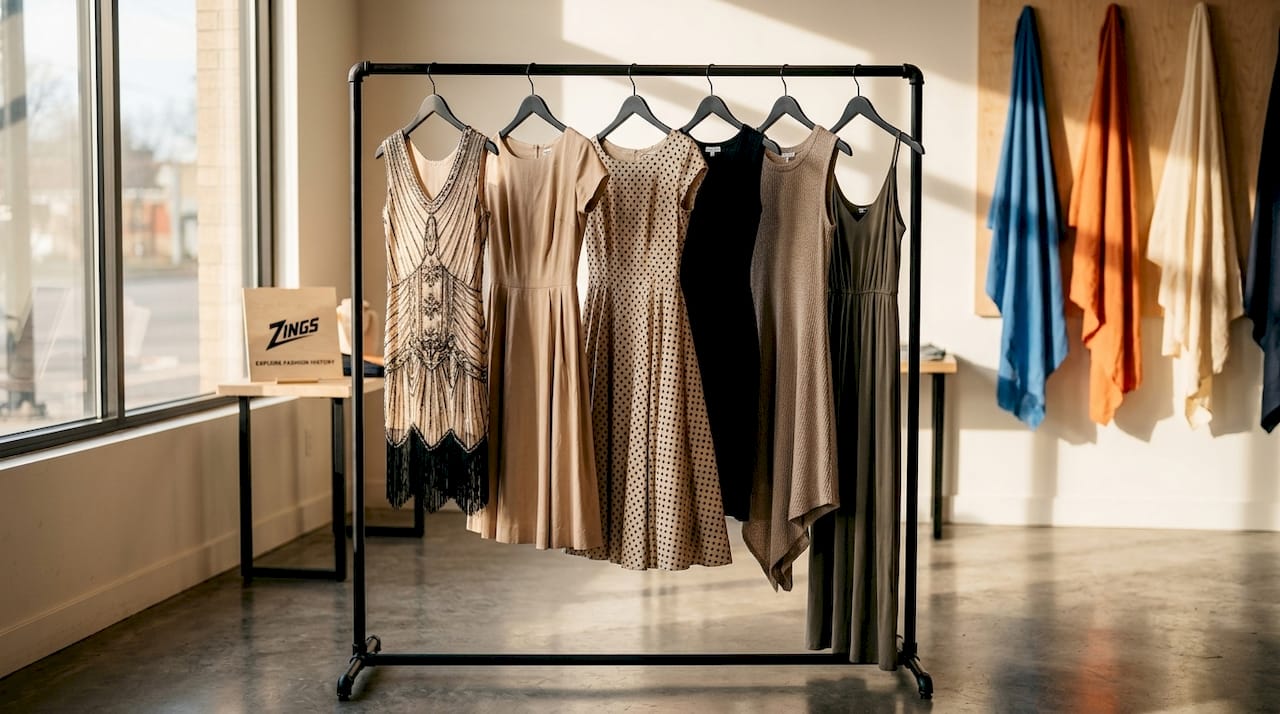
The hemline is the clearest example of the cycle in action. Short flapper dresses defined the 1920s, then hemlines dropped to conservative mid-calf lengths through the 1950s, then shot back up with the miniskirt revolution of the 1960s. That is a full oscillation completed in roughly 40 years, with a recognizable peak every 20. Bell-bottoms followed a similar arc: popular in the 1970s, abandoned through the 1980s and 1990s, and revived in the 2010s.
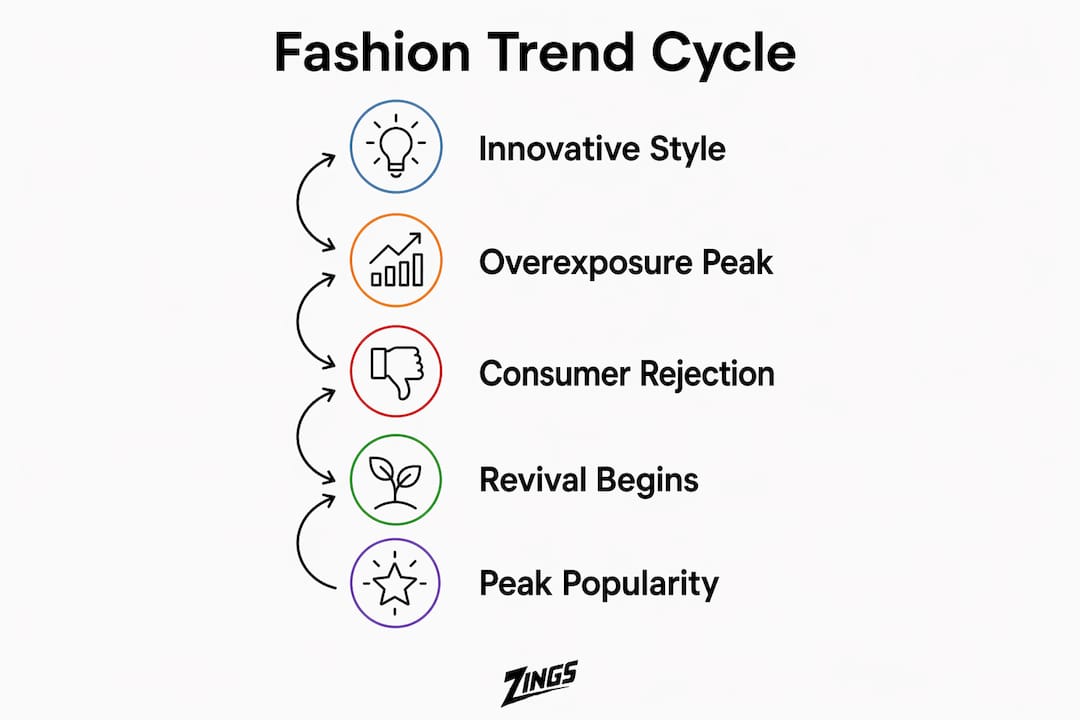
The mathematical model treats fashion as a pendulum. Styles swing toward maximum distinction, become overexposed, then swing back toward conformity before the cycle repeats. Researchers describe this as the market moving away from styles once they become too common, then returning to earlier forms that feel fresh again.
| Decade | Dominant hemline | Cycle position |
|---|---|---|
| 1920s | Short (flapper) | Peak short |
| 1950s | Long (conservative) | Peak long |
| 1960s | Short (miniskirt) | Peak short |
| 1980s | Mixed lengths | Fragmentation begins |
| 2010s | Revival of 1990s styles | Delayed cycle |
Pro Tip: When studying fashion history, track one specific garment feature across decades rather than broad style labels. Hemline data reveals the cycle far more clearly than vague categories like “casual” or “formal.”
What psychological forces drive trend repetition?
The psychological engine behind fashion repetition is a concept called optimal distinctiveness. Developed in social psychology, it describes the human need to be simultaneously unique and accepted. Consumers want to wear something different enough to stand out but familiar enough that others recognize it as stylish rather than strange. This tension is the core reason trends do not diverge infinitely into chaos.
Designers operate within this constraint whether they acknowledge it or not. A silhouette that is too radical fails commercially because it triggers discomfort rather than desire. A silhouette that is too familiar feels dated. The sweet spot sits at the edge of recognition, which is exactly where revived trends land. A Y2K low-rise jean in 2023 feels new to a 20-year-old who never wore it the first time, while remaining legible as “fashion” to everyone else.
Several psychological mechanisms reinforce this cycle:
- Generational novelty. Every 20 years, a new generation encounters styles from the era before their conscious memory. Those styles feel genuinely new to them while carrying cultural weight for older consumers.
- Emotional comfort. Familiar silhouettes reduce cognitive friction. Shoppers process and accept them faster than truly alien designs.
- Social signaling. Wearing a revived trend signals cultural literacy. It says you understand fashion history, not just current catalogs.
- Designer risk management. Revisiting proven silhouettes reduces commercial risk while still allowing surface-level innovation through fabric, color, and proportion.
Pro Tip: When you spot a trend being labeled “retro” or “vintage-inspired,” check whether it is approximately 20 years old. If it is, the cycle is likely driving the revival rather than random editorial choice.
What role does nostalgia play in repeating fashion trends?
Nostalgia is a documented force in consumer behavior, and its impact on fashion is especially strong during periods of economic or geopolitical uncertainty. When the present feels unstable, consumers and brands alike gravitate toward the aesthetic language of a period that felt safer or simpler. This is not sentimental weakness. It is a rational response to risk, and it has measurable effects on purchasing decisions.
Alice Crossley, a trend analyst cited by Vogue, notes that nostalgia leads brands to romanticize past designs and lean on proven strategies. The result is a commercial environment where retro revivals cluster during downturns. The 2008 financial crisis accelerated 1980s and 1990s revivals. Post-2020 uncertainty fueled the Y2K resurgence that dominated 2022 and 2023 runways.
Cultural influences on fashion extend beyond individual emotion. Shared generational memory creates collective demand. When a significant portion of a consumer base shares a formative experience tied to a specific aesthetic, that aesthetic carries social currency. The 1970s revival of recent years is not just about wide-leg trousers. It connects to broader cultural conversations about that decade’s politics, music, and social movements.
The impact of vintage styles also operates at the brand level. Labels like Gucci, Versace, and Levi’s regularly mine their own archives to produce collections that feel simultaneously heritage and current. This strategy works because it comforts consumers while giving designers a structured creative framework. The risk, as Vogue notes, is over-reliance on nostalgia at the expense of genuine forward movement.
How has trend acceleration changed the fashion cycle?
The classic 20-year cycle became harder to track starting in the 1980s, and the reason is measurable. Skirt length variance increased dramatically as short, floor-length, and midi styles began coexisting simultaneously rather than taking turns as dominant forms. A single dominant trend gave way to multiple concurrent niches, each with its own internal logic and consumer base.
| Fashion era | Cycle clarity | Dominant pattern |
|---|---|---|
| 1869 to 1980 | High | Single dominant trend per decade |
| 1980 to 2000 | Moderate | Two or three competing trends |
| 2000 to present | Low | Multiple simultaneous niches |
Fast fashion brands like Zara and H&M compressed the trend lifecycle from years to months by the early 2000s. Social media platforms, particularly Instagram and TikTok, compressed it further. A micro-trend can now rise and fall within a single season, making the 20-year cycle feel invisible against the noise of weekly drops and viral moments.
Acceleration does not abolish the underlying cycle. It transforms it into overlapping systems. The broad oscillation between fitted and relaxed silhouettes, or between maximalism and minimalism, still follows longer rhythms. What changes is the surface texture. Dozens of micro-trends run simultaneously on top of the deeper wave, making it harder to see the pattern without quantitative tools. This is precisely why the Northwestern University research matters. It cuts through surface noise by tracking structural garment attributes numerically rather than relying on editorial labels.
How to apply trend cycle knowledge in practice
Understanding how trends evolve gives fashion students and enthusiasts a concrete analytical tool. Recognizing the cycle is not just academic. It has direct applications for wardrobe decisions, academic research, and industry forecasting. Here is how to put it to work:
- Track structural features, not style names. Measure hemline position, shoulder width, and waist placement in garments across decades. These quantifiable attributes reveal cycles that broad labels like “boho” or “minimalist” obscure.
- Look for the 20-year marker. When a style is described as a revival, identify its original peak decade. If it peaked around 2005, expect serious runway attention around 2025. The math supports this prediction.
- Distinguish repetition from exact replication. Designers modify recurring silhouettes through fabric, proportion, and styling to feel new while retaining familiarity. A 1970s flare jean returns in 2025 with a higher rise and a different fabric weight. Spotting these modifications is the skill that separates trend literacy from trend following.
- Use nostalgia as a signal, not a trend itself. When cultural anxiety is high, nostalgic revivals accelerate. Tracking news cycles and economic indicators alongside fashion calendars gives you a more complete picture of why specific eras resurface when they do.
- Apply cycle awareness to wardrobe curation. Investing in pieces at the beginning of a revival cycle, rather than at its peak, gives you maximum wear before saturation sets in. Understanding seasonal collections through this lens helps you buy smarter and build a wardrobe with longer relevance.
If you want to go deeper on identifying upcoming trends before they peak, the practical guide on spotting fashion trends for casual and affordable clothing covers the signals worth watching.
Key takeaways
Fashion repeats trends because the tension between novelty and familiarity creates a measurable 20-year oscillation in garment features, confirmed by 150 years of quantitative data.
| Point | Details |
|---|---|
| The 20-year cycle is real | Northwestern University data from 37,000 garments confirms repeating waves in hemlines, necklines, and waistlines. |
| Psychology drives repetition | Optimal distinctiveness theory explains why consumers need trends that are new enough to signal individuality but familiar enough to feel wearable. |
| Nostalgia amplifies cycles | Economic and cultural uncertainty pushes consumers and brands toward proven past aesthetics, clustering revivals during unstable periods. |
| Acceleration complicates the cycle | Since the 1980s, faster trend velocity and simultaneous style niches make the 20-year wave harder to see but do not eliminate it. |
| Track features, not labels | Measuring structural garment attributes like hemline position reveals cycles that broad style categories conceal. |
What the cycle actually teaches us about creativity
I have spent years watching fashion commentary treat trend repetition as evidence of creative bankruptcy. The argument goes: if designers keep returning to the 1970s or the 1990s, they have run out of ideas. I think that reading is wrong, and the data backs me up.
The Northwestern University research shows that fashion’s oscillation is a property of human innovation systems in general, not a failure specific to clothing. Music, architecture, and product design follow similar patterns. The cycle is not a symptom of exhaustion. It is the structure within which creativity operates.
What I find genuinely interesting is how much variation exists within each revival. The Y2K trend that dominated recent seasons is not a photocopy of 2003. The proportions shifted, the fabrics changed, and the styling context is entirely different. Recognizing that distinction is what separates someone who understands fashion from someone who just wears it.
The nostalgia piece is where I think most commentary goes wrong. Nostalgia is not weakness. It is a signal about what a culture needs at a specific moment. When you see a 1970s revival, you are not just seeing wide-leg trousers. You are seeing a collective reach for a period associated with a particular kind of cultural confidence. That is worth paying attention to.
Understanding these cycles also changes how I think about building a wardrobe. Buying at the beginning of a revival rather than its peak is not just financially smart. It is a form of cultural literacy. You can refresh your wardrobe with pieces that will carry relevance for years rather than months, if you know where the cycle is pointing.
— TONY
Explore trend-informed style at Zings365

Zings365 carries apparel that reflects exactly the kind of cyclical thinking this article covers. The satin-lined beanie (use code DEAL for 40% off) is a modern take on a classic cold-weather staple that has cycled through fashion for decades. The British casual shirt draws on heritage check patterns that have returned to prominence in multiple trend cycles since the 1970s. Both pieces sit at the intersection of nostalgia and current relevance, which is exactly where the 20-year cycle places its best opportunities. Browse the full catalog at Zings365 to find pieces built for long-term style rather than single-season wear.
FAQ
Why do fashion trends repeat every 20 years?
Fashion trends repeat on a roughly 20-year cycle because each new generation encounters styles from before their conscious memory, making those styles feel genuinely novel. Research from Northwestern University confirms this pattern through mathematical analysis of over 37,000 garments spanning 150 years.
What is optimal distinctiveness in fashion?
Optimal distinctiveness is a psychological theory explaining that consumers want trends that are different enough to signal individuality but familiar enough to remain socially acceptable. This balance prevents trends from diverging infinitely and pulls them back toward recognizable forms, driving cyclical repetition.
How does nostalgia influence fashion trend cycles?
Nostalgia increases in influence during periods of economic or cultural uncertainty, pushing consumers and brands toward familiar past aesthetics. Trend analysts note that brands lean on proven retro designs as a risk-reduction strategy during unstable periods, which clusters revivals around downturns.
Has social media broken the 20-year fashion cycle?
Social media has accelerated the surface velocity of trends without eliminating the deeper 20-year oscillation. Micro-trends now rise and fall within months, but structural shifts in silhouette, proportion, and garment features still follow longer rhythmic patterns confirmed by quantitative research.
How can students track fashion cycles accurately?
Students should measure specific garment attributes like hemline position, shoulder width, and waistline placement across decades rather than relying on broad style labels. Northwestern University researchers used this numerical approach to detect cycles even within the fragmented, multi-niche fashion environment of recent decades.
