

TL;DR:
- A structured clothing selection workflow uses AI style analysis, trend data, and pruning to create personalized outfits efficiently. It involves building a style profile, filtering by seasonal trends, pruning the shortlist, and refining recommendations through feedback. This method helps shoppers reduce decision fatigue and develop a repeatable, trend-aware dressing process.
A trendy clothing selection workflow is a systematic process that helps you identify, evaluate, and choose fashionable apparel efficiently using AI-driven style analysis, trend data, and outfit assembly techniques. Most online shoppers waste time scrolling through hundreds of items without a clear method. The structured approach covered here replaces that habit with a 6-step ranked outfit system that captures your style profile, maps it to real products, and refines results through feedback. Tools like FashionCLIP and AI shopping agents now make this kind of apparel curation workflow accessible to anyone, not just professional stylists. By the end of this guide, you will have a repeatable fashion selection process that saves time and produces outfits you will actually wear.
What are the essential steps in a trendy clothing selection workflow?
The most effective trendy clothing selection workflow follows six defined steps, moving from style input to ranked, personalized outfit results. Each step builds on the last, so skipping one reduces the quality of your final selections.
Step 1: Build your style profile. Upload reference images, mood board photos, or drag-and-drop style examples into an AI shopping tool. The system reads color, silhouette, and texture signals from those inputs to create a personal taste vector.
Step 2: Map your profile to product attributes. The tool translates your taste vector into searchable product attributes such as slim fit, earth tones, or relaxed silhouette. This step converts abstract style preferences into a concrete product filter.
Step 3: Generate ranked outfit directions. Good tools produce multiple ranked outfit categories, typically labeled Classic, Trendy, and Bold. Each category presents a different interpretation of your profile, giving you real choices rather than a single suggestion.
Step 4: Review outfit candidates. Browse the ranked grid and evaluate each outfit for fit, occasion, and budget. This is where you apply practical filters that the AI cannot apply on your behalf.
Step 5: Collect your feedback. Like, dislike, or edit individual items within each outfit. Every action you take feeds data back into the system. Feedback loops build taste vectors that grow more accurate with each session.
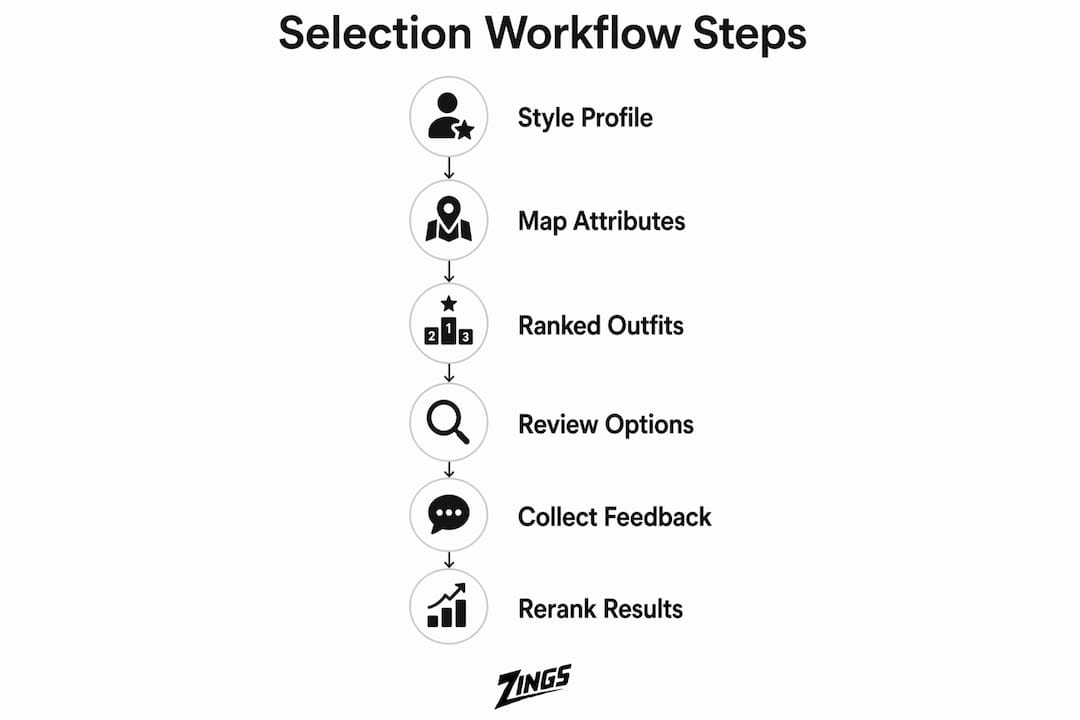
Step 6: Rerank based on feedback. The tool updates its recommendations using your input. Without this step, suggestions stay generic. With it, the system learns your actual preferences over time.
Pro Tip: Start with at least five reference images from different sources, such as Pinterest, Instagram, and brand lookbooks. More varied inputs produce a richer style profile and better ranked results from the start.
This six-step method is the foundation of any efficient how-to-select-trendy-clothes approach. Every other technique in this article layers on top of it.
How do google search trends inform your fashion selection process?
Google Search trend data is the most accessible top-of-funnel filter for seasonal clothing selection. It tells you which silhouettes and styles are gaining real consumer attention before you spend time evaluating individual products.
Seasonal trend surfacing works best as a first input. You use it to define your silhouette and material focus, then let personal fit and budget narrow the field from there. Treating trend data as a final validator instead of an opening filter wastes the signal entirely.
The numbers make the case clearly. Search interest in capri pants rose +180% in search volume heading into summer 2026. That spike means capri silhouettes belong in your candidate set before you evaluate color, brand, or price. Ignoring that signal means you are curating against the current moment.
Here are the trend categories worth tracking for a strong clothing trend analysis:
- Silhouette trends: Capri pants, knee-length skirts, and wide-leg trousers are all showing sustained search growth in 2026.
- Pattern trends: Polka dots and retro prints are at decade-high search interest, making them low-risk additions to a trend-forward wardrobe.
- Footwear and comfort: Walkable footwear searches are rising sharply, signaling that comfort-forward styling is not a passing moment.
- Nostalgia-driven styles: Retro references from the 1990s and early 2000s are consistently surfacing across Google Search categories.
The practical move is to check Google Trends once per season, note the top three rising silhouettes, and use those as your candidate set filters before you open any shopping site. That single habit cuts browsing time significantly. For a deeper look at how seasonal signals translate to real outfit choices, the Zings365 guide on seasonal collections in fashion is worth reading alongside your trend research.
What merchandising techniques reduce decision fatigue during selection?
Fashion merchandisers use a practice called line review and assortment planning to cut their product offerings before presenting a final collection. You can apply the same logic to your personal shopping shortlist.
The core idea is pruning. Brands remove 20–30% of candidate styles before finalizing their assortment. That pruning step eliminates near-duplicate items and forces a focus on cohesion. When you apply this to your own shortlist, you stop evaluating ten similar black tees and commit to the one that fits your outfit direction best.
Pro Tip: After building your initial shortlist, group items by attribute family: silhouettes in one column, colors in another, and occasion in a third. Then cut the bottom third of each group. What remains is a tighter, more coherent set of candidates.
The table below shows how a merchandising mindset differs from a typical consumer approach:
| Approach | Consumer Default | Merchandising Method |
|---|---|---|
| Shortlist size | 30–50 items | 10–15 items after pruning |
| Selection focus | Individual trendy pieces | Cohesive multi-item outfits |
| Decision driver | Novelty and price | Occasion fit and silhouette cohesion |
| Outcome | Orphaned items, low wear rate | Versatile outfits with high use frequency |
Building shortlists by attribute families ensures trendy pieces fit into versatile outfits rather than sitting unworn in your closet. A slightly less trendy item that completes an outfit delivers more style value than an isolated statement piece with nothing to pair it with. Style inventory management, at its core, is about maximizing the number of outfits you can build from the items you already own or plan to buy.
Which outfit recommendation types convert single items into full outfits?
Outfit recommendation modes differ in purpose, and using the wrong one for your intent creates friction rather than clarity. Knowing which mode to use speeds up your trendy outfit planning considerably.
Here is how each type works and when to use it:
- Style With: Shows items that pair well with a product you are already viewing. Use this when you have one anchor piece and need to build around it. This is the most common mode and works well for casual outfit assembly.
- Complete the Look: Presents a pre-built outfit using the item as a starting point. Use this when you want a fast, low-effort outfit decision. It works best for occasion-specific shopping like a work event or weekend trip.
- Shop the Look: Lets you buy every item in an editorial or influencer photo. Use this when you see a full outfit you love and want to replicate it exactly. It requires a well-stocked catalog to work properly.
- Bundle: Groups items at a combined price point. Use this when budget is a primary filter. Bundles often reflect the retailer’s own trend curation, so they can double as a shortcut for trend-aligned selections.
Confusion in outfit selection most often comes from mismatched recommendation modes and shopper intent. If you are using a “Shop the Look” feature but the catalog only has two of the five items shown, the experience breaks down. Matching the mode to your actual intent, and the catalog’s actual depth, removes that friction entirely.
Metrics like outfit attach rate and average order value show that curated multi-item selections outperform single-item browsing for both shopper satisfaction and purchase completion. That finding applies to your personal workflow too. Selecting full outfits rather than individual pieces produces a more satisfying result and reduces the chance of buying something that has nothing to pair with.
For practical examples of how these outfit modes play out in real casual looks, the Zings365 resource on trendy outfits for casual occasions shows the concept in action across different style directions.
Key takeaways
A structured trendy clothing selection workflow, built on style profiling, trend data, pruning, and feedback loops, produces better outfit results than open-ended browsing.
| Point | Details |
|---|---|
| Start with a style profile | Upload reference images to generate a personal taste vector before browsing any products. |
| Use trend data as a filter | Check Google Trends each season and use top silhouettes to define your candidate set first. |
| Prune your shortlist early | Cut 20–30% of candidates by attribute family to reduce fatigue and improve outfit cohesion. |
| Match recommendation mode to intent | Choose Style With, Complete the Look, or Shop the Look based on how much of the outfit you already have. |
| Build feedback into every session | Rate or edit outfit suggestions so the AI refines your taste vector with each use. |
Why i think most online shoppers are one step away from getting this right
I have spent years watching people approach online fashion shopping the same way: open a site, search a vague term, scroll for twenty minutes, and close the tab without buying anything. The frustration is real, but the fix is closer than most people realize.
The part that surprises people most is how much the feedback loop changes things. Most shoppers treat a recommendation engine as a static tool. They browse, maybe buy, and move on. But AI taste vectors only get useful after you engage with them deliberately. A few sessions of rating outfits, rejecting items that do not fit your life, and editing suggestions produces a system that genuinely reflects your preferences. That is not a small improvement. It changes the entire experience.
The pruning step is the other piece most people skip. Keeping a shortlist of 40 items feels thorough. It is actually paralyzing. Cutting it to 12 focused candidates, organized by occasion and silhouette, makes the final decision feel obvious rather than exhausting. I have seen this work for shoppers across every budget and style direction.
The one thing I would push back on is the idea that trendiness should drive every decision. Classic silhouettes paired with one or two seasonal trend pieces produce outfits you will wear repeatedly. Chasing every trend spike produces a closet full of items that felt exciting for a week. The workflow described here keeps you trend-aware without making trend-chasing the goal. That balance is where real style lives.
If you want a practical starting point for spotting which trends are worth your attention, the Zings365 guide on how to spot fashion trends breaks it down without the noise.
— TONY
Shop trend-ready apparel at Zings365
Zings365 carries a broad catalog of casual and fashionable clothing built for exactly the kind of workflow described above. Every category, from new arrivals to seasonal collections, is updated regularly so your selections stay current without extra research on your part.

Right now, the Fashion Stretchy Satin Lined Beanie is available with 40% off using code DEAL. For men building a trend-forward casual wardrobe, the Men’s Casual Jacket and the Fall British Casual Shirt are strong anchor pieces that pair well across multiple outfit directions. Browse the full catalog at Zings365 to find pieces that fit your style profile and seasonal shortlist.
FAQ
What is a clothing selection workflow?
A clothing selection workflow is a structured process for identifying, evaluating, and choosing apparel using style profiling, trend data, and outfit assembly steps. It replaces open-ended browsing with a ranked, repeatable method.
How do i use google trends for fashion selection?
Check Google Trends once per season and note the top three rising silhouettes or patterns. Use those as your candidate set filters before opening any shopping site or applying budget and fit criteria.
What is the best way to reduce decision fatigue when shopping for clothes?
Prune your shortlist early by cutting 20–30% of candidates and grouping remaining items by silhouette, color, and occasion. A tighter list of 10–15 items produces faster, more confident decisions than a list of 40.
How does AI improve outfit recommendations over time?
AI shopping tools build personal taste vectors from your feedback. The more you rate, edit, or reject suggestions, the more accurately the system reflects your actual preferences across future sessions.
What is the difference between “style with” and “complete the look”?
“Style With” shows items that pair with a single anchor piece you are viewing, while “Complete the Look” presents a pre-built full outfit starting from that piece. Use “Style With” when you want control, and “Complete the Look” when you want speed.
