

TL;DR:
- Mixing and matching clothes involves combining versatile wardrobe pieces to maximize outfit options without additional purchases. Using foundational principles like the 60-30-10 color rule, limiting textures, and applying the 3x3 formula simplifies daily dressing and enhances wardrobe efficiency. Digital tools and intentional curation ensure a streamlined, budget-friendly wardrobe that reflects personal style and reduces decision fatigue.
Mixing and matching clothes is the practice of combining different garments and accessories from your existing wardrobe to create multiple cohesive outfits without buying anything new. Most people own far more wearable combinations than they realize. The problem is not the wardrobe. It is the absence of a system. With the right principles, including color theory, proportion rules, and outfit formulas like the 3x3 method, you can dress well every day in under three minutes and get significantly more value from every piece you already own.
How to mix and match clothes using foundational principles
Color is the first variable to control. The 60-30-10 color rule structures any outfit around 60% base color, 30% secondary color, and 10% accent. This ratio prevents visual chaos and gives your eye a clear path through the look. Neutral bases like white, black, navy, and camel anchor the outfit, while the secondary and accent layers introduce personality.
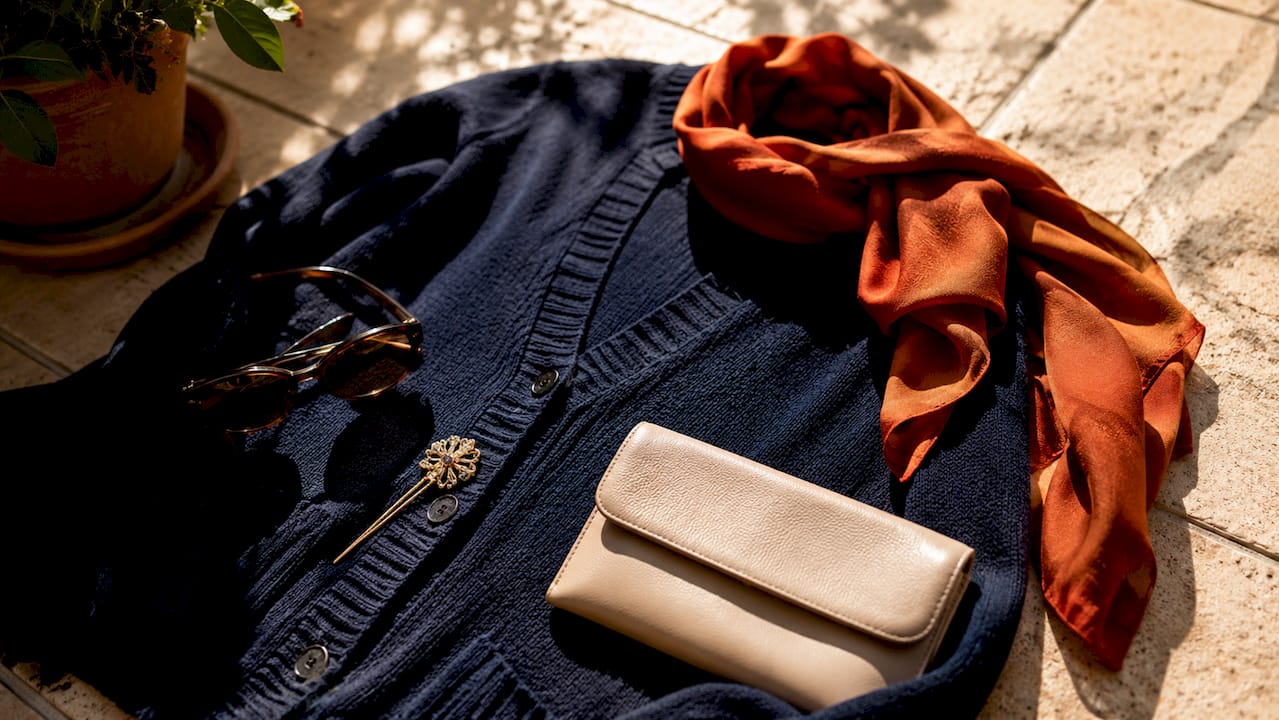
Texture is the second lever. Limiting textures to 2-3 per outfit keeps the look intentional rather than accidental. Pairing a cotton tee with a structured blazer and leather sneakers works because each texture is distinct but not competing. Mixing a chunky knit, a velvet trouser, and a satin blouse in one outfit, by contrast, creates visual noise.
Proportion is the third principle, and it is the one most beginners skip. Balance fitted and loose items to maintain a readable silhouette. A relaxed wide-leg trouser pairs cleanly with a fitted shirt. An oversized hoodie works with slim-cut jeans. The goal is contrast, not uniformity.
Strict matching is outdated in modern styling. Stylists now advise connecting pieces through shared visual themes like tone, texture, or pattern family rather than forcing exact color matches. A rust-toned shirt does not need rust-toned shoes. It needs something that lives in the same warm color universe, such as tan, terracotta, or olive.
- Neutrals first: Build your outfit around one neutral anchor piece before adding color.
- Analogous colors: Colors adjacent on the color wheel (blue and green, orange and yellow) always read as intentional.
- Complementary contrast: Opposite colors (navy and mustard, burgundy and forest green) create bold, high-impact combinations.
- Pattern mixing: When combining patterns, vary the scale. A large plaid with a small stripe works. Two medium-scale patterns compete.
Pro Tip: Half-tucking a shirt or swapping a belt changes the entire mood of an outfit without touching any other piece. These small moves cost nothing and reset a look completely.
What is the 3x3 formula and how does it work?
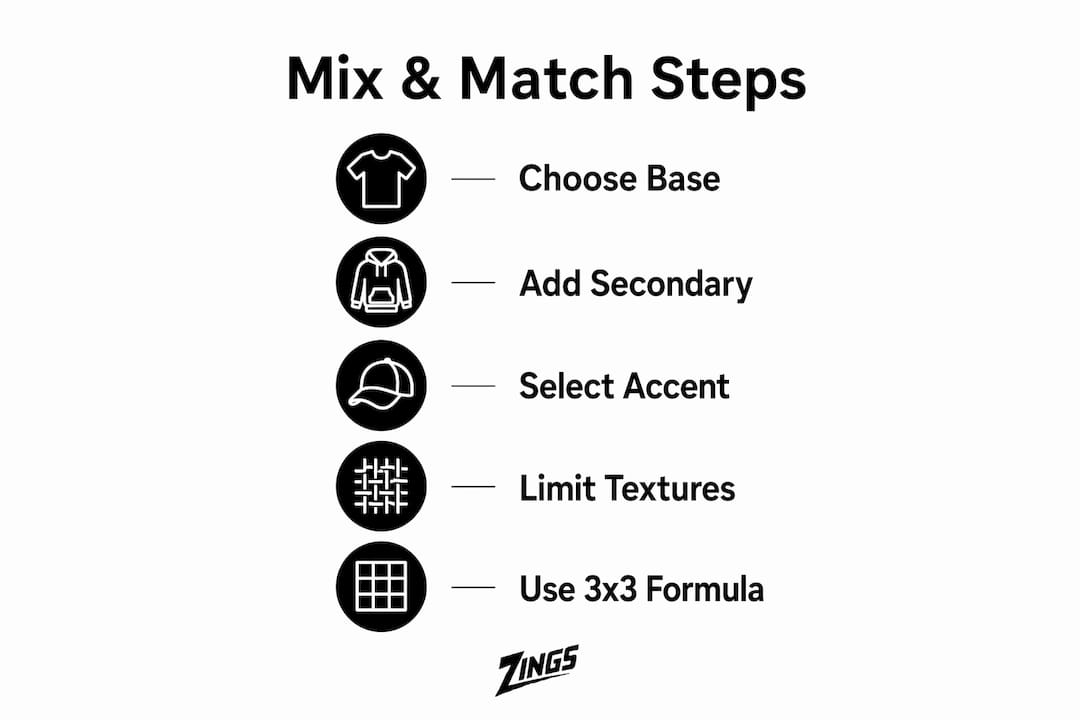
The 3x3 formula is a practical outfit system built on 6 interchangeable items: 3 tops and 3 bottoms that all work together. From those six pieces, you get nine distinct outfits. Add two layers (a jacket and a cardigan) and two accessory sets, and that number climbs past twenty without buying a single new item.
Here is how to build your own 3x3 set:
- Choose 3 tops that share a color family or neutral base. A white tee, a navy button-down, and a gray long-sleeve work together because they all anchor to neutrals.
- Choose 3 bottoms that pair with all three tops. Black jeans, khaki chinos, and dark denim cover casual, smart-casual, and semi-formal without overlap.
- Test every combination. Lay them out physically or photograph them. If one pairing fails, swap that piece for something more versatile.
- Add layers. A structured blazer or a zip-up hoodie extends every combination into a new context.
- Rotate accessories. A satin-lined beanie, a canvas tote, or a leather belt shifts the tone of the same outfit from casual to put-together.
| Step | Action | Outcome |
|---|---|---|
| Select 3 tops | Neutrals or shared color family | All tops pair with all bottoms |
| Select 3 bottoms | Versatile cuts in neutral tones | 9 base outfit combinations |
| Add 2 layers | Jacket, cardigan, or hoodie | Doubles usable combinations |
| Add accessories | Belts, hats, bags | Shifts outfit mood and context |
| Test combinations | Photograph or lay flat | Confirms all pairings work |
The efficiency gain is real. Outfit formulas cut decision time from 17 minutes to under 3 minutes per morning. That translates to roughly 100 hours reclaimed per year, which is time most people did not know they were losing.
Pro Tip: Photograph your best 3x3 combinations and save them in a phone album. On rushed mornings, you are not deciding. You are selecting from a pre-approved list.
The formula works because it removes randomness. Decision fatigue costs the average adult 104 hours yearly in outfit uncertainty. A formula replaces that uncertainty with a repeatable system, and repeatable systems produce consistent results.
What digital tools help you organize and pair outfits?
Digital wardrobe tools solve a problem that physical closets create: you cannot see everything at once. Apps like Twelve70 and INDYX catalog your pieces visually, suggest combinations, and reveal pairings you would never discover by staring into a closet. The act of photographing and uploading each item forces you to audit what you actually own.
Visualizing garments digitally consistently uncovers forgotten pieces and new combinations. Most users report discovering at least a dozen outfit options they had overlooked. That is not a wardrobe problem. That is an organization problem with a simple fix.
Practical organization tactics that work alongside digital tools:
- Color-sort your closet. Grouping by color rather than category makes it easier to spot what pairs naturally.
- Create outfit routines. Assign specific combinations to specific contexts (work, weekend, evening) so you are not rebuilding decisions from scratch each time.
- Tag versatile pieces. In any wardrobe app, mark items that pair with five or more other pieces. These are your workhorses.
- Audit quarterly. Remove pieces that have not been worn in 90 days. They are creating visual noise, not options.
Pro Tip: Before buying any new piece, open your wardrobe app and check how many items it pairs with. If the answer is fewer than three, skip it.
Understanding your body shape and lifestyle matters more than any app feature. A tool that shows you combinations you would never wear in real life adds no value. Set your lifestyle filters first, then let the tool work within those parameters.
How to mix and match clothes on a budget
Budget-conscious dressing is not about buying less. It is about buying smarter. Tim Gunn’s principle of focusing on the “right 20” wardrobe items is the most practical budget framework in fashion. Twenty versatile, well-fitting pieces that all work together outperform a closet of sixty items with no coherent system.
The core of a budget mix-and-match wardrobe is versatility per dollar. A plain white tee at $15 that pairs with seven bottoms delivers more value than a $60 printed shirt that works with two. When you shop with pairing potential as the primary filter, your cost-per-outfit drops significantly.
Specific strategies for building a mix-and-match wardrobe on a budget:
- Thrift first for basics. White tees, denim, and neutral chinos are abundant in thrift stores and cost a fraction of retail. Quality varies, so check seams and fabric weight before buying.
- Shop seasonal sales for investment pieces. Structured jackets, quality denim, and leather accessories hold up over years. Buying them at end-of-season discounts cuts cost without cutting quality.
- Use layering to refresh looks. A flannel shirt worn open over a tee, a scarf added to a plain outfit, or a button-down shirt layered under a hoodie creates a new look from existing pieces.
- Prioritize fit over brand. A well-fitting $20 shirt reads better than an ill-fitting $100 one. Tailoring basics costs less than buying premium.
For a deeper look at shopping trendy clothing affordably, Zings365 covers the exact filters to apply when building a functional wardrobe without overspending. The men’s style checklist on Zings365 also maps out the specific 20 pieces worth prioritizing.
Curating a wardrobe around essentials rather than trends reduces both financial stress and decision fatigue. Trends cycle. A navy blazer, white Oxford shirt, and well-cut dark jeans do not.
Why curation beats quantity every time
Most people approach their wardrobe like a collection rather than a toolkit. The result is a closet full of individual pieces that do not talk to each other. I have seen this pattern repeatedly: someone owns 80 items and feels like they have nothing to wear, while someone else owns 30 and looks put-together every day.
The difference is intentional curation. When I started applying the 3x3 formula to my own wardrobe, the first thing I noticed was how many pieces I owned that paired with almost nothing else. They were interesting on their own but useless in a system. Removing them did not reduce my options. It increased them, because the remaining pieces worked together.
The biggest beginner mistake is buying statement pieces before building a neutral foundation. A bold printed jacket is exciting in the store. At home, it pairs with two things and sits unworn. Neutrals first, personality second. That sequence is the difference between a wardrobe that works and one that just looks full.
Fit and comfort are non-negotiable. Style rules are secondary to fit. An outfit formula built on clothes that do not fit your body or your lifestyle will not get worn, regardless of how technically correct it is. The best wardrobe is the one you actually reach for.
Experimentation within a system is where personal style develops. Once your neutral foundation is solid, add one personality piece per season. Test it against your existing combinations. If it earns its place, keep it. If it does not pair with at least three other items, it does not belong in the rotation.
— TONY
Build your mix-and-match wardrobe with Zings365

Zings365 carries the kind of versatile, everyday pieces that form the backbone of a mix-and-match wardrobe. The Fashion Stretchy Satin Lined Beanie is a standout accessory that works across casual and smart-casual combinations. Use code DEAL to get 40% off. For men building a foundational shirt collection, the casual long-sleeve polo covers all seasons and pairs cleanly with dark denim, chinos, or joggers. Zings365 updates its catalog regularly with new arrivals designed for exactly the kind of versatile, budget-friendly dressing this guide covers.
FAQ
What does it mean to mix and match clothes?
Mixing and matching clothes means combining different tops, bottoms, layers, and accessories from your wardrobe to create multiple outfits from fewer pieces. The goal is maximum outfit variety from a minimal, curated set of versatile items.
How many pieces do you need to mix and match effectively?
The 3x3 formula shows that 6 core pieces (3 tops and 3 bottoms) generate 9 distinct outfits. Adding 2 layers and a few accessories pushes that number past 20 combinations without buying anything new.
What is the easiest color rule for pairing outfits?
The 60-30-10 rule is the most practical starting point: 60% base color, 30% secondary color, and 10% accent. Keeping the base neutral (black, white, navy, gray) makes every combination easier to execute.
Do patterns and textures mix well together?
Yes, when you vary the scale and limit the count. Combine a large-scale pattern with a small-scale one, and keep textures to 2-3 per outfit. Mixing a chunky knit with smooth denim and a leather accessory works because each texture is distinct without competing.
How do I stop wasting time choosing outfits every morning?
Build a pre-approved combination list using the 3x3 formula and photograph your best pairings. Outfit formulas reduce morning decision time from 17 minutes to under 3 minutes, saving roughly 100 hours per year.
Key takeaways
Mastering how to mix and match clothes requires a neutral foundation, a repeatable formula like the 3x3 method, and a curated set of versatile pieces rather than a large, disconnected wardrobe.
| Point | Details |
|---|---|
| Use the 60-30-10 color rule | Assign 60% base, 30% secondary, and 10% accent to every outfit for instant visual harmony. |
| Apply the 3x3 formula | Six interchangeable pieces generate nine outfits; layers and accessories multiply that further. |
| Limit textures per outfit | Keep to 2-3 textures per look to maintain intentional contrast without visual noise. |
| Curate, do not accumulate | Tim Gunn’s “right 20” principle outperforms a large wardrobe with no coherent system. |
| Use digital wardrobe tools | Apps like Twelve70 and INDYX reveal overlooked combinations and reduce daily decision fatigue. |
