

TL;DR:
- Knowing how to shop seasonal collections helps build a versatile wardrobe while avoiding overspending. Timing sales and planning purchases around key windows allows buyers to maximize discounts efficiently. Following simple rules like the 3-outfit filter and proper storage extends the value of off-season buys.
Knowing how to shop seasonal collections is the single most effective way to update your wardrobe without overspending. Seasonal collections are time-targeted fashion assortments released by retailers each spring, summer, fall, and winter to reflect current trends and weather needs. The industry term for this practice is “seasonal buying,” and it follows a predictable calendar that smart shoppers use to their advantage. Students and young professionals who master this calendar can access high-quality pieces at a fraction of their original price while keeping their style current all year.
How to find the best seasonal deals throughout the year
Timing is the most underrated skill in seasonal shopping. Shopping out of season can yield savings between 30% and 80%, depending on the item and the retailer. That range means a $120 winter coat could cost you as little as $24 if you buy it at the right moment.
The key is knowing which months align with which categories:
- Winter coats and heavy knitwear: Buy in february and march, when retailers clear winter stock for spring arrivals.
- Swimwear and summer dresses: Buy in august and september, after peak summer demand drops.
- Back-to-school basics (jeans, tees, casual shirts): Buy in late august through early september when retailers run clearance before fall drops.
- Outerwear and transitional layers: Buy in november, right before Black Friday, when pre-sale markdowns appear.
Major shopping windows include late january, Memorial Day weekend, late august, and Black Friday through mid-december. Each window targets a specific category, so spreading your budget across these dates beats shopping in one big haul.
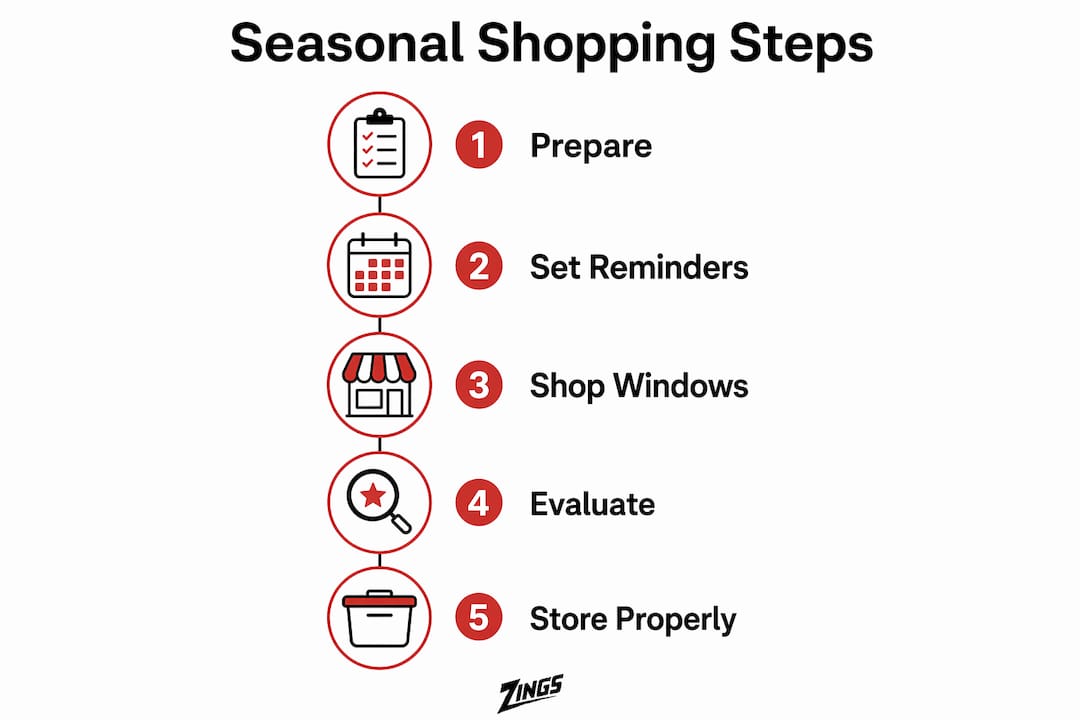
Pro Tip: Set calendar reminders two weeks before each major shopping window. Retailers often drop early markdowns before the official sale date, and those first-wave prices have the widest selection.

Patience is the real strategy here. Preparation over impulse buying consistently delivers better results for shoppers who plan their purchases in advance rather than reacting to flash sales.
How to plan before you shop seasonal collections
Planning separates buyers who build great wardrobes from those who accumulate clutter. The first step is a wardrobe audit. Open your closet and identify genuine gaps: missing a versatile mid-layer? Short on casual shirts for work-from-home days? Write these down before you browse anything.
A structured approach makes this concrete:
- Audit your wardrobe gaps. List the three to five categories you actually need, not just want.
- Set a refresh budget. Decide your total spend before you see a single sale banner.
- Apply the 90-day rule. The 90-day rule means waiting three months after you first notice an item before buying it. This filter eliminates most impulse purchases.
- Decode brand style codes. Many retailers label items with codes like “S126,” which signals Spring, first drop, 2026. Decoding style codes lets you search a site’s catalog for upcoming sale items before markdowns appear on the main navigation.
- Plan for versatility. Every item on your list should work across at least two seasons or three different outfit combinations.
| Planning method | Best for | Key benefit |
|---|---|---|
| Wardrobe audit | All shoppers | Identifies real gaps vs. wants |
| 90-day rule | Impulse buyers | Cuts unplanned spending |
| Style code search | Deal hunters | Finds markdowns before public launch |
| Budget-first approach | Students, tight budgets | Prevents overspending during sales |
| Versatility checklist | Young professionals | Maximizes cost-per-wear value |
Pre-ordering through brand stylists is another tactic worth knowing. Pre-ordering seasonal items through a brand’s stylist contact can secure lower prices before sales open to the public. This works best for mid-range and higher-end retailers, but the principle applies broadly: building a relationship with a brand’s customer service team often surfaces early access.
How to choose the right pieces from a seasonal collection
Selecting the right items is where most shoppers lose money. The 3-outfit rule is the most reliable filter: only buy a sale item if it pairs well with at least three pieces you already own. If you cannot mentally build three outfits with it right now, skip it.
Here is how to apply this in practice:
- Test before you buy. Pull up your phone and scroll through your wardrobe photos. Can you see three combinations? If not, the item stays on the rack.
- Prioritize timeless basics over trend pieces. A well-cut casual shirt or a neutral mid-layer will outlast three seasons of trend items. Versatile, timeless pieces deliver more value per dollar than fast-fashion trend buys.
- Check the seasonal role of each item. Does it fill a genuine wardrobe function, or does it duplicate something you already have?
- Think about transition seasons. Items that work in both fall and spring, like lightweight jackets and layering cardigans, give you more wear per purchase.
- Read the fabric label. Natural fibers like cotton and wool hold up better across multiple seasons than synthetic blends.
Pro Tip: After buying off-season items, store them properly right away. Vacuum-sealed bags with cedar blocks prevent insect damage and odors, keeping garments wearable when their season returns. For closet organization ideas that protect your purchases, resources like closet storage guides offer practical solutions for every space.
Learning how to mix and match your existing pieces with new seasonal buys also extends the value of every purchase. The goal is a wardrobe where everything connects, not a collection of isolated statement pieces.
Common mistakes to avoid when shopping seasonal collections
Even experienced shoppers fall into predictable traps. Knowing these mistakes in advance saves both money and frustration.
- Falling for scarcity tactics. Retailers use “limited edition” tags and countdown timers to create urgency. These tactics manufacture pressure. Pause, apply the 3-outfit rule, and buy only if the item genuinely fits your wardrobe.
- Chasing quick-fade trends. A neon color or an exaggerated silhouette that dominates one season rarely survives the next. Spend your budget on pieces with staying power.
- Skipping the second markdown wave. Early sale waves offer wider selection, but later waves offer deeper discounts. Split your budget: use part early for must-have basics, and hold the rest for the second wave.
- Buying duplicates. Without a wardrobe audit, it is easy to buy a third navy crewneck when you needed a lightweight jacket. Track your purchases in a notes app or spreadsheet.
- Ignoring your actual lifestyle. A formal blazer at 70% off is still a waste if you work remotely and never dress up. Buy for the life you live, not the one you imagine.
Thoughtful buying beats reactive buying every time. The best seasonal shoppers treat each purchase as a decision, not a reaction. They ask: does this fill a real gap, or does it just feel good right now? That one question eliminates most regrettable purchases.
Keeping a simple purchase log also prevents the “I already have that” problem. A quick photo or note after each buy takes ten seconds and saves real money over a full shopping season.
Key Takeaways
Mastering seasonal shopping requires timing, planning, and a clear selection filter to build a stylish wardrobe without overspending.
| Point | Details |
|---|---|
| Buy off-season for maximum savings | Off-season purchases can save between 30% and 80% on key items. |
| Use the 90-day rule to cut impulse buys | Waiting three months before purchasing filters out non-essential items. |
| Apply the 3-outfit rule before buying | Only buy a piece if it pairs with at least three items you already own. |
| Plan around major shopping windows | Late january, Memorial Day, late august, and Black Friday offer the deepest discounts. |
| Store off-season purchases properly | Vacuum-sealed bags with cedar blocks protect garments until their season returns. |
What I have learned from years of seasonal shopping
Seasonal shopping rewards patience more than speed. The shoppers I have watched build genuinely great wardrobes on tight budgets share one habit: they treat the off-season period as their real shopping season. They buy winter coats in march, not november. They pick up summer pieces in september, not june. That single shift in timing changes everything.
The 3-outfit rule sounds simple, but most people skip it in the moment. I have seen buyers walk away from genuinely good deals because the item only matched one or two things they owned. That discipline is exactly right. A piece that only works in one context is not a wardrobe asset. It is a storage problem.
For students and young professionals specifically, the budget-first approach matters more than any trend calendar. Decide your number before you open a single sale page. Sales are designed to expand your spending, not contain it. Your budget is the only tool that works against that pressure.
The sustainability angle is real too. Buying fewer, better pieces at the right price point produces less waste than chasing every trend drop. A wardrobe refresh built around versatile basics lasts longer and costs less per wear than a closet full of trend pieces that expire in one season.
— TONY
Seasonal style from Zings365
Zings365 updates its seasonal collections regularly, with new arrivals across menswear and womenswear that fit the versatile, budget-friendly criteria this guide covers.

For men building a fall wardrobe, the men’s casual jacket is a strong mid-season layer that works across multiple outfit combinations. The women’s wool coat is a timeless cold-weather piece that passes the 3-outfit rule easily. Both items represent the kind of versatile, season-spanning purchases this guide recommends. Browse Zings365’s full seasonal catalog to find pieces that fill real wardrobe gaps at prices that make sense for your budget.
FAQ
What does “shopping seasonal collections” mean?
Shopping seasonal collections means buying fashion items tied to a specific season, such as spring or fall, often at discounted prices during end-of-season sales. Retailers release new collections each season and mark down older stock to clear inventory.
When is the best time to shop seasonal collections?
The best times are late january for winter clearance, late august for summer clearance, and Black Friday through mid-december for broad discounts. Buying off-season can save between 30% and 80% on key items.
What is the 3-outfit rule in seasonal shopping?
The 3-outfit rule means you only buy a sale item if you can pair it with at least three pieces you already own. If you cannot build three outfits with it immediately, skip the purchase.
How do I avoid impulse buying during seasonal sales?
Apply the 90-day rule: wait three months after first noticing an item before buying it. This waiting period filters out most non-essential purchases driven by sale pressure.
How should I store off-season purchases?
Use vacuum-sealed bags with cedar blocks or dryer sheets to prevent insect damage and odors. Proper storage keeps off-season garments wearable when their season returns.
