

TL;DR:
- Affordable fashion now dominates the market by offering stylish, quality clothing at low prices for everyday wardrobes. Building a versatile wardrobe with mass-market basics, secondhand finds, and intentional styling maximizes value and minimizes waste. Proper fit, accessories, and a strategic approach to trend pieces significantly elevate the appearance of budget-friendly clothing.
Affordable fashion is defined as clothing that balances low cost, style, and quality to deliver practical everyday wardrobe options for budget-conscious shoppers. Value-based clothing brands now exceed 40% of global retail fashion growth, which signals that budget-friendly clothing is no longer a compromise. It is the dominant direction of the market. The types of affordable fashion available today span mass-market basics from Uniqlo and H&M, secondhand platforms like ThredUp and Poshmark, direct-to-consumer brands, capsule wardrobe strategies, and selective fast fashion shopping. Each approach offers a different balance of price, quality, and style for men and women building everyday wardrobes.
1. types of affordable fashion: mass-market basics
Mass-market retail is the most accessible entry point into budget-friendly clothing. Brands like H&M, Zara, and Uniqlo produce high volumes of clothing, which drives down the cost per unit and passes savings directly to shoppers. Crewneck tees at these retailers start at $5–$10 with reasonable fabric durability, making them reliable everyday staples.
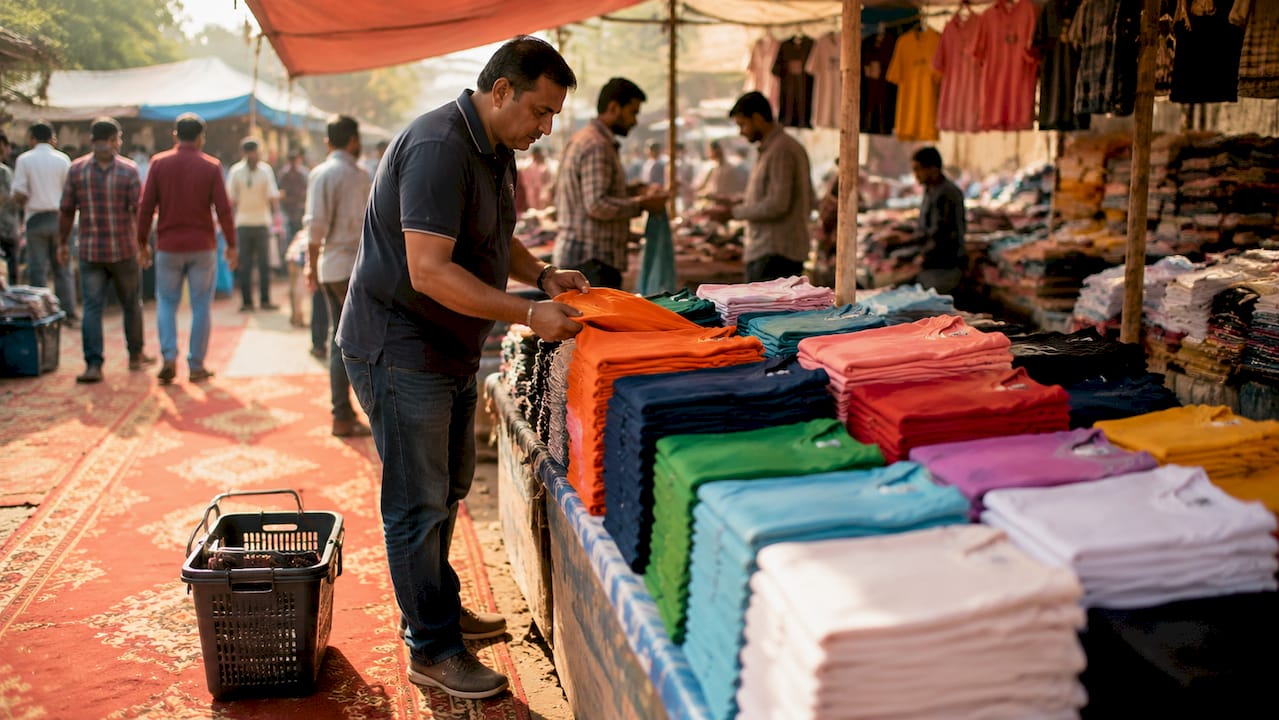
The core strength of mass-market fashion is consistency. You get standardized sizing, predictable fabric weights, and a wide range of colors across basics like denim, casual shirts, and crewneck tees. These items form the backbone of most everyday wardrobes for both men and women.
Key items worth prioritizing at mass-market retailers:
- Crewneck and V-neck tees in neutral colors (white, gray, navy, black)
- Straight-leg or slim-fit denim in mid-wash or dark wash
- Casual button-down shirts in cotton or cotton-blend fabrics
- Lightweight jackets for layering across seasons
- Basic chinos or trousers in neutral tones
Walmart and Kohl’s also offer basics starting at $5 with solid variety and quality for everyday wear. That price point makes it realistic to build a full week of outfits without exceeding a modest monthly clothing budget.
Pro Tip: When shopping mass-market basics, prioritize 100% cotton or cotton-blend fabrics over polyester-heavy blends. Cotton holds its shape longer and looks less worn after repeated washing, which matters when you are buying at volume.
2. thrift and secondhand fashion: quality finds at low prices
Secondhand shopping is one of the most effective low-cost fashion ideas available today. Platforms like ThredUp, Poshmark, and Facebook Marketplace give you access to designer labels and quality garments at a fraction of their original retail price. A $200 blazer from a recognized brand can appear on ThredUp for $18.
The circular economy model behind secondhand fashion also reduces environmental waste. Sustainability experts endorse secondhand shopping and garment repair as the most effective way to maintain style while cutting both cost and environmental impact. That combination makes thrifting one of the smartest moves for fashion-conscious shoppers.
Trendy thrift shop finds require a consistent approach. Here is what works:
- Search by brand or fabric type on ThredUp and Poshmark rather than browsing by category. You find better quality faster.
- Check Facebook Marketplace for local sellers. Local pickups eliminate shipping costs and let you inspect items before buying.
- Look for natural fabrics. Wool, cotton, and linen hold up better than synthetics in secondhand condition.
- Inspect seams, zippers, and collar edges before purchasing. These areas show wear first.
- Buy slightly oversized and tailor down. A $6 thrifted blazer altered for $15 still beats a $90 retail equivalent.
For guidance on choosing fabrics that last, the clothing material guide at Zings365 breaks down which materials perform best for everyday wear.
Pro Tip: Set up saved searches on ThredUp and Poshmark for specific brands in your size. New listings appear daily, and the best pieces sell within hours. Alerts give you first access.
3. direct-to-consumer brands: premium style at lower markups
Direct-to-consumer (DTC) fashion is the industry term for brands that sell directly to shoppers without wholesale or retail middlemen. DTC brands offer premium materials and quiet luxury aesthetics at a fraction of traditional luxury prices by cutting out those distribution layers. The result is better fabric quality at a price point that competes with mid-tier mass-market options.
Bridge brands occupy a similar space. They sit between mass-market and luxury pricing, offering better construction and materials than H&M while staying well below designer price tags. Think of brands like Everlane or Banana Republic Factory as examples of this tier.
The table below shows how these tiers compare on key factors:
| Factor | Mass-Market (H&M, Zara) | DTC / Bridge Brands | Traditional Luxury |
|---|---|---|---|
| Price range (basics) | $5–$30 | $30–$100 | $200+ |
| Fabric quality | Standard | Above average | Premium |
| Style aesthetic | Trend-driven | Minimal, timeless | Exclusive |
| Markup structure | High retail markup | Low to moderate | Very high |
| Longevity | 1–2 seasons | 3–5 years | 5+ years |
The average observer now struggles to distinguish between an $80 DTC basic and a $2,000 designer equivalent. That shift in perception means you can dress at a high aesthetic level without the price tag.
Pro Tip: When shopping DTC brands, focus on their core items rather than seasonal pieces. Core items are where they invest in the best materials and construction. Seasonal pieces often use lower-grade fabrics to hit trend cycles quickly.
4. capsule wardrobes: maximum outfits, minimum spend
A capsule wardrobe is a curated set of versatile clothing pieces that mix and match to create multiple outfits. A 12-piece capsule wardrobe combining thrifted items, discount basics, and secondhand finds can be assembled for under $100. That figure includes enough pieces to cover a full week of casual and semi-casual outfits.
The capsule approach works because it forces intentional buying. Every piece must work with at least three other items in the wardrobe. That constraint eliminates impulse purchases and reduces the total number of items you need to look consistently put-together.
Here is a practical 12-piece capsule framework for under $100:
- Two white or light gray crewneck tees (thrift or Walmart, $5 each)
- One navy or black V-neck tee (mass-market, $8)
- One pair of dark-wash slim jeans (thrift, $12)
- One pair of chinos in khaki or olive (clearance, $15)
- One casual button-down shirt in a neutral check or solid (thrift or DTC sale, $10)
- One lightweight zip-up hoodie (mass-market, $18)
- One versatile casual jacket (thrift or clearance, $15)
- One pair of clean white sneakers (already owned or $12 budget)
That totals under $100 and generates over 20 distinct outfit combinations. The cost-per-wear metric makes this math clear. A $15 thrifted jacket worn 60 times costs $0.25 per wear. A $10 fast fashion jacket worn 8 times before it falls apart costs $1.25 per wear. Durability is the real savings driver.
For a deeper breakdown of how to build a men’s everyday wardrobe on a budget, Zings365 has a full checklist worth reviewing.
Pro Tip: Stick to a three-color palette across your capsule. Repeating the same three colors in different combinations creates outfits that look intentional and coordinated, not random. Navy, white, and olive is a reliable starting point for both men and women.
5. fast fashion: how to shop trends without the waste
Fast fashion delivers the latest trends at the lowest prices, but it carries real trade-offs. Fast fashion items have a high cost-per-wear because rapid wear and tear forces frequent replacement. A $12 trend piece that lasts one season costs more per wear than a $40 basic that lasts three years.
The smart approach is not to avoid fast fashion entirely. It is to use it selectively. Trendy pieces that are seasonal by nature, like a printed summer shirt or a statement jacket, are reasonable fast fashion purchases. Core wardrobe items like jeans, tees, and outerwear are not.
Practical rules for shopping fast fashion without overspending:
- Buy trend pieces only when they complement existing wardrobe items. If a new piece works with fewer than three things you already own, skip it.
- Set a per-item price ceiling for trend buys. A $15 limit per trend piece keeps impulse spending controlled.
- Avoid buying multiples of the same trend. One statement piece per trend cycle is enough.
- Check fabric content before buying. Even at fast fashion prices, 100% cotton outperforms polyester blends in longevity.
- Prioritize fit over trend. A well-fitting $10 shirt looks better than a poorly fitting $50 one.
For more on avoiding the common traps of trend shopping, the Zings365 guide on shopping trendy clothing wisely covers the key decision points in detail.
6. accessories and finishing pieces: low cost, high impact
Accessories are the most cost-effective category in affordable fashion. A single well-chosen accessory can shift the entire tone of an outfit. A clean cap, a structured belt, or a simple beanie can take a $15 outfit and make it look considered and complete.
The return on investment for accessories is higher than for clothing because they are not subject to the same fit constraints. One size fits most, and they rarely wear out as quickly as garments. Budget shoppers consistently underinvest in accessories and overspend on clothing pieces that do less visual work.
Jewelry is another high-impact, low-cost category. A minimal chain necklace or simple stud earrings add a finished quality to casual outfits without requiring significant spend. The jewelry styling guide from USA Jewels covers how to match accessories to casual and everyday outfits across different styles and budgets.
The key rule for budget accessory shopping is restraint. Two or three well-chosen pieces per outfit outperform a collection of mismatched items. Quality over quantity applies here more than anywhere else in the wardrobe.
7. styling affordable clothes: fit is the real differentiator
The single most important factor in making budget clothing look premium is fit. Proper fit and tailoring elevate the perceived value of inexpensive clothes more than any other variable. A $10 shirt that fits well looks better than a $60 shirt that does not.
Basic tailoring alterations cost between $10 and $25 at most local tailors. Hemming trousers, taking in a shirt at the sides, or shortening jacket sleeves are all simple jobs. Simple alterations can transform inexpensive clothing to appear custom-made, which dramatically changes how the piece reads in an outfit.
Fashion expert Shagufta Haq identifies minimalism and neutral colors as the most reliable approach to looking expensive on a budget. Neutral tones are forgiving, easy to combine, and never look dated. That advice holds across every category of affordable fashion, from mass-market basics to thrifted finds.
The rule of three in color coordination reinforces this point. Repeating one color across three elements of an outfit, such as navy in your jeans, your watch strap, and your bag, creates visual cohesion that reads as intentional styling. It costs nothing to apply and works at every price point.
Key takeaways
The most effective approach to affordable fashion combines mass-market basics, secondhand finds, and deliberate styling to maximize style output per dollar spent.
| Point | Details |
|---|---|
| Mass-market basics anchor the wardrobe | H&M, Uniqlo, and Walmart offer tees and shirts from $5 with reliable quality for everyday wear. |
| Secondhand platforms multiply your budget | ThredUp and Poshmark give access to quality and designer pieces at a fraction of retail price. |
| Capsule wardrobes cut cost-per-wear | A 12-piece wardrobe under $100 generates 20+ outfit combinations when built around neutral basics. |
| Fit matters more than price | A $10 tailored shirt outperforms a $60 ill-fitting one in every style context. |
| Accessories deliver the highest return | One well-chosen accessory shifts an entire outfit’s tone at minimal cost. |
Why affordable fashion rewards the disciplined shopper
I have spent years watching people overspend on clothing and still feel like they have nothing to wear. The problem is almost never budget size. It is buying without a system.
The shoppers who look consistently well-dressed on limited budgets share one habit: they buy less and choose more carefully. They know their color palette. They check fit before they check price. They use thrift platforms regularly and treat tailoring as a standard part of the process, not an extra expense.
What I find most interesting about the current market is how much the DTC and secondhand sectors have shifted the value equation. You no longer need to spend $200 on a blazer to get one that looks like it costs $200. That shift rewards the shopper who does the research and penalizes the one who buys on impulse at full retail.
My practical advice: build your wardrobe in layers. Start with five to seven neutral basics from mass-market or discount retail. Add two or three quality secondhand pieces in better fabrics. Then use fast fashion or trend pieces sparingly to keep the wardrobe current. That structure gives you style flexibility without the financial waste that comes from buying everything new and at full price.
The affordable fashion outlook for 2026 at Zings365 covers how the market is shifting and where the best value opportunities are right now.
— TONY
Build your affordable wardrobe with Zings365
Zings365 carries a full range of casual and everyday pieces built for budget-conscious shoppers who do not want to sacrifice style. Whether you are filling out a capsule wardrobe or adding a standout piece to an existing collection, the catalog covers both men’s and women’s options at accessible prices.

Right now, the Fashion Stretchy Satin Lined Beanie is available with 40% off using code DEAL. It is the kind of finishing piece that completes a casual outfit without adding cost. For men building out everyday basics, the Men’s Casual Jacket and the casual British-style shirt are strong additions at their current price points. Browse the full collection at Zings365 to find pieces that fit your wardrobe strategy and budget.
FAQ
What is affordable fashion?
Affordable fashion is clothing that balances low cost, style, and quality for everyday wear. Value-based brands now represent over 40% of global retail fashion growth, confirming it as the market’s dominant segment.
Which affordable fashion brands are best for basics?
H&M, Uniqlo, and Zara are the most consistent mass-market options for basics, with crewneck tees starting at $5–$10. Walmart and Kohl’s offer comparable basics at similar price points with strong size variety.
How do i build a stylish cheap outfit on a budget?
Start with neutral basics from mass-market retail, add one or two thrifted quality pieces, and apply the rule of three for color coordination. A 12-piece capsule wardrobe built this way can cost under $100 and generate over 20 outfit combinations.
Is secondhand shopping worth it for everyday clothing?
Yes. Platforms like ThredUp and Poshmark offer designer and quality garments at a fraction of retail price. Buying secondhand and repairing garments when needed is also the most sustainable approach to building an affordable wardrobe.
Does tailoring make affordable clothes look more expensive?
Tailoring is the single most effective way to elevate budget clothing. Simple alterations like hemming trousers or taking in a shirt cost $10–$25 and can make a $10 garment look custom-made.
