

TL;DR:
- Affordability in fashion influences consumer choices by shifting focus from upfront price to long-term value. Most shoppers now use cost-per-wear analysis and flexible payments to stretch their budgets and buy higher-quality items. Market shifts include growth in value fashion in India and accessible luxury offerings, all driven by the need for affordable, durable, and sustainable clothing.
Affordability in fashion is defined as the degree to which clothing prices align with what consumers can realistically spend without financial strain. The role of affordability in fashion goes far beyond simple price tags. It shapes which brands grow, which trends spread, and how millions of shoppers build their wardrobes each season. Price sensitivity now cuts across every income bracket, with 44% of consumers identifying price as the single greatest barrier to sustainable consumption. That figure signals a structural shift, not a temporary mood. Understanding how cost shapes style decisions is the first step toward spending smarter and dressing better.
How does affordability influence consumer purchasing behavior in fashion?
Affordability shapes purchasing behavior at every stage of the buying process, from browsing to checkout. Shoppers no longer evaluate clothing purely on upfront price. They apply frameworks, set budgets, and use payment tools to stretch their spending further.
The most significant shift is the rise of cost-per-wear analysis. Cost-per-wear transforms affordability from a sticker price into a long-term value calculation. A $120 jacket worn 60 times costs $2 per wear. A $30 jacket worn 5 times costs $6 per wear. That reframing changes which item is actually the budget-friendly choice.
The numbers back this up. Approximately 7 in 10 adults now use cost-per-wear to manage clothing spending, and 44% plan purchases in advance to avoid impulsive buys. Among 25–34-year-olds, that figure rises to 79%. Younger shoppers are leading a deliberate, value-focused approach to building their wardrobes.
Flexible payment options are accelerating this trend. Buy Now, Pay Later (BNPL) services lower the upfront cost barrier, making it easier to access higher-quality pieces. About 20% of UK consumers use flexible payments for clothing purchases, rising to more than 25% among younger shoppers. BNPL does not make clothing cheaper. It makes the cost manageable, which is a meaningful distinction for budget-conscious consumers.
Key behaviors shaping how affordability affects style today:
- Cost-per-wear calculation: Shoppers divide item price by expected wears to determine true value.
- Purchase planning: 44% of consumers plan buys in advance to reduce impulse spending.
- BNPL adoption: Younger shoppers use flexible payments to access quality pieces without large upfront costs.
- Quality prioritization: 79% of 25–34-year-olds favor durability over low price when evaluating clothing.
Pro Tip: Before buying any item over $50, divide the price by how many times you realistically expect to wear it. If the cost-per-wear exceeds $5, reconsider whether a slightly pricier, more durable option delivers better long-term value.
What are the emerging trends and market shifts driven by affordable fashion?
Affordable fashion is reshaping retail markets at a global scale. The clearest evidence comes from India, where a value-fashion boom is rewriting how millions of shoppers engage with branded clothing.
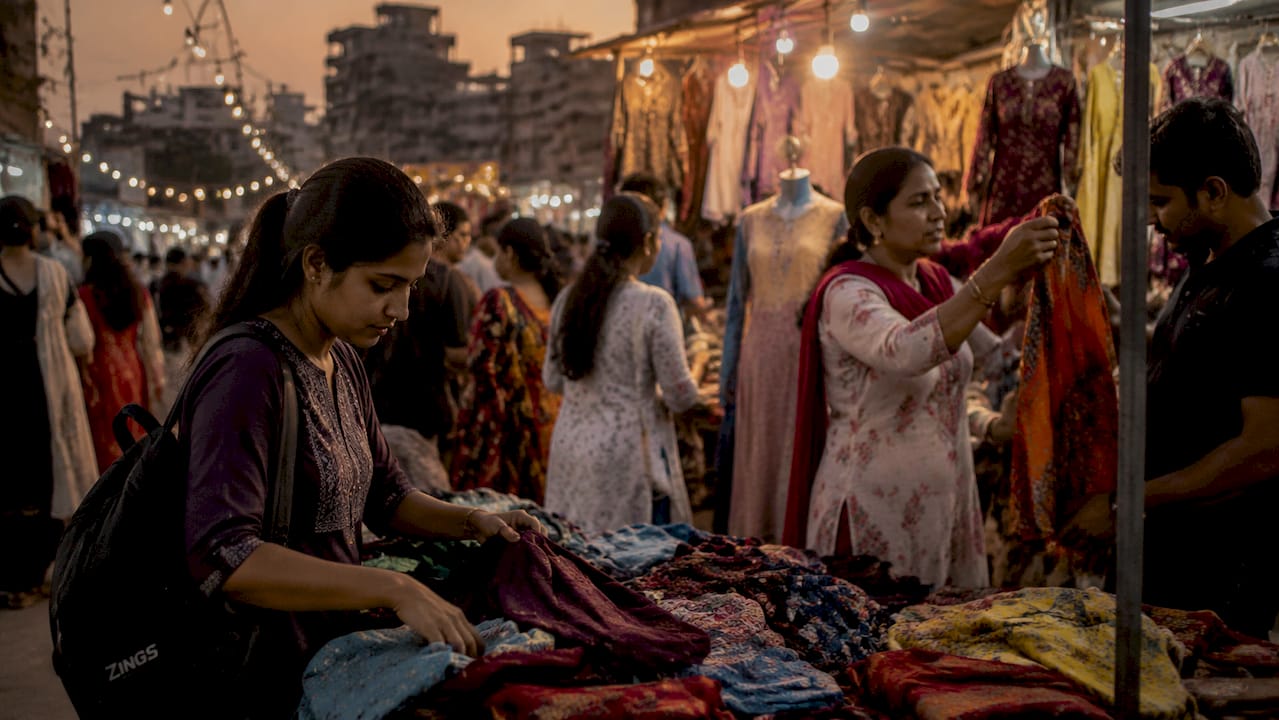
Brands offering contemporary fashion at price points between $4 and $15 are capturing wallet share in tier-2 and tier-3 towns, pulling customers away from unbranded local stores. The Indian value-fashion market is estimated between $70 billion and $100 billion. That scale reflects a fundamental consumer preference: aspiration does not require a luxury price tag.
This shift has a cultural dimension. Shoppers in smaller cities now expect branded quality at accessible prices. The rise of organized, affordable retail in these markets is displacing traditional mom-and-pop stores. It is not just a pricing story. It is a story about who gets access to fashion.
At the premium end, a parallel shift is underway. Luxury market price hikes have created an opening for premium mass-market brands to offer coveted products at accessible price points. Shoppers who once aspired to luxury are finding comparable design and quality at a fraction of the cost. This repositioning is expanding the definition of what “affordable” means across different income segments.
| Market Segment | Price Range | Key Driver |
|---|---|---|
| Indian value fashion | $4–$15 per item | Aspiration at accessible prices |
| Premium mass-market | Mid-range | Luxury price hikes creating openings |
| Global fast fashion | Entry-level | Speed and trend responsiveness |
| Sustainable budget options | Varies | Consumer demand for ethical value |
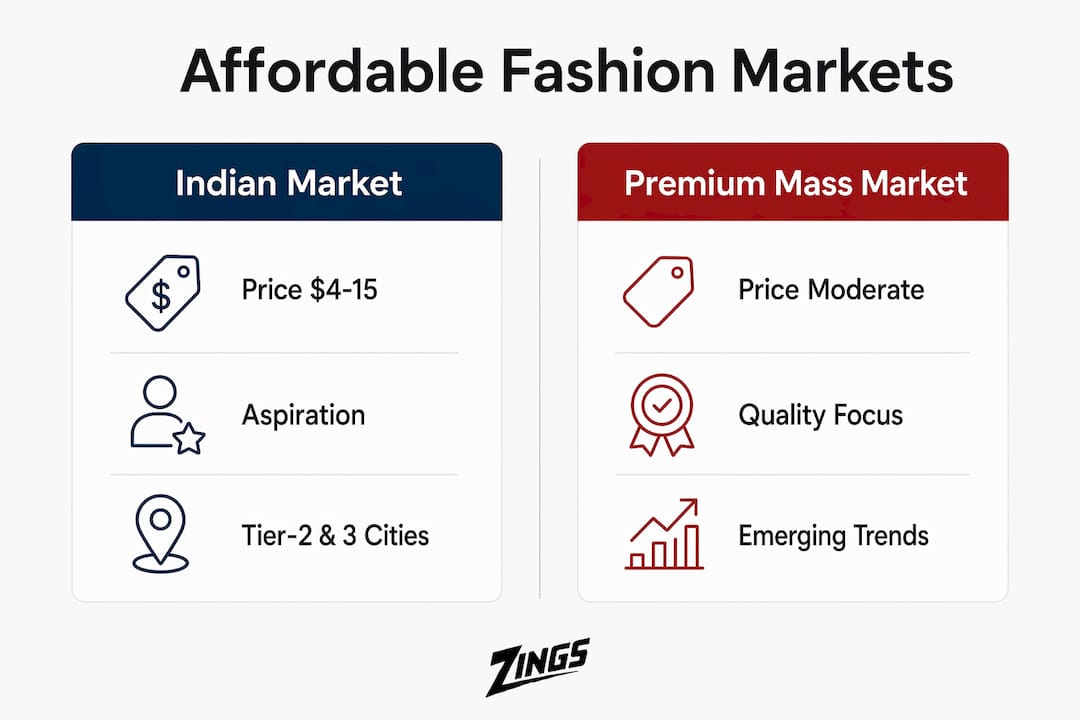
The table above shows how pricing pressure is reshaping every segment of the fashion market simultaneously. No tier is insulated from the importance of affordability in fashion.
How does affordability affect sustainable and ethical fashion adoption?
Price is the primary reason consumers do not buy sustainable clothing. 77% of consumers say they would buy more sustainable items if prices were lower. That is not a niche concern. It reflects a mainstream gap between consumer values and consumer behavior.
The breakdown by generation is telling. 81% of Gen Z and millennials cite price sensitivity as a barrier to sustainable fashion, compared to 70% of Gen X. Younger shoppers care deeply about ethics but face real budget constraints. Sustainable fashion brands that ignore this reality lose the very customers most aligned with their values.
The solution is not to lower quality. It is to reframe the value proposition. Industry experts argue that sustainability must be integrated into the value equation, emphasizing longevity and durability rather than positioning eco-friendly clothing as a luxury add-on. A garment that lasts five years and costs $80 is more affordable than a $20 garment replaced every six months.
“Retailers must stop framing sustainability as a luxury add-on and instead integrate it into the value equation, emphasizing longevity and durability.” — Drapers, Sustainability and the Consumer 2026
Cost-per-wear is the bridge between sustainability and affordability. Showing shoppers cost-per-wear data at the point of sale significantly increases their likelihood of choosing higher-quality, more durable options. That single intervention shifts behavior without requiring a price cut. It reframes the purchase as a financial decision, not just an ethical one.
Practical ways cost-effective fashion choices support sustainability:
- Buy durable staples: A $90 organic cotton shirt worn 100 times costs less per wear than a $15 synthetic alternative worn 10 times.
- Prioritize natural materials: Longer-lasting fabrics reduce replacement frequency and total spending. Learn more about sustainable clothing materials and their long-term value.
- Use cost-per-wear at checkout: Calculate before buying, not after. This single habit reduces both waste and overspending.
- Avoid trend-only purchases: Trend pieces worn once or twice inflate cost-per-wear dramatically.
What practical strategies help consumers make cost-effective fashion choices?
Building a wardrobe that looks good without overspending requires a clear system, not just willpower. The most effective approach combines a capsule wardrobe structure with deliberate buying habits and smart payment tools.
A capsule wardrobe reduces unnecessary spending by focusing on versatile, high-quality staples that work across multiple outfits. The core principle is simple: buy fewer items, but choose pieces that earn their place through repeated use. Pair those staples with a small selection of affordable trend-driven pieces to stay current without committing large sums to styles that fade quickly.
Here is a practical framework for building cost-effective style:
- Audit your current wardrobe. Identify what you actually wear versus what sits unused. Most shoppers discover they wear 20% of their clothing 80% of the time.
- Define your staples. Choose 8–12 versatile pieces in neutral colors: well-fitted trousers, quality shirts, a structured jacket, and reliable denim. These form the foundation of every outfit.
- Set a trend budget. Allocate a fixed monthly amount for trend pieces. Stick to it. Affordable trend items from platforms like Zings365 let you stay current without derailing your overall budget. Browse the 2026 affordable fashion guide for style direction.
- Apply cost-per-wear before every purchase. If an item does not clear your personal cost-per-wear threshold, put it back.
- Use BNPL strategically. Flexible payments work best for quality staples, not trend pieces. Spreading the cost of a $100 shirt over four payments makes a durable investment manageable.
- Shop with a list. Unplanned browsing is the fastest way to overspend. A written list keeps purchases intentional. Check money-saving shopping tips before your next session.
The most common mistake budget-conscious shoppers make is equating low price with true affordability. A $10 shirt that falls apart after three washes is not affordable. It is expensive per wear and wasteful by design.
Pro Tip: Build your capsule wardrobe around two or three neutral colors that mix easily. Every new piece you add should work with at least three items you already own. That rule alone eliminates most impulse purchases.
Key Takeaways
Affordability is the central force shaping fashion choices in 2026, and consumers who apply cost-per-wear thinking, capsule wardrobe principles, and flexible payment tools consistently get more value from every dollar they spend.
| Point | Details |
|---|---|
| Price is the top barrier | 44% of consumers cite price as the greatest obstacle to sustainable fashion adoption. |
| Cost-per-wear reframes value | 79% of 25–34-year-olds use cost-per-wear to prioritize quality over upfront price. |
| Emerging markets are shifting | India’s value-fashion sector is estimated at $70 billion–$100 billion, driven by $4–$15 price points. |
| Sustainability needs repricing | Integrating durability into the value equation makes sustainable fashion accessible without cutting quality. |
| Capsule wardrobes reduce waste | Curating versatile staples with affordable trend pieces cuts overspending and maximizes outfit variety. |
Affordability’s evolving role: a perspective worth considering
The conversation around affordability in fashion has changed significantly over the past decade. When I started paying close attention to how consumers actually shop, the dominant assumption was simple: cheaper is more accessible, and more accessible is better. That framing was always incomplete.
What I observe now is a more sophisticated consumer. Shoppers are not just asking “Can I afford this?” They are asking “Is this worth what I will spend on it over time?” That shift from price to value is the most important development in fashion retail right now. It is not driven by marketing. It is driven by financial pressure and better information.
The brands that will win the next decade are not the ones with the lowest prices. They are the ones that make the value case clearly. That means communicating durability, cost-per-wear, and material quality at the point of sale, not buried in a product description. Shoppers who understand why affordable fashion deserves attention in 2026 are already ahead of the curve.
My honest view: affordability is not a race to the bottom. It is a commitment to giving consumers real value for their money. The brands and shoppers who understand that distinction will build wardrobes and businesses that last.
— TONY
Stylish, affordable menswear at Zings365
Zings365 carries a curated selection of casual and formal menswear built around the value principles covered in this article. Every piece is chosen for versatility, quality, and price points that make cost-per-wear math work in your favor.

The fall British casual shirt is a strong example: a slim-fit, jacquard check design that works across casual and smart-casual settings, priced to serve as a genuine wardrobe staple rather than a one-season throwaway. Zings365 updates its catalog with new arrivals each season, so you can build a capsule wardrobe progressively without large upfront spending. Visit Zings365 to browse the full men’s and women’s collections.
FAQ
What is the role of affordability in fashion?
Affordability in fashion determines which products consumers can access, which trends spread widely, and how brands position themselves across market segments. It is the primary driver of purchasing decisions for the majority of shoppers globally.
How does cost-per-wear help with budget-friendly clothing choices?
Cost-per-wear divides the item price by the number of times you expect to wear it, revealing the true cost of any garment. Research shows that presenting this data at the point of sale increases selection of higher-quality, more durable clothing.
Why is price the biggest barrier to sustainable fashion?
44% of consumers identify price as the greatest obstacle to buying sustainable clothing, with Gen Z and millennials most affected. Sustainable items carry higher upfront costs that many shoppers cannot absorb, even when they support the underlying values.
What is a capsule wardrobe and how does it save money?
A capsule wardrobe is a small collection of versatile, high-quality staples that combine easily to create multiple outfits. It reduces overspending by eliminating redundant purchases and maximizing the use of every item you own.
How does BNPL affect affordable fashion trends?
Buy Now, Pay Later services spread the cost of higher-value purchases across several payments, making quality clothing accessible without large upfront spending. More than 25% of younger shoppers now use flexible payments specifically for clothing purchases.
