

TL;DR:
- Ethical clothing is defined by fair labor conditions, environmental responsibility, and transparent supply chains throughout production. Standards like SA8000:2026 and Materials Matter certify social and material ethics, but verifying claims requires detailed audits and transparency. Prioritizing garment durability and reducing waste offers the most impactful way to support ethical fashion practices.
Ethical clothing is defined as apparel produced with fair labor conditions, environmental responsibility, and full supply chain transparency across every stage of production. What makes clothing ethical goes beyond a single certification or a “made from recycled materials” label. It covers who made the garment, under what conditions, from what raw materials, and how long the piece is designed to last. Standards like SA8000:2026 for labor and Textile Exchange’s Materials Matter Standard now set the benchmark for credible ethical claims. Understanding these frameworks gives you a sharper lens for separating genuine ethical apparel from marketing noise.
What makes clothing ethical: labor rights and SA8000:2026
Labor practices are the foundation of any credible ethical clothing claim. A garment can be made from organic cotton and still be produced in a factory where workers face unsafe conditions, unpaid overtime, or suppressed wages. The distinction matters because ethical versus sustainable fashion are not the same concept. Ethical fashion centers on people and labor rights. Sustainable fashion centers on environmental impact. Both matter, but conflating them leads to incomplete purchasing decisions.
SA8000:2026 is the most widely recognized social certification for decent work in the apparel industry. It protects over 2.8 million workers across multiple countries and industries by setting enforceable standards on nine core areas:
- Child labor: No employment of workers under the minimum legal age
- Forced labor: No coercion, debt bondage, or withheld documents
- Health and safety: Safe working environments with documented risk controls
- Freedom of association: Workers’ right to organize and bargain collectively
- Discrimination: No hiring or firing based on gender, race, religion, or ethnicity
- Disciplinary practices: No physical punishment or verbal abuse
- Working hours: Compliance with legal limits on weekly hours
- Remuneration: Wages that meet or exceed legal minimums and cover basic needs
- Management systems: Ongoing auditing, worker feedback, and continual improvement
The management systems component is what separates SA8000 from simpler audits. SA8000’s continual improvement approach requires certified facilities to engage workers actively and document progress over time, not just pass a one-time inspection. This makes it a living standard rather than a static checkbox.
Pro Tip: When evaluating a brand’s labor ethics, look for SA8000 certification numbers on their website or ask directly for factory audit reports. Vague claims like “ethically made” or “fair trade inspired” without a named certifying body are red flags worth investigating.
What materials define ethical apparel?
Raw material sourcing is the second pillar of ethical clothing practices. Textile Exchange’s Materials Matter Standard sets requirements that span land, water, people, animals, and emissions from the point of raw material extraction through processing. It became effective December 31, 2026, and provides a credible framework for brands making material ethics claims. Understanding sustainable clothing materials helps clarify which fibers carry lower environmental and social costs.

One critical distinction: the Materials Matter Standard covers raw material sourcing and processing, but it does not guarantee ethical labor conditions in the factories where those materials are cut and sewn. A shirt made from certified organic cotton can still be assembled under exploitative conditions. This is why both SA8000 and the Materials Matter Standard are needed together, not as substitutes for each other.
The table below compares common fibers and their key ethical considerations:
| Fiber | Environmental impact | Labor considerations | Ethical notes |
|---|---|---|---|
| Conventional cotton | High water and pesticide use | Often linked to low-wage farm labor | Look for GOTS or Materials Matter certification |
| Organic cotton | Lower chemical use, still water-intensive | Better farm labor oversight | Verify certification scope covers processing |
| Recycled polyester | Reduces plastic waste, still sheds microfibers | Factory conditions vary widely | Pair with SA8000-certified manufacturing |
| Linen (flax) | Low water and pesticide requirements | Generally lower risk, but verify | European Flax certification adds credibility |
| Wool | Land use and animal welfare concerns | Shearing conditions matter | Look for Responsible Wool Standard (RWS) |
| Viscose/Rayon | Linked to deforestation if unverified | Chemical processing risks for workers | FSC-certified or Lenzing ECOVERO preferred |
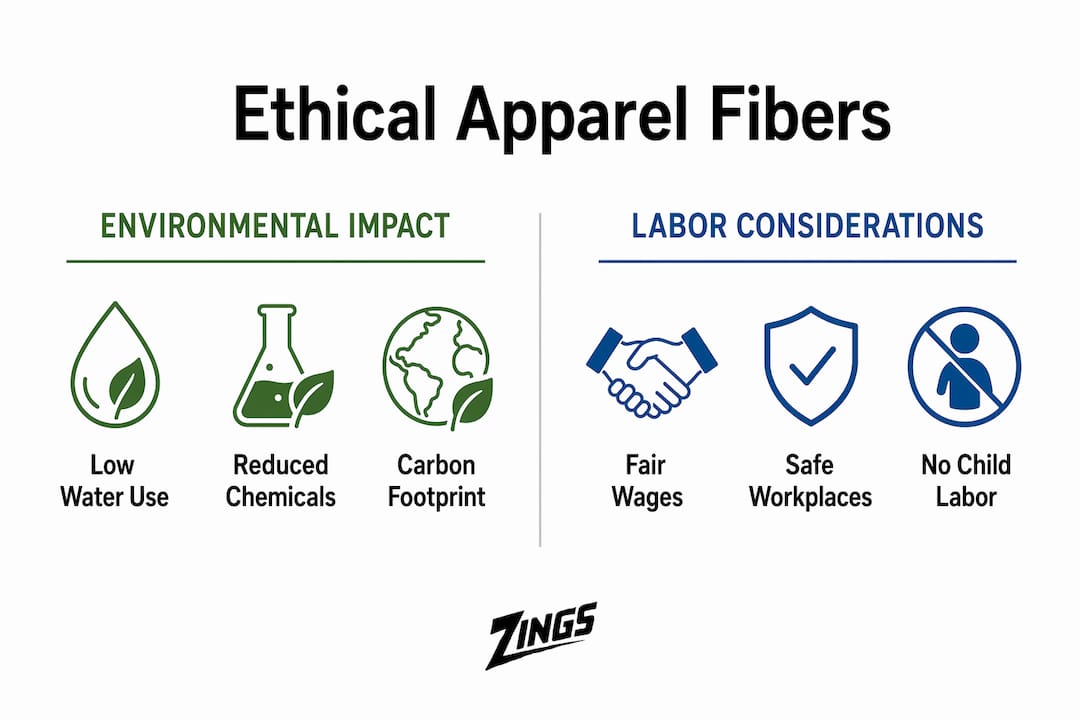
The table shows that no single fiber is automatically ethical. Every material choice carries tradeoffs across climate, nature, people, and animals. The fabric types you choose carry real consequences for both the environment and the workers involved in production.
Environmental impacts beyond materials: waste, durability, and microfibers
Material choice is only one part of the environmental picture. The broader impact of ethical fashion includes how long garments last, how they are washed, and what happens when they are discarded.
Consumers globally discard clothes after just 7 to 10 uses, losing $460 billion in value annually. Textile waste contributes 11% of plastic pollution, and only 8% of textile fibers in 2023 were recycled, with less than 1% coming from textile-to-textile recycling. These numbers reveal that the dominant problem in fashion is not just what clothes are made from. It is how quickly they are thrown away.
Microfiber pollution adds a separate but equally serious dimension. Microfiber pollution originates primarily from textile laundering and manufacturing emissions. Every wash cycle releases synthetic microfibers into waterways, where they accumulate in aquatic ecosystems and enter the food chain. Peer-reviewed research from 2010 through 2024 confirms that solving microfiber pollution requires a systems-level response combining fiber engineering, laundry filtration devices like the Guppyfriend washing bag or Cora Ball, and governance reforms at the industry level. No single intervention is sufficient on its own.
“A consumer’s purchase of high-quality, durable clothing with transparent supply chains is more ethical than focusing solely on fiber type or recycled content.” — National Geographic
Garment durability is the most underrated factor in ethical fashion. Buying fewer, higher-quality pieces and choosing secondhand garments both reduce waste and environmental impact more effectively than swapping one synthetic fiber for another. A well-constructed pair of trousers worn 200 times has a fraction of the environmental cost of a “sustainable” garment discarded after ten wears. Understanding why quality matters in clothing is central to making genuinely ethical choices.
How to choose ethical clothing: a practical checklist
Identifying truly ethical clothing requires asking specific questions rather than accepting surface-level claims. Supply chain transparency and garment longevity are the two factors experts consistently identify as most critical for ethical purchases. Brands that cannot or will not answer direct questions about their supply chains are signaling a problem.
Use this checklist when evaluating any brand or garment:
- Labor certification: Does the brand hold SA8000, Fair Trade, or an equivalent social certification? Can they name the specific factories where garments are made?
- Material sourcing: Are raw materials covered by the Materials Matter Standard, GOTS, Responsible Wool Standard, or another credible scheme?
- Factory transparency: Does the brand publish a supplier list or factory map? Brands like Patagonia and Eileen Fisher do this as standard practice.
- Environmental claims: Are environmental claims specific and verified, or vague phrases like “eco-conscious” and “green”?
- Durability signals: Does the brand offer repair services, warranties, or garment take-back programs? These indicate confidence in product longevity.
- Greenwashing red flags: Watch for recycled content claims without addressing microfiber shedding, or organic fiber claims without addressing factory labor conditions.
Verifying ethical claims requires auditing upstream materials, factory compliance, and lifecycle impacts like durability. No single data point is enough. Brands should provide auditable evidence across all three checkpoints: raw material ethics, social compliance in manufacturing, and garment lifecycle outcomes.
Pro Tip: Avoid buying new clothing during peak promotional periods like Black Friday. The discount pressure encourages volume purchasing that directly contradicts ethical fashion principles. Instead, plan purchases around genuine need and use sales to invest in higher-quality pieces you have already researched.
Key takeaways
Ethical clothing requires verified labor standards, responsible material sourcing, and a commitment to garment durability across the full supply chain.
| Point | Details |
|---|---|
| Labor certification matters | SA8000:2026 protects over 2.8 million workers and sets the benchmark for factory ethics. |
| Materials need their own standard | Textile Exchange’s Materials Matter Standard covers raw material sourcing but not factory labor conditions. |
| Durability outweighs fiber type | Wearing garments longer reduces environmental impact more than switching to recycled or organic fibers alone. |
| Microfibers require system solutions | Laundry filtration, fiber engineering, and policy reform are all needed to address microfiber pollution. |
| Transparency is non-negotiable | Brands that cannot name their factories or certifications cannot credibly claim ethical production. |
Why ethical fashion is harder than it looks
I have spent years reading certifications, brand reports, and supply chain audits, and the honest conclusion is this: ethical fashion is genuinely difficult to get right, and most brands are not there yet. The standards exist. SA8000:2026 is rigorous. The Materials Matter Standard is credible. But certification coverage across the global apparel industry remains thin, and the gap between a brand’s marketing language and its actual supply chain practices is often wide.
What I find most useful is treating ethical fashion as a spectrum rather than a binary. No garment is perfectly ethical. Every production process has tradeoffs. The goal is to move in the right direction: buy less, buy better, ask harder questions, and reward brands that answer them honestly. Patagonia publishes its factory list. Eileen Fisher runs a garment take-back program. These are concrete, auditable commitments, not slogans.
The other thing worth saying plainly: durability is the single highest-leverage choice most consumers can make. Buying one well-made jacket and wearing it for ten years beats buying five “sustainable” jackets in the same period. The environmental math is not close. If you are new to ethical fashion, start there before worrying about fiber certifications.
— TONY
Explore quality-focused men’s clothing at Zings365

Zings365 carries men’s clothing built around durability and material quality, two of the core criteria for ethical apparel. The casual stretch trousers are constructed for extended wear, which directly reduces the per-use environmental cost compared to fast-fashion alternatives. The men’s casual jacket prioritizes long-lasting construction over seasonal disposability. Zings365 also carries the British casual fashion shirt, made with durable fabrics suited to regular wear. Browse the full catalog at Zings365 to find pieces worth keeping.
FAQ
What is the definition of ethical clothing?
Ethical clothing is apparel produced with fair labor conditions, environmental responsibility, and transparent supply chains from raw material sourcing through garment disposal. It covers both who made the garment and how the materials were sourced.
How does SA8000:2026 relate to ethical fashion standards?
SA8000:2026 is a social certification standard that protects over 2.8 million workers by setting enforceable requirements on child labor, wages, health and safety, and freedom of association. It is the most credible labor ethics certification available for apparel manufacturers.
What is the difference between ethical and sustainable clothing?
Ethical fashion focuses primarily on labor rights and fair treatment of workers, while sustainable fashion focuses on environmental impact. The two overlap but are not interchangeable, and a garment can meet one standard without meeting the other.
How can I verify a brand’s ethical claims?
Ask for named factory locations, specific certifications like SA8000 or GOTS, and published supplier lists. Vague terms like “responsibly made” without a certifying body attached are not verifiable claims.
Why does garment durability matter for ethical fashion?
Consumers discard clothes after just 7 to 10 uses on average, generating $460 billion in lost value annually. Buying fewer, higher-quality garments and wearing them longer reduces overproduction and environmental impact more effectively than fiber substitution alone.
