

TL;DR:
- High-quality clothing relies on durable fabrics, precise construction, and reinforced stress points, extending garment life and reducing waste. Investing in well-made pieces lowers the cost per wear, saves money long-term, and diminishes environmental impact. Choosing quality also promotes better labor practices and supports sustainable fashion industry shifts.
Most people have bought a shirt that looked great in the cart and fell apart after five washes. That experience captures why quality matters in clothing better than any industry report. Fast fashion has made cheap, trend-forward pieces the default choice for millions of shoppers, but the math rarely works out the way it seems at checkout. This guide breaks down what actually defines clothing quality, how it affects your wallet and wardrobe long-term, and why your purchasing decisions carry weight far beyond your closet.
Table of Contents
- Key takeaways
- Why quality matters in clothing: what to look for
- Durability and longevity: why quality clothing saves money
- Style longevity and how quality keeps you looking sharp
- The socio-economic and ethical case for quality
- My take on why quality is worth the patience
- Build a quality wardrobe with Zings365
- FAQ
Key takeaways
| Point | Details |
|---|---|
| Quality starts with materials | Fabric type, weave density, and fiber resilience determine how long a garment holds its shape and function. |
| Cost per wear reveals true value | A $120 quality piece worn 200 times costs less per wear than a $15 fast fashion item worn 10 times. |
| Durability cuts environmental waste | Extending garment life by just 9 months reduces carbon, water, and waste footprints by roughly 20%. |
| Timeless pieces outlast trends | Well-made garments maintain fit and appearance across seasons, reducing the need to constantly replace items. |
| Your choices shape the industry | Buying from quality-focused brands encourages better labor practices, craftsmanship, and sustainable production. |
Why quality matters in clothing: what to look for
Price and brand name are the two things most shoppers use to judge clothing quality. Neither is reliable. A $200 jacket from a trendy label can be made with the same synthetic fabric and loose stitching as a $30 version. Understanding what actually defines quality gives you a real filter for shopping smarter.
Fabric is the foundation. Natural fibers like cotton, wool, linen, and silk breathe better, feel more comfortable against skin, and age more gracefully than most synthetic alternatives. That said, the best quality often comes from well-engineered blends where, for example, a small percentage of elastane gives a cotton fabric stretch recovery without sacrificing breathability. What you want to avoid are cheap polyester blends that pill quickly, trap heat, and lose color after a handful of washes.
Beyond the fiber itself, the weave matters. High-quality fabrics snap back when stretched and hold their shape when held up to light. Low-quality weaves show visible gaps and stay stretched out. Run a quick test in the store: stretch the fabric gently and release it. If it recovers cleanly, that is a good sign.
Construction is where most mass-market clothing cuts corners. Here are the specific things worth checking before you buy:
- Stitch density: A stitch count of 10-12 per inch signals solid construction for casual wear; fine tailoring can reach 20 stitches per inch. Fewer stitches mean the seams are more likely to split under stress.
- Seam finishing: Flip the garment inside out. Finished seams, whether flat-felled, French, or serged cleanly, indicate that the manufacturer thought about how the piece would hold up over time.
- Pattern matching: Quality garments match patterns at seams like stripes, plaids, and prints. Getting this right requires extra fabric and more careful cutting, which is why cheaper brands skip it.
- Grain alignment: Fabric cut off-grain causes garments to twist and distort with wear, no matter how well the rest of the piece is made.
- Reinforced stress points: Bar tacks at belt loops and pocket corners, and double stitching at shoulder seams, all add years to a garment’s functional life.
- Buttons and hardware: Buttons made from Mother-of-Pearl or horn last decades. Cheap plastic buttons crack within months. On heavier garments, shanked buttons prevent the fabric from puckering over time.
Pro Tip: Before buying any shirt or jacket, check the button attachment thread. Tight, knotted threading that lies flat against the button base is a mark of careful construction. Loose, single-loop threading means that button will be gone within a season.
Durability and longevity: why quality clothing saves money
There is a widely used concept in fashion called cost per wear, and once you understand it, cheap clothing stops looking like a bargain.
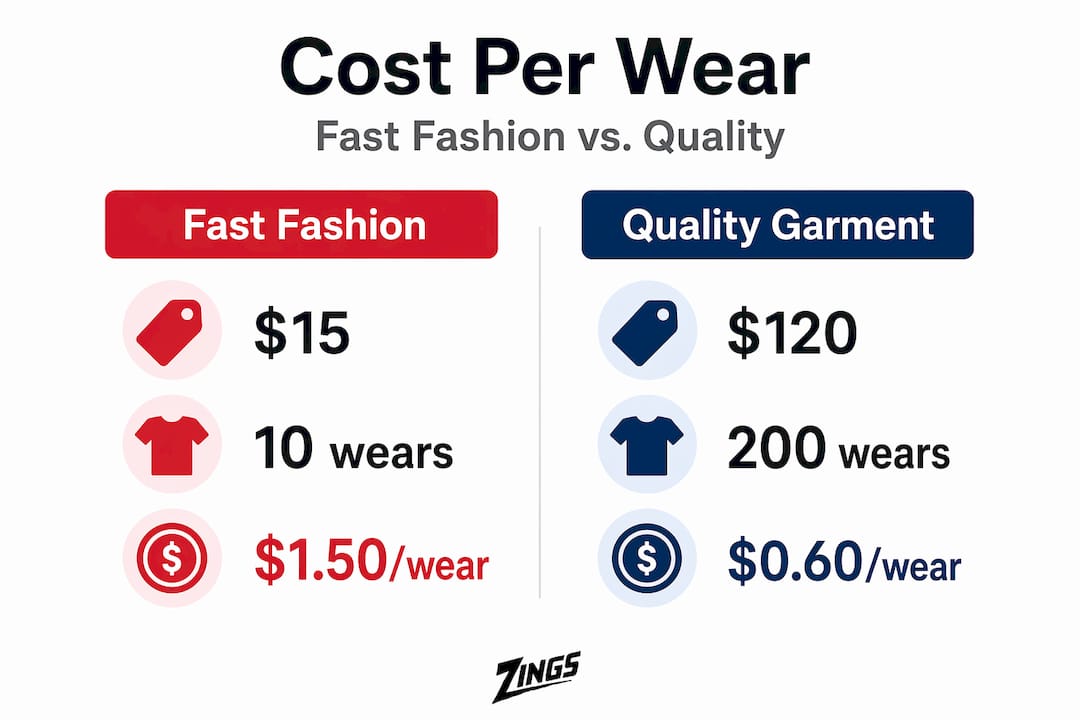
Here is how the math works:
| Garment type | Purchase price | Estimated wears | Cost per wear |
|---|---|---|---|
| Fast fashion t-shirt | $15 | 10 | $1.50 |
| Quality casual shirt | $80 | 150 | $0.53 |
| Fast fashion jacket | $40 | 15 | $2.67 |
| Quality casual jacket | $120 | 200 | $0.60 |
The numbers align with documented research. A $15 fast fashion piece worn 10 times runs $1.50 per wear, while a $120 quality piece worn 200 times comes out to $0.60 per wear. Over five years, shifting 40% of purchases toward durable brands can reduce total wardrobe costs by 18 to 27 percent.
The environmental side of that equation is just as striking. Fast fashion garments last only 7 to 15 wears on average. High-quality garments last 50 to 120 wears. Extending garment lifespan by just 9 months cuts carbon, water, and waste footprints by roughly 20 percent. That is not a marginal improvement. It is the kind of impact that compounds across millions of purchasing decisions.
High-quality construction allows garments to maintain appearance and function through more than 50 washes. That alone separates a wardrobe built on quality from one built on trend cycles. You also need to consider repairability. A well-made garment with quality seams and hardware can be altered, patched, or re-hemmed. Cheap construction falls apart faster than it can be fixed.
Pro Tip: Track your cost per wear for a few key pieces over one year. Most people are surprised to find their most-worn items are almost always their higher-quality ones, not their impulse buys.
Style longevity and how quality keeps you looking sharp
There is a reason certain garments stay in rotation for years while others disappear from your wardrobe after a single season. Quality transcends trends. It ages well and develops character rather than wearing out. That is not a vague claim about aesthetics. It is a practical outcome of how well-made pieces are constructed.
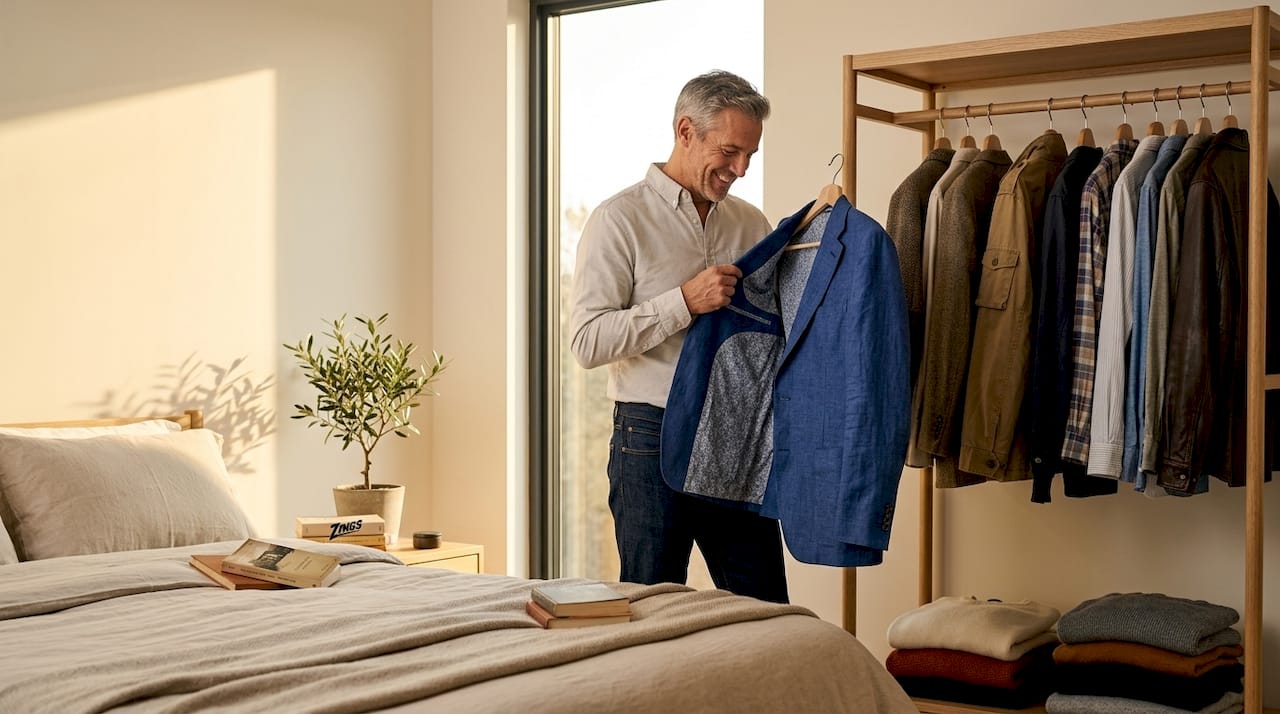
Well-made garments hold their shape. The collar stays flat. The shoulders sit correctly. The fabric does not stretch out at the knees or elbows. These are structural outcomes of good materials and tight construction, not styling choices. When you invest in pieces that maintain their fit across years of regular wear, you stop the cycle of constantly replacing things that no longer look right.
Quality also enables versatility, which is a core principle behind capsule wardrobe thinking. Consider what makes a good capsule:
- Neutral or adaptable color palettes that work across multiple outfits
- Fabrics that hold their structure and color across frequent washing
- Classic silhouettes that do not depend on a specific trend moment to look appropriate
- Pieces that transition between casual and semi-formal settings
Capsule wardrobes built around fewer, higher-quality pieces reduce decision fatigue, simplify daily dressing, and support more sustainable buying habits. Men in particular are increasingly shifting away from trend chasing toward timeless, versatile garments. The clothing material guide at Zings365 covers exactly how fabric choices tie into long-term style and sustainability goals.
The psychological dimension matters here too. Wearing clothing that fits well, looks right, and has not faded or stretched gives you a quiet but real confidence boost. That is not marketing language. Researchers consistently find connections between well-fitting clothing and self-perception. When your wardrobe works reliably, you spend less mental energy on it.
The socio-economic and ethical case for quality
The fashion industry’s environmental footprint is not subtle. The industry contributes 2 to 8 percent of global greenhouse gas emissions, consumes 93 billion cubic meters of water every year, and sends 92 million tonnes of textile waste to landfills annually. That waste is not accidental. It is a direct output of the fast fashion production model, which is built on low costs, low durability, and high volume turnover.
Consumer behavior drives that model. When enough people stop buying disposable clothing, manufacturers respond. That is not optimism. It is how markets work.
“True luxury involves craftsmanship, attention to detail, and enduring excellence. It is not about price tags or logos. It is about what the garment is made of and how it was made.” — Istituto Marangoni Miami
The labor dimension is equally real. Sustainable fabrics like organic cotton, hemp, and bamboo offer lower environmental impact without sacrificing quality. Brands that use them are often the same ones paying fairer wages and maintaining better factory conditions. Choosing quality is not just a personal financial decision. It connects directly to the conditions of the people making your clothes.
Sustainability certifications give consumers a way to verify those claims. Labels like GOTS (Global Organic Textile Standard), OEKO-TEX, and Bluesign indicate that a brand has met third-party standards for environmental and labor practices. They are not perfect filters, but they are more reliable than marketing copy.
Quality buyers tend to become more mindful shoppers overall. Buying less but better is a strategic reaction to both the financial and environmental costs of fast fashion. Every purchase is a small vote for the kind of industry you want to exist. The more consumers understand the impact of fabric quality and construction, the more that vote is cast with intention rather than impulse. For readers interested in putting this into practice, the Zings365 guide on shopping trendy clothing without overspending is a practical starting point.
My take on why quality is worth the patience
I have watched a lot of people chase trends and come away with closets full of things they do not wear. I have done it myself. The cycle is seductive because cheap clothing lowers the stakes on each individual purchase. But the cumulative cost, in money, in closet space, and in environmental impact, adds up fast.
What I have found is that the shift toward quality is less about spending more and more about slowing down. It takes time to learn how to evaluate a garment properly. You have to flip it inside out, check the seams, feel the fabric weight, stretch it and watch it recover. That kind of attention is unusual in a world built for fast decisions, but it is a skill worth developing.
The other thing I would say is this: quality clothing changes how you relate to what you own. When a jacket costs real money and was made to last, you take better care of it. You get it altered when the fit drifts. You repair it instead of discarding it. That relationship with your wardrobe is not just more sustainable. It is more satisfying.
Start with one or two pieces. Learn what good construction actually feels like. Then let that standard raise the bar for everything else you buy.
— TONY
Build a quality wardrobe with Zings365
Zings365 carries a focused range of casual and fashion-forward pieces built for durability and everyday versatility. The catalog covers everything from structured outerwear to everyday shirts and trousers, with an emphasis on construction that holds up past the first season.

If you are building a wardrobe around fewer, better pieces, start with staples that work across multiple settings. The men’s casual jacket is a strong example: durable construction, clean design, and the kind of versatility that keeps it relevant season after season. Browse the full Zings365 catalog at zings365.com and find pieces that are worth wearing more than once.
FAQ
What defines quality in clothing?
Quality in clothing is determined by fabric type, weave density, stitch count, seam construction, and finishing details like buttons and hems. Pattern matching at seams and reinforced stress points are reliable indicators that a manufacturer prioritized durability.
How does quality clothing save money over time?
The cost per wear concept shows the real math: a $120 quality piece worn 200 times costs $0.60 per wear, compared to $1.50 per wear for a $15 fast fashion item worn 10 times. Quality pieces cost more upfront but consistently deliver better value over their lifespan.
Why does fabric quality matter for the environment?
Fast fashion garments last an average of 7 to 15 wears before disposal, contributing to the 92 million tonnes of textile waste sent to landfills every year. Choosing durable clothing and extending garment life by just 9 months can reduce your clothing’s carbon, water, and waste footprint by around 20 percent.
How can I tell if a garment is high quality without checking the label?
Stretch the fabric and watch it recover. Flip the piece inside out and check seam finishing. Look for pattern alignment at seams, tight stitch density, and hardware made from metal or natural materials rather than thin plastic. Off-grain cutting and loose buttons are immediate red flags.
Are quality and sustainability the same thing in fashion?
They overlap significantly but are not identical. Quality garments last longer and reduce waste, which is inherently more sustainable. However, truly sustainable clothing also considers the materials used and the conditions under which it was made. Certifications like GOTS and OEKO-TEX help identify brands that meet both quality and sustainability standards.
