

TL;DR:
- Fabric choices influence how clothes feel, last, and perform, beyond just appearance and price. Understanding fiber, weave, and finish helps shoppers select garments suited to their lifestyle, climate, and care routines. Proper fabric care extends clothing lifespan and enhances long-term satisfaction in everyday wear.
Most people pick clothes based on color, cut, and price. Fabric type rarely enters the conversation. Yet the reason why care about fabric types matters so much comes down to this: the fiber, weave, and finish of a garment determine how it feels against your skin, how long it lasts, how easy it is to wash, and whether you actually reach for it again after the first wear. Fabric choice is not a designer’s concern alone. It belongs to every shopper who wants clothes that work.
Table of Contents
- Key takeaways
- Core fabric properties that shape how clothes feel
- Durability, care, and why fabric type influences garment lifespan
- Weave vs. knit: how fabric structure changes what you wear
- How to select fabric types for your actual life
- Smarter buying decisions start with fabric knowledge
- My take: what I learned after years of ignoring fabric
- Find quality fabrics at Zings365
- FAQ
Key takeaways
| Point | Details |
|---|---|
| Fabric affects more than looks | Fiber, weave, and finish shape how a garment feels, fits, and performs over time. |
| Care labels are functional guides | Reading care labels prevents shrinking, pilling, and color loss that shorten a garment’s life. |
| Weave type changes performance | Plain and twill weaves behave differently for breathability, strength, and moisture control. |
| Match fabric to your lifestyle | Climate, activity level, and washing habits should guide fabric selection, not aesthetics alone. |
| Fabric feel drives satisfaction | Tactile quality influences buyer satisfaction more than visual appearance in most purchasing decisions. |
Core fabric properties that shape how clothes feel
Understanding fabric starts with five measurable properties: weight, drape, breathability, stretch, and texture. Each one tells you something specific about how a garment will behave on your body and through daily use.
Weight refers to how heavy a fabric feels per unit area. A heavier cotton twill makes a structured trouser. A lightweight jersey knit makes a relaxed tee. Neither is better. They serve different purposes. Drape describes how a fabric falls and flows. Silk and rayon drape loosely and fluidly. Canvas and denim hold their shape rigidly. Breathability measures how easily air and moisture pass through the weave, which matters enormously for warm weather or active use.
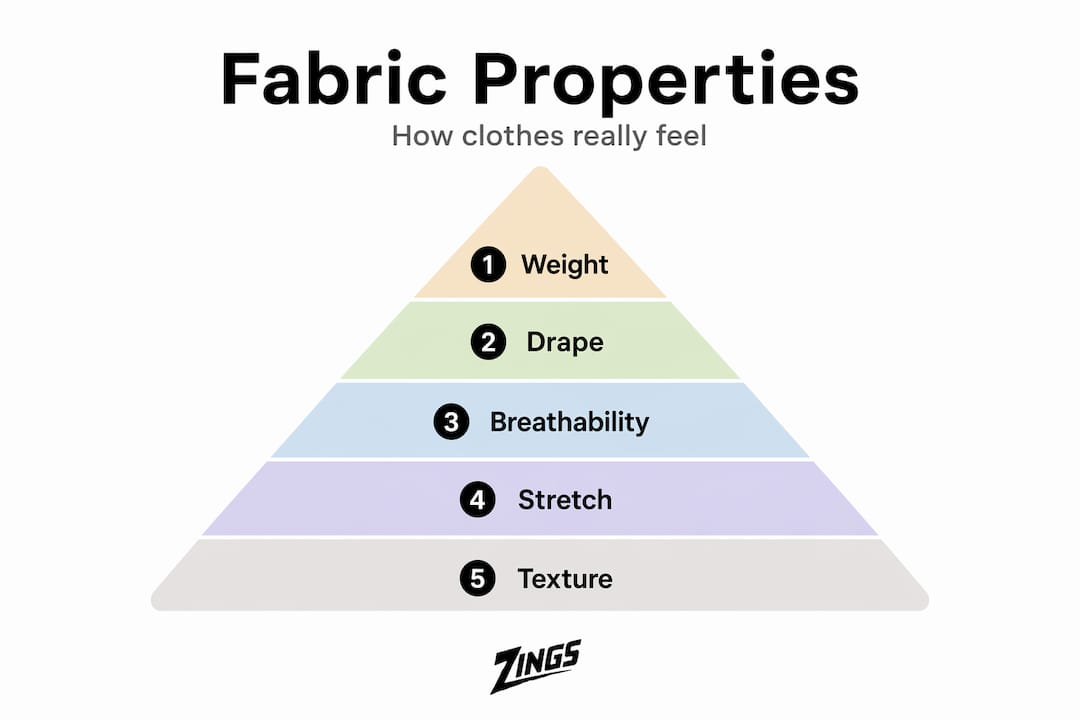
Stretch and texture round out the picture. Stretch comes from elastic fiber content like spandex or from a knit construction. Texture affects both appearance and how the fabric feels against skin, ranging from smooth poplin to rough linen.
Here is where it gets interesting. These five properties do not come from fiber content alone. Fabric performance is a bundle of traits shaped by fiber, weave, and finishing together. A cotton fabric can be stiff or stretchy, breathable or dense, depending entirely on how it was constructed and finished.
The key fabric properties to track when shopping:
- Fiber content: Natural fibers like cotton and linen breathe well. Synthetics like polyester resist wrinkles and dry fast.
- Weave or knit structure: Determines stretch, drape, and air flow independent of fiber type.
- Finish: Chemical or mechanical treatments that add softness, water resistance, or wrinkle resistance.
- Weight: Signals warmth, structure, and seasonal appropriateness.
- Texture: Indicates comfort against skin and visual formality.
Pro Tip: Check the fabric composition label before buying. A garment listed as “100% polyester” can feel soft and breathable or stiff and sweaty depending on the weave. The fiber percentage alone does not tell the full story.
Durability, care, and why fabric type influences garment lifespan
Fabric type directly controls how a garment ages. This is where the importance of fabric types becomes most visible in your closet. A shirt that shrinks after two washes, jeans that pill at the thighs after a month, or a sweater that stretches out of shape are almost always victims of mismatched care rather than poor construction.

Natural and synthetic fibers respond differently to water temperature, heat, detergents, and agitation. Wool shrinks dramatically in hot water. Polyester can melt under high dryer heat. Cotton fades faster with harsh detergents. These are not random failures. They follow predictable patterns tied to fiber chemistry.
Care labels exist precisely for this reason. Proper care balances cleaning effectiveness, garment longevity, and sustainability. A garment that gets washed incorrectly twice a week degrades at a rate no amount of quality construction can offset.
Common fabric care pitfalls that shorten garment life:
- Washing cotton or linen on hot when cold was specified, causing shrinkage and weave distortion
- Tumble drying wool or structured knits, which breaks down fiber elasticity
- Using bleach-based detergents on colored synthetics, accelerating dye loss
- Ignoring “dry clean only” labels on structured garments like blazers, causing shape collapse
Sustainability connects here too. Care labels are not just maintenance instructions. They function as sustainability levers that prevent premature garment failure. A well-cared-for garment stays out of landfill longer. If you care about buying less and wearing more, fabric care is part of that equation.
If chemical safety matters to you when choosing materials, OEKO-TEX certification signals that a textile has been tested for harmful substances. It is one more piece of information that helps you make a confident choice at the point of purchase.
Weave vs. knit: how fabric structure changes what you wear
Two garments can share identical fiber content and behave completely differently. Weave and construction affect comfort and moisture management independent of what the fabric is made from. This is one of the most overlooked facts in everyday fashion shopping.
The table below shows the key performance differences between the most common fabric structures:
| Structure | Strength | Breathability | Moisture management | Best uses |
|---|---|---|---|---|
| Plain weave | High | Moderate | Poor | Dress shirts, trousers, bags |
| Twill weave | Moderate | Good | Better | Jeans, chinos, jackets |
| Jersey knit | Low to moderate | Good | Moderate | T-shirts, casual tops, activewear |
| Rib knit | Moderate | Good | Moderate | Sweaters, cuffs, fitted tops |
Plain weave fabrics show superior mechanical strength but weaker one-way moisture transport compared to twill weaves. That is why your cotton dress shirt feels crisper but can feel clammy in heat, while a twill chino in the same fiber manages sweat better and feels more comfortable through a long day.
Knit fabrics operate on a different axis entirely. Their looped construction creates inherent stretch without any added elastic fiber. A jersey knit tee moves with your body because of structure, not because it contains spandex. This is why the same cotton content in a woven shirt and a knit tee produces two completely different wearing experiences.
Pro Tip: When shopping online for casual trousers or shirts, search for the weave type in the product description alongside the fiber content. “Cotton twill” tells you far more about how that garment will perform than “100% cotton” alone.
For anyone researching clothing material choices before buying, understanding weave structure is the step that moves you from guessing to genuinely knowing what you are purchasing.
How to select fabric types for your actual life
No single fabric is universally best. The right fabric depends on your specific use case, and matching fabric to purpose is the practical skill that makes fabric knowledge worth having. Here is a straightforward process for applying what you know:
-
Identify the climate and season. Hot and humid conditions call for breathable, moisture-managing fabrics like linen, cotton, or moisture-wicking synthetics. Cold weather suits denser weaves, wool blends, and brushed fabrics that trap warmth.
-
Match fabric to activity level. High-movement activities, workouts, and outdoor use need stretch and durability. Knit fabrics and stretch-woven synthetics handle this better than rigid plain weave cotton. For low-activity settings like office wear or social occasions, structured wovens project a cleaner silhouette.
-
Audit your actual washing habits. If you machine-wash everything on warm and toss it in the dryer, do not buy garments that require cold hand wash and flat drying. Aligning fiber content and construction with your real washing practices is what keeps clothes looking good.
-
Balance aesthetics with practicality. A beautiful linen blazer is a fair-weather piece that wrinkles constantly. A cotton-polyester blend shirt holds its shape through a busy day. Neither is wrong. Knowing the trade-off before you buy removes disappointment.
-
Check the garment weight for the end use. Lightweight fabrics travel well and layer easily. Heavier fabrics provide structure and warmth but add bulk. For anyone building a travel-friendly wardrobe on a budget, lightweight fabrics offer more versatility per garment.
For budget-focused shoppers, pairing this knowledge with practical guidance on shopping without wasting money helps you prioritize fabric quality where it counts most.
Smarter buying decisions start with fabric knowledge
There is a direct line between understanding fabric materials and feeling satisfied with your purchases. Fabric feel can be a decisive factor, often more powerful than appearance in driving satisfaction or driving returns. A shirt that photographs beautifully but scratches your neck will not stay in your rotation regardless of how good it looks.
Fabric knowledge prevents a specific kind of shopping regret: the kind where you spend money on something that looked right but wore wrong. When you know that a loosely woven linen shirt will wrinkle heavily in travel, or that a polyester blend tee will feel hot in summer, you make different choices before paying, not after.
This is also where long-term wardrobe thinking pays off. Fabrics that suit your lifestyle, survive your care routine, and age gracefully cost less over time than cheap garments replaced every season. Building a wardrobe with fabric awareness is not about spending more. It is about spending in the right places. Understanding the benefits of different fabrics helps every purchase contribute to a wardrobe you actually use.
My take: what I learned after years of ignoring fabric
I spent a long time buying clothes based on fit and price alone. The results were predictable. A cotton hoodie that shrunk two sizes after three washes. Chinos that pilled at the inner thigh by month two. A linen shirt I loved the look of but never wore because it wrinkled beyond recovery after twenty minutes.
The shift happened when I started reading fabric content labels the same way I read nutrition labels on food. Once I understood that a twill weave in cotton manages moisture better than a plain weave, I stopped buying plain-weave cotton shirts for warm weather and wondering why I was uncomfortable. Once I knew that cotton-polyester blends resist wrinkles far better than pure cotton, travel became less about steaming my clothes in a hotel bathroom.
What I have found is that fabric knowledge does not complicate shopping. It simplifies it. You eliminate the garments that will not work for you before they reach your cart. The result is fewer purchases and higher satisfaction with what you keep.
— TONY
Find quality fabrics at Zings365

Knowing why different fabrics matter is only useful if the clothes you buy actually reflect that knowledge. Zings365 stocks garments built with fabric choices that translate directly to real-world comfort. The casual stretch trousers combine a cotton blend with a stretch-friendly construction that moves with you without losing shape. For a shirt that balances structure with wearability, the British casual jacquard shirt uses a textured weave that holds up through regular wear and machine washing. Browse the full catalog at Zings365 and use what you now know about fabric to make every pick count.
FAQ
Why does fabric type matter more than style when buying clothes?
Fabric type determines how a garment feels, performs, and lasts in daily use. Style can look good in a photo, but if the fabric scratches, shrinks, or wears out fast, the garment fails in practice.
What fabric should I choose for hot weather?
Choose breathable, lightweight fabrics like linen, cotton, or moisture-wicking synthetics. Twill weaves in cotton offer better moisture management than plain weaves in the same fiber, making them more comfortable in warm conditions.
How do I know if a fabric will shrink?
Check the care label and fiber content before washing. Natural fibers like wool and cotton are most prone to shrinkage in hot water. Incorrect washing conditions can shift fabric dimensions even when the label claims stability.
Does weave type really change how a fabric performs?
Yes. Two fabrics with identical fiber content can behave very differently based on weave structure. Plain weaves are stronger but trap more heat. Twill weaves manage moisture better and feel more comfortable through extended wear.
What is the most low-maintenance fabric for everyday clothes?
Polyester and cotton-polyester blends resist wrinkles, dry quickly, and tolerate machine washing well. They suit people who prefer minimal care routines and want garments that hold their shape over time.
