

TL;DR:
- Fabric type mainly determines a garment’s appearance, feel, and longevity, influencing its cost and quality. Natural, synthetic, and blended fibers each serve different purposes, affecting comfort, durability, and environmental impact. Understanding fabric construction and care improves clothing durability and helps brands communicate their values effectively.
Fabric type is the single most influential variable in how a garment looks, feels, and lasts. The role of fabric types extends from the factory floor to your closet: fabric accounts for 40–60% of a garment’s total production cost, which directly shapes the price you pay and the quality you receive. Fibers fall into three broad categories: natural (cotton, wool, linen, hemp), synthetic (polyester, nylon, acrylic), and blended. Each category carries distinct fabric characteristics that affect comfort, durability, care requirements, and brand positioning. Understanding these differences gives you a real advantage when choosing fabric types for clothing.
How do different fabric types affect comfort and garment performance?
Fiber origin determines how a fabric manages moisture, temperature, and movement. Cotton absorbs up to 8.5% of its weight in moisture, while wool absorbs up to 16%. That gap explains why a wool sweater keeps you warm even when damp, while a cotton shirt feels cold and clingy after a workout.
Fabric construction matters just as much as fiber content. Knitted fabrics offer significantly more flexibility than woven ones, which makes them the standard choice for activewear and casual T-shirts. The tradeoff is that knitted fabrics are more susceptible to snagging and require specific sewing needles to avoid damaging the loops. Woven fabrics, by contrast, hold their shape better and resist tearing, making them the go-to for structured shirts, trousers, and outerwear.
Surface texture, known in the industry as “hand,” shapes how a fabric feels against your skin. A smooth hand signals luxury and comfort; a rough hand can cause irritation. Fabric surface texture significantly affects tactile experience and perceived durability, though it is distinct from actual fiber strength. A fabric can feel incredibly soft yet pill quickly, or feel coarse yet outlast softer alternatives by years.
Fiber diameter is the microscopic detail that separates a luxurious merino wool sweater from an itchy budget wool. Finer fiber diameters yield softer wools like merino compared to coarser wool varieties. This is why two garments labeled “100% wool” can feel completely different on your skin.
- Moisture management: Wool outperforms cotton in moisture absorption, making it better for layering in cold or variable climates.
- Stretch and flexibility: Knitted constructions (jersey, rib, interlock) provide stretch without added spandex.
- Softness: Fiber diameter, not just fiber type, determines how soft a fabric feels.
- Durability: Woven fabrics generally resist wear better than knits, though fiber strength also plays a role.
- Temperature regulation: Natural fibers like linen and wool regulate body temperature more effectively than most synthetics.
Pro Tip: When shopping for activewear or casual basics, check the fabric construction label, not just the fiber content. A knitted cotton jersey and a woven cotton poplin are both 100% cotton but perform very differently.
What are the main categories of fabrics and their typical uses in fashion?
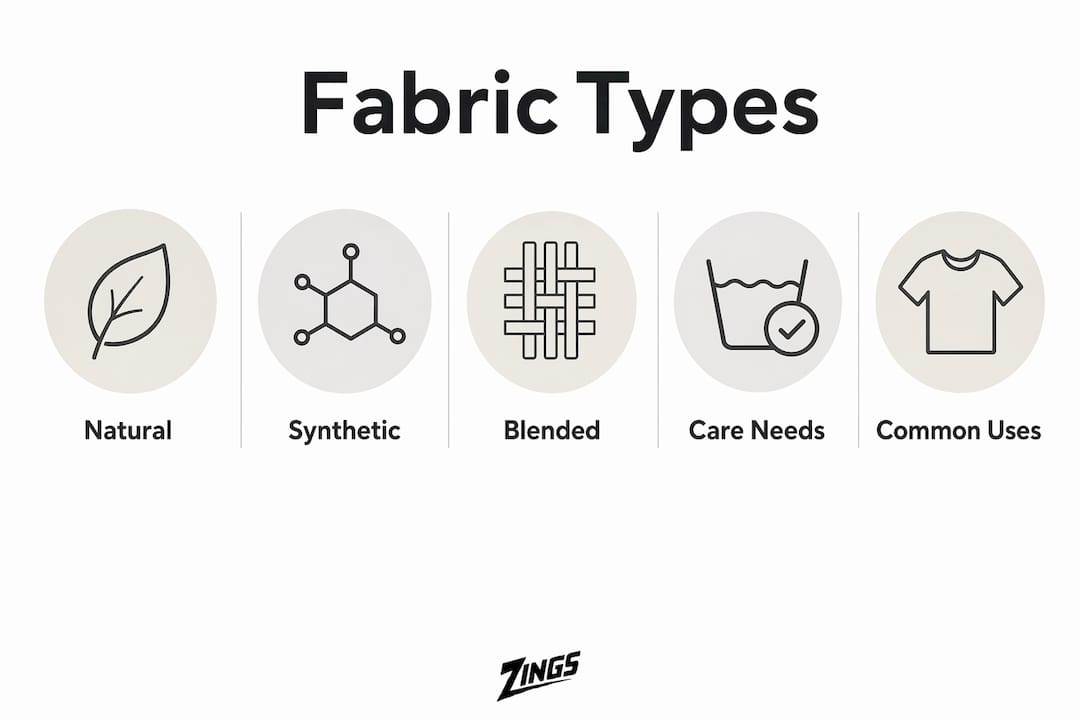
The three main categories of fabrics are natural, synthetic, and blended. Each serves a distinct purpose in fashion, and knowing the difference helps you make better wardrobe decisions.
Natural fibers come from plants or animals. Cotton is the most widely used natural fiber globally, valued for its breathability and softness. Wool provides warmth and moisture management. Linen, made from flax, is lightweight and ideal for warm weather. Hemp is gaining ground as a sustainable alternative: hemp requires about 50% less water to cultivate than conventional cotton, making it a strong choice for eco-conscious shoppers who want to reduce their environmental footprint.
Synthetic fibers are engineered from petrochemicals. Polyester resists wrinkles and dries quickly, making it a staple in performance and fast-fashion garments. Nylon is stronger and more abrasion-resistant than polyester, which is why it appears in bags, outerwear, and athletic gear. Acrylic mimics the look and feel of wool at a lower price point but lacks wool’s natural moisture management.
Blended fabrics combine the strengths of two or more fibers. A cotton-polyester blend, for example, delivers cotton’s softness alongside polyester’s wrinkle resistance and durability. These blends are common in casualwear fabric choices because they balance comfort, ease of care, and cost.
| Fabric category | Common examples | Typical fashion use |
|---|---|---|
| Natural | Cotton, wool, linen, hemp | T-shirts, sweaters, summer dresses, outerwear |
| Synthetic | Polyester, nylon, acrylic | Activewear, linings, budget basics |
| Blended | Cotton-poly, wool-nylon | Casualwear, workwear, performance shirts |
| Specialty | Denim, fleece, jersey | Jeans, hoodies, everyday tops |
Specialty fabrics like denim, fleece, and jersey deserve their own mention. Denim is a woven cotton twill that ages with wear, developing character over time. Fleece is a knitted synthetic that traps air for warmth without significant weight. Jersey is a knitted fabric, often cotton or cotton-blend, that forms the backbone of the global T-shirt market.
How do fabric characteristics influence garment care and longevity?
Fabric type determines how a garment should be washed, dried, and stored. Getting this wrong shortens a garment’s life significantly. Checking fabric quality before you buy gives you a preview of the care commitment you are making.
The construction of a fabric, specifically its warp-to-filling yarn ratio, has a direct impact on shape retention. Balanced fabrics with a 1:1 warp to filling yarn ratio retain shape better than unbalanced fabrics, which are prone to seam twisting after repeated washing. This is a technical detail most shoppers never see on a label, but it explains why some shirts look crisp after 50 washes while others twist and distort after 10.
Care by fabric type follows a clear pattern:
- Cotton: Machine wash in cold or warm water. Tumble dry on low to prevent shrinkage. Avoid high heat, which causes cotton fibers to contract.
- Wool: Hand wash or use a gentle machine cycle with cold water. Lay flat to dry. Heat and agitation cause wool to felt and shrink permanently.
- Linen: Machine wash on a gentle cycle. Expect some wrinkling; linen softens and improves with each wash.
- Polyester and nylon: Machine wash in cold water. Tumble dry on low. Avoid high heat, which can melt or distort synthetic fibers.
- Blended fabrics: Follow the care instructions for the most delicate fiber in the blend. A wool-nylon blend should be treated like wool.
Pilling is another longevity factor tied directly to fabric construction. Knitted fabrics, especially those made from short-staple fibers like acrylic, pill faster than woven fabrics made from long-staple fibers like combed cotton or linen. Turning garments inside out before washing reduces friction and slows pilling significantly.
Pro Tip: Always read the care label before the first wash, not after something goes wrong. The fiber content and construction type on that label tell you exactly how much maintenance a garment will demand over its lifetime.
What role do fabric types play in brand positioning and sustainable fashion choices?
Fabric selection is a direct signal of brand values. Premium natural fibers like cashmere and merino wool are associated with luxury and sustainability in brand positioning. A brand that uses organic cotton or merino wool communicates quality and environmental responsibility without saying a word.
Performance synthetics tell a different story. Polyester and nylon signal technical innovation and durability, which is why activewear brands build their identity around these materials. Consumers shopping for running gear or outdoor apparel expect moisture-wicking, stretch, and fast-drying properties that synthetics deliver reliably.
Cotton-polyester blends occupy the value segment. They signal accessibility and practicality, which suits brands targeting everyday casual wear at affordable price points. This is not a weakness. It is a deliberate positioning choice that matches consumer expectations for easy-care, long-lasting basics.
Sustainable fibers are reshaping the market. Hemp, as noted, uses significantly less water than cotton. Biobased polymers like PLA (polylactic acid), derived from plant starch, are entering the market as alternatives to petroleum-based synthetics. These materials appeal to consumers who want sustainable clothing choices without sacrificing style or performance.
- Luxury positioning: Cashmere, merino wool, and organic cotton signal premium quality and environmental care.
- Performance positioning: Polyester, nylon, and technical blends signal function and durability for active lifestyles.
- Value positioning: Cotton-poly blends signal affordability and easy care for everyday wear.
- Sustainability positioning: Hemp, organic cotton, and biobased fibers signal environmental responsibility.
Fabric choice in casual fashion is not just a design decision. It is a brand statement that reaches consumers before they read a single word of marketing copy.
Key takeaways
The role of fabric types in fashion is foundational: fiber origin, construction method, and surface characteristics together determine a garment’s cost, comfort, care requirements, and brand identity.
| Point | Details |
|---|---|
| Fabric drives garment cost | Fabric accounts for 40–60% of production cost, directly setting quality and price expectations. |
| Fiber type shapes comfort | Wool absorbs twice as much moisture as cotton, making fiber choice critical for warmth and performance. |
| Construction affects care | Knitted fabrics need gentler care than woven ones; balanced weaves retain shape through repeated washing. |
| Sustainability matters | Hemp uses 50% less water than cotton, making it a strong choice for eco-conscious wardrobes. |
| Fabric signals brand identity | Natural fibers communicate luxury; synthetics signal performance; blends signal value and practicality. |
What I have learned from years of paying attention to fabric
Most people read a care label only after something shrinks or twists. That is the wrong order. The label tells you everything before you commit: fiber content, construction type, and the care ceiling the garment can handle. Spending 30 seconds with that label before buying saves real money and frustration.
The biggest misconception I see is that softness equals durability. Consumers often equate fabric surface texture with durability, but actual longevity depends more on fiber strength and weave structure. A buttery-soft acrylic sweater will pill within a season. A slightly coarser merino wool knit will outlast it by years.
Balancing cost, performance, and sustainability is genuinely hard. Budget does not always allow for organic cotton or merino wool across an entire wardrobe. The practical answer is to prioritize natural fibers for garments worn directly against your skin, like T-shirts and base layers, and accept synthetics or blends for outerwear and structured pieces where performance and shape retention matter more than breathability.
Testing fabric hand before buying is a skill worth developing. Rub the fabric between your fingers. Pull it gently on the bias. Check whether it recovers its shape. These 10 seconds of physical testing tell you more than any product description. The more you practice, the faster you get at reading a fabric’s quality and likely lifespan.
— TONY
Quality fabrics, ready to wear at Zings365
Understanding fabric types changes how you shop. You stop buying based on color alone and start reading labels, checking construction, and choosing garments that will actually perform.

Zings365 carries a curated range of casual and fashion-forward pieces built around fabric quality. The fall men’s casual shirt uses a jacquard check construction that holds its structure wash after wash. For warmth without bulk, the wool coat for women delivers the moisture management and premium hand-feel that natural wool is known for. If you want a versatile layer for active days, the men’s hooded cardigan sports suit combines stretch and comfort in a fabric blend built for movement. Browse the full collection at Zings365 and check each product’s fabric composition before you buy.
FAQ
What is the role of fabric types in garment cost?
Fabric accounts for 40–60% of a garment’s total production cost. This means fabric choice is the primary driver of both retail price and perceived quality.
Which fabric type is best for moisture management?
Wool is the strongest performer, absorbing up to 16% of its weight in moisture compared to cotton’s 8.5%. For activewear, synthetic moisture-wicking fabrics like polyester also perform well.
How do I care for different types of fabrics?
Natural fibers like wool require cold water and flat drying, while cotton tolerates machine washing on warm. Synthetics handle machine washing well but should avoid high heat to prevent fiber damage.
Are knitted or woven fabrics more durable?
Woven fabrics generally last longer and resist tearing better than knitted ones. Knitted fabrics offer more stretch but are more prone to snagging and pilling over time.
What makes hemp a sustainable fabric choice?
Hemp requires about 50% less water to grow than conventional cotton. It also produces strong, durable fibers that hold up well in clothing without heavy chemical processing.
