

TL;DR:
- Fabric quality is the key predictor of a garment’s durability, comfort, and value, with poor quality causing significant waste and dissatisfaction.
- Careful inspection through simple physical tests and label checks can prevent buying clothes that pill, shrink, or wear out prematurely, saving money and frustration.
Fabric quality is the single most reliable predictor of how long a garment lasts, how comfortable it feels, and whether it delivers real value for your money. Returns linked to apparel quality issues cost the global fashion industry over $84 billion annually. That number reflects millions of individual purchases that disappointed. Understanding why check fabric quality matters gives you a direct advantage: you stop buying clothes that fall apart after three washes and start building a wardrobe that holds up. The industry term for this practice is fabric quality assessment, and it covers everything from fiber composition to weave integrity to colorfastness.
Why checking fabric quality saves you money and frustration
Fabric quality assessment is the practice of evaluating a textile’s fiber content, construction, and performance characteristics before committing to a purchase. Over 38% of small-batch apparel returns are caused by fabric defects that proper pre-purchase checks would catch. That statistic applies to consumers too. Every time you buy a shirt that pills after two wears or jeans that shrink a full size, you are absorbing a cost that a 60-second inspection could have prevented.
Consumers increasingly judge fabric quality by performance factors: shape retention, shrinkage resistance, and softness rather than branding. This shift matters because brand name alone no longer signals durability. A $90 shirt from a recognizable label can use cheaper blended yarns while a $35 shirt from a lesser-known brand uses long-staple cotton. Price and logo are not substitutes for knowing what you are actually buying.
The importance of fabric quality also connects directly to sustainability. High-quality fabric is an investment that reduces replacement costs and supports sustainability through durability. Buying fewer, better garments produces less textile waste. That is a practical benefit, not just an environmental talking point.
What are the key indicators of high-quality fabric?
High-quality fabric shows specific, measurable characteristics across fiber content, weave structure, weight, and surface finish. Learning to read these signals takes less time than most people expect.
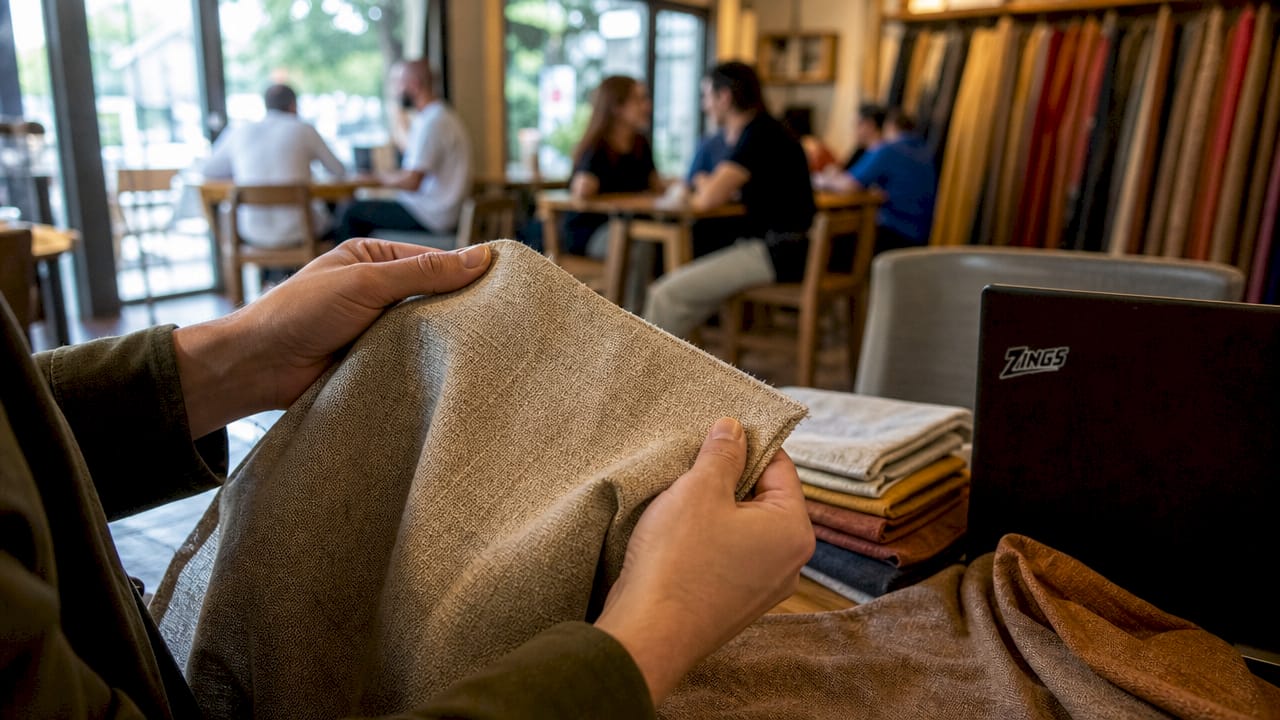
Fiber composition and yarn quality are the foundation. High-quality fabrics use long-staple fibers that produce stronger, smoother yarns which resist pilling. Long-staple Egyptian cotton and Pima cotton are the standard references for premium cotton goods. Short-staple fibers produce fuzzier, weaker yarns that pill quickly and lose shape. Check the care label for fiber percentages. A fabric labeled “100% cotton” tells you nothing about staple length, but it is a starting point for further evaluation.
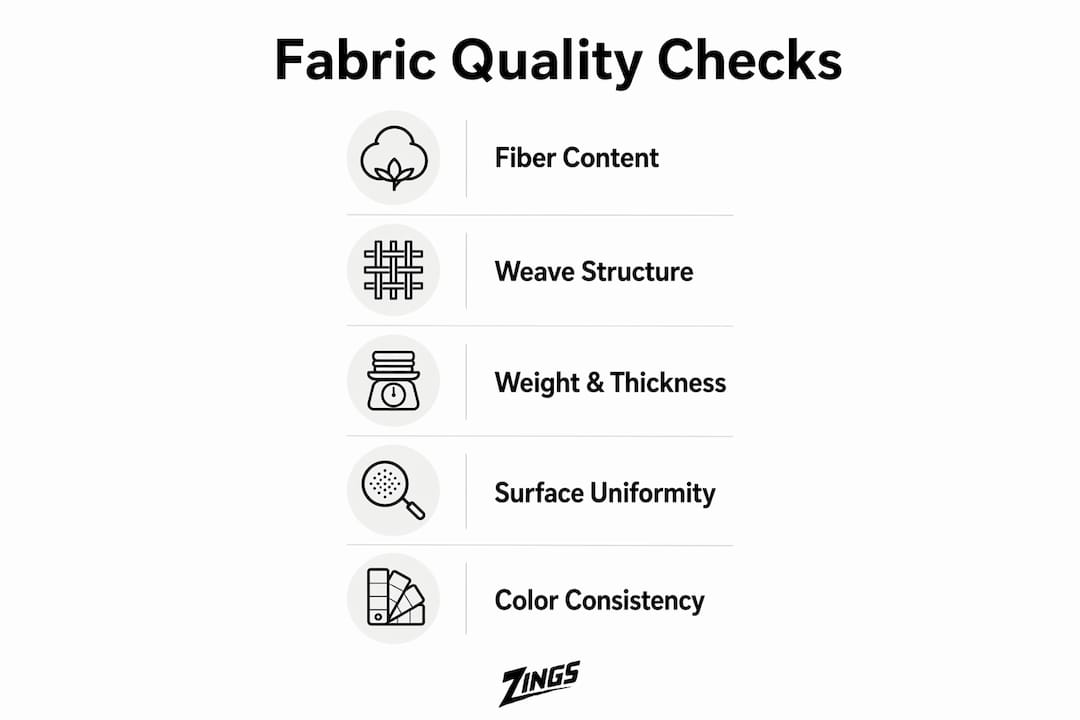
Weave tightness and uniformity reveal construction quality. Holding fabric against light reveals weave integrity and uniformity, helping detect manufacturing defects. Consistent light distribution means even yarn spacing. Gaps, thin spots, or irregular patterns indicate poor construction that will wear unevenly and tear sooner.
Fabric weight should match the garment’s purpose. A dress shirt needs a medium-weight woven fabric with enough body to hold its shape. A summer t-shirt needs a lighter knit with good drape. Weight alone does not equal quality, but a fabric that feels too thin or too stiff for its intended use is a red flag.
Here are the four tactile and visual tests to perform before buying:
- Drape test. Hold the fabric loosely and let it fall. Quality fabric drapes smoothly without bunching or holding a rigid shape.
- Stretch recovery test. Gently stretch a section of the fabric, then release. It should return to its original shape within one or two seconds.
- Rub test. Rub the fabric surface briskly with your thumb for 10 seconds. Pilling or fiber separation indicates short-staple yarns or a loose weave.
- Light test. Hold the fabric up to a light source. Uniform light distribution confirms consistent weave density.
Pro Tip: Avoid judging softness alone. Temporary chemical finishing agents can create an artificial softness that does not last beyond the first few washes. Rub the fabric firmly before deciding.
Color uniformity also matters. Deep, even color saturation across the entire fabric surface signals quality dyeing. Uneven patches, streaks, or color that looks faded before purchase all indicate poor dye penetration.
How does fabric quality affect garment performance and longevity?
Fabric quality directly determines four performance outcomes: shrinkage, abrasion resistance, colorfastness, and shape retention. Each one affects how a garment looks and fits after repeated wear and washing.
-
Shrinkage and dimensional stability. Shrinkage below 3% in woven fabrics and below 5% in knits is the accepted standard to avoid fit issues after washing. Fabrics that exceed these thresholds will change size noticeably after the first wash. Pre-shrunk fabrics and those with a higher thread count in woven constructions tend to perform better on this measure.
-
Abrasion resistance and tensile strength. These properties determine how fabric holds up against friction from daily wear, seating surfaces, and repeated laundering. Fabrics with tightly woven or knitted structures and longer fiber lengths resist abrasion far better than loosely constructed alternatives.
-
Colorfastness across conditions. Colorfastness testing across multiple conditions prevents reputational damage caused by fading or bleeding. For consumers, this means checking whether a dark garment bleeds color onto lighter clothing in the wash, or whether a brightly colored shirt fades to a dull version of itself after four or five cycles.
-
Shape retention and fiber blend performance. Fiber blends affect both comfort and durability. A polyester-cotton blend resists wrinkles and shrinkage better than pure cotton but may feel less breathable. A wool-nylon blend in knitwear holds its shape through repeated stretching while pure wool alone may sag. Understanding fabric choice in casual fashion helps you match fiber blends to your actual wearing habits.
| Performance factor | What it means for your wardrobe |
|---|---|
| Shrinkage control | Garments maintain their original fit after washing |
| Abrasion resistance | Fabric survives daily friction without thinning or tearing |
| Colorfastness | Colors stay true through repeated laundering |
| Shape retention | Garments hold their cut and silhouette over time |
Why labels and certificates alone are not enough
Fabric quality certificates and care labels provide a starting point, but they are not a complete picture of what you are buying. 23% of supplier-issued quality certificates fail independent lab re-tests. That gap between documentation and reality is significant. It means a garment can carry a quality certificate and still fail basic performance standards.
Labels have specific limitations worth knowing:
- Incomplete fiber disclosure. Labels are required to list fiber content by percentage, but they do not disclose staple length, yarn twist, or finishing treatments applied after weaving or knitting.
- No performance data. A label stating “100% linen” tells you the fiber but nothing about shrinkage rate, colorfastness, or abrasion resistance.
- Finishing treatments are invisible. Softening agents, wrinkle-resistant coatings, and anti-static treatments change how a fabric feels and performs, but most are not disclosed on consumer labels.
Physical inspection combined with testing provides the strongest assurance of quality beyond what any certificate can confirm. This applies whether you are shopping in a store or ordering online.
Pro Tip: When shopping online, look for brands that publish fabric weight in grams per square meter (GSM) alongside fiber content. A t-shirt at 180 GSM or above in 100% cotton will almost always outperform a 140 GSM alternative in the same fiber.
For online purchases specifically, read verified buyer reviews that mention fabric feel, shrinkage, or pilling after washing. These comments reflect real-world performance data that no label provides. Third-party certifications like OEKO-TEX Standard 100 verify that a fabric has been tested for harmful substances, which adds a layer of assurance beyond basic fiber content claims.
How to build fabric checks into your shopping routine
Incorporating fabric quality inspection tips into your regular shopping process takes about two minutes per garment and pays back in fewer returns and longer-lasting clothes. Here is a practical sequence that works both in-store and online.
- Read the label first. Identify fiber content and care instructions. Avoid garments with vague labels like “other fibers” listed above 5% without specification.
- Check the weight and drape. Pick up the garment and feel its weight relative to its size. Hold it loosely to assess drape. Lightweight fabrics for structured garments signal cost-cutting in construction.
- Perform the rub and stretch tests. Run your thumb across the surface for 10 seconds to check for pilling. Stretch a seam area gently and release to test recovery.
- Inspect seams and hems. Tight, even stitching with no loose threads indicates quality construction that complements good fabric. Loose or uneven stitching will fail regardless of fabric quality.
- Hold the fabric to light. Check for weave uniformity. Thin spots or gaps in a woven fabric will become holes or tears with wear.
- Match fabric to purpose. A casual weekend shirt and a formal dress shirt require different fabric weights and constructions. Knowing what to look for in fabrics by garment type prevents mismatched purchases.
- Use brand reputation and certifications as supporting evidence. Not as the primary decision factor. Certifications like OEKO-TEX and GOTS add credibility, but they do not replace physical assessment.
One common mistake is equating softness with quality. Softness at point of purchase can be a finishing treatment that washes out. The rub test and stretch recovery test give you more reliable data than touch alone.
Key takeaways
Checking fabric quality before purchase is the most direct way to avoid wasted spending, poor fit after washing, and garments that wear out prematurely.
| Point | Details |
|---|---|
| Fiber length determines durability | Long-staple fibers resist pilling and produce stronger, smoother yarns. |
| Labels are incomplete | Certificates and care labels do not disclose staple length, finishing treatments, or performance data. |
| Shrinkage standards exist | Woven fabrics should shrink below 3% and knits below 5% to maintain fit after washing. |
| Physical tests outperform certificates | The rub, stretch, drape, and light tests reveal defects no label will disclose. |
| Softness can be artificial | Chemical finishing agents create temporary softness that disappears after the first wash. |
What I’ve learned from buying clothes without checking the fabric first
I spent years buying clothes based on price and appearance alone. The results were predictable: a stack of t-shirts that pilled within a month, jeans that shrank a full size after the first wash, and dress shirts that lost their shape after six wears. The cost added up faster than I expected.
The shift happened when I started applying the rub test and the light test before every purchase. The difference in outcomes was immediate. Garments I evaluated carefully lasted two to three times longer than ones I grabbed off the rack based on color or cut. That is not a small margin. It changes how often you need to replace items and how much you spend annually on clothing.
What surprised me most was how often expensive garments failed basic tests. A well-known brand’s premium line produced visible pilling on the rub test. A mid-range shirt from a less prominent brand passed every check and is still in regular rotation three years later. Price is a weak proxy for quality. The criteria for fabric evaluation are learnable skills, not insider knowledge.
The other thing worth saying: fabric quality checks are not about being difficult or demanding. They are about spending your money on things that actually work. Once you know what to look for, the whole process takes less time than reading a product description.
— TONY
Shop Zings365 for clothing built to last

Zings365 carries casual and fashion-forward clothing for men and women with a focus on fabric transparency and construction quality. Every product listing includes fiber content and care details so you can apply what you have learned here before you buy. The Fall Men’s British Casual Jacquard Shirt is a strong example: a structured woven fabric with defined pattern integrity that holds its shape through repeated wear. For casual and athletic use, the Men’s Hooded Cardigan Sports Suit uses a fabric weight suited to movement and durability. Browse the full catalog at Zings365 and use your new fabric assessment skills to shop with confidence.
FAQ
Why does fabric quality matter more than price?
Price reflects brand positioning and marketing costs, not fiber quality. A garment’s durability, shrinkage resistance, and comfort are determined by fiber composition and weave construction, not its retail price.
What is the fastest way to check fabric quality in a store?
The rub test and stretch recovery test each take under 30 seconds. Rub the fabric surface firmly for 10 seconds to check for pilling, then stretch a section and release to confirm shape recovery.
Can I trust fabric quality certificates?
Certificates provide a baseline but are not definitive. 23% of supplier-issued certificates fail independent re-testing, so physical inspection remains the most reliable verification method.
How do I check fabric quality when shopping online?
Look for listings that include fabric weight in GSM alongside fiber content. Read verified buyer reviews that mention shrinkage, pilling, or texture after washing. These reflect real performance data that product photos cannot show.
What fabric shrinkage rate is acceptable?
Shrinkage below 3% in woven fabrics and below 5% in knits is the accepted industry standard. Anything above these thresholds will produce a noticeable change in fit after the first wash.
