

TL;DR:
- Buying direct from brands cuts out intermediaries, reducing markup fees and saving consumers money.
- It also enables personalized recommendations and greater transparency about product origins, improving trust and satisfaction.
Direct-to-consumer (DTC) shopping is defined as buying products straight from the brand that makes them, with no retailer, wholesaler, or distributor in between. The global DTC market recently reached $151.2 billion and projects to nearly double by 2034. That growth reflects a real shift in how consumers think about price, quality, and trust. If you’ve been asking why shop direct to consumer, the short answer is this: you pay less, get more personalized service, and know exactly where your product comes from.
How does direct-to-consumer pricing deliver savings for shoppers?
Bypassing intermediaries is the single biggest financial advantage of buying direct. Traditional retail chains add markup at every stage: the brand sells to a distributor, the distributor sells to a wholesaler, and the wholesaler sells to a retailer. Each step adds cost. You pay for all of it at the register.

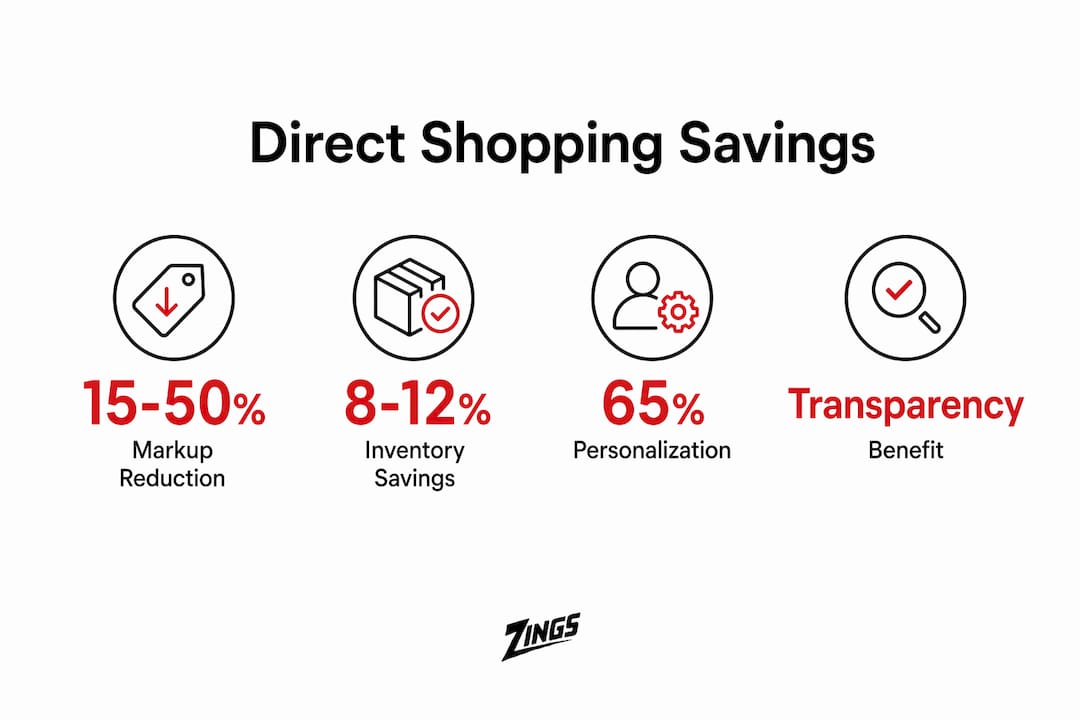
Cutting out those layers reduces markup fees by 15% to 50%, depending on the industry and how many middlemen are involved. A product that costs a brand $30 to make can carry a $90 retail price after passing through three intermediary layers. Buying direct from that brand could bring the price closer to $45 or $55.
The savings are not always automatic, though. Some DTC brands reinvest those savings into marketing, research, and product development rather than passing every dollar back to you. That is not a bad thing. It often means better products and stronger brand support. But it does mean you should compare total landed cost, not just the sticker price.
Key factors that affect your actual savings when buying direct:
- Shipping costs: DTC brands ship individual orders, which can cost more per unit than bulk retail logistics.
- Return policies: Without a retailer safety net, return processes vary widely by brand.
- Promotional timing: Flash sales and loyalty programs at DTC brands often deliver the deepest discounts.
- Product exclusivity: Some items are only available direct, so there is no comparison price to find elsewhere.
Pro Tip: Before you buy direct, add up the full cost: product price, shipping, and estimated return cost if the item does not fit. That total landed cost is your real comparison number against a retail price.
Mature DTC programs also achieve 8–12% cost savings through better inventory management and fewer transaction layers. Those savings compound over time for repeat buyers who use loyalty programs or subscriptions.
What personalized and quality advantages come from buying direct?
DTC brands own their customer data. That single fact changes the entire shopping experience. When you buy from a brand directly, it can track your preferences, purchase history, and size choices to offer you genuinely relevant recommendations. A marketplace like Amazon or a department store does not share that data with the brand. The brand is essentially blind to who you are.
65% of consumers expect personalized brand experiences, and DTC models deliver this by collecting first-party data that boosts conversion rates by 10–15%. That means brands using direct channels are better at showing you what you actually want, not just what is trending. For fashion shoppers, this matters. Getting served the right fit, color, and style from the start saves time and reduces returns.
Quality control is tighter in DTC for a straightforward reason: the brand controls the entire chain from production to your door. There are no third-party warehouses mixing inventory, no gray-market resellers, and no outdated stock sitting on a shelf for two years. What you order is what the brand currently makes and stands behind.
Here is how the DTC quality advantage plays out in practice:
- Direct feedback loops: Brands receive your reviews and complaints without a retailer filtering them. Product improvements happen faster.
- Controlled packaging: DTC brands control packaging and unboxing experiences, which reduces damage in transit and reflects actual brand standards.
- Agile product launches: DTC brands test and iterate products without retailer constraints like minimum order quantities or planogram rules. You get access to new styles faster.
- Loyalty programs: Brands build reward systems directly tied to your purchase behavior, offering better deals the more you engage.
Pro Tip: Sign up for a brand’s email list or loyalty program before your first purchase. Many DTC brands offer a first-order discount and then tier rewards based on spending, which compounds savings over time.
The contrast with traditional retail is clear. A department store carries dozens of brands and has no incentive to personalize your experience for any one of them. A DTC brand has every incentive to know you well.
How does brand transparency in direct shopping benefit consumers?
Brand transparency in DTC shopping means you can trace a product back to its source. You know who made it, where it was made, and under what conditions. That traceability is nearly impossible to verify when a product passes through multiple intermediary hands.
Buying direct from brands helps consumers avoid counterfeit products and verify ethical sourcing by enabling traceability back to the manufacturer. Large marketplaces face a well-documented problem called inventory commingling, where authentic and counterfeit versions of the same product are stored and shipped from the same warehouse. You order the real thing and may receive a fake. That risk does not exist when you buy directly from the brand’s own store.
“DTC transparency supports ethical shopping by giving consumers confidence that products come from verified manufacturers, avoiding counterfeits common in large marketplaces.”
For fashion specifically, transparency matters beyond counterfeits. Ethical sourcing, fair labor practices, and sustainable materials are claims that only hold up when the brand controls its own supply chain. Brands like Patagonia and Everlane built their reputations on publishing exactly where and how their products are made. That level of disclosure is only possible through direct channels. For a deeper look at what ethical sourcing actually means in apparel, the ethical clothing brands guide at Zings365 breaks it down clearly.
Key transparency benefits when you buy direct:
- Verified origins: You know the manufacturer, not just the brand name on the label.
- No commingled inventory: Your product ships from the brand’s own fulfillment, not a shared marketplace warehouse.
- Honest product descriptions: Brands stake their reputation on accuracy. Marketplace sellers often do not.
- Ethical sourcing confirmation: Direct brands can show certifications, factory audits, and material sourcing details.
What are the potential trade-offs with direct-to-consumer shopping?
DTC shopping is not without friction. Buying direct shifts some responsibility to you for returns and warranties, since the retailer safety net is absent. If something goes wrong with a product bought at a department store, the store often handles the resolution. With DTC, you deal with the brand directly, and policies vary.
Common challenges to watch for:
- Shipping delays: Individual order fulfillment is slower than buying from a retailer with local stock.
- Higher shipping costs: Brands shipping single units often charge more than retailers who pass on bulk logistics savings.
- Limited product variety: A single brand’s website will never match the breadth of a marketplace or department store.
- Warranty handling: You must contact the brand directly for repairs or replacements, which can take longer without a retail intermediary.
These trade-offs are manageable. Read the return policy before you buy. Check estimated shipping times. Factor in whether the brand has a physical presence or customer service line you can reach easily.
Pro Tip: Before committing to a DTC purchase, search for the brand’s return policy and customer service reviews separately. A brand with strong reviews and a clear 30-day return window carries far less risk than one with vague policies.
How can consumers make the most of direct-to-consumer shopping?
Getting the most from DTC shopping takes a small amount of upfront research. The benefits of direct shopping are real, but they reward consumers who approach it with a plan.
- Research the brand’s sourcing story. Legitimate DTC brands publish information about their manufacturing, materials, and quality standards. If that information is hard to find, treat it as a warning sign.
- Compare total costs. Add product price, shipping, and potential return costs before comparing to a retail price. Use resources like fashion shopping tips to sharpen your cost comparison skills.
- Use loyalty and subscription options. DTC brands own their customer data and build loyalty programs around it. Joining early gives you access to better personalization and compounding discounts.
- Track flash sales and product launches. DTC brands run clearance and launch promotions without retailer approval. Signing up for notifications puts you first in line for the best prices.
- Check pricing strategy context. Understanding how ecommerce pricing works helps you recognize when a DTC price genuinely reflects savings versus when it has been padded back up through marketing costs.
Pro Tip: Set a browser bookmark folder for your favorite DTC brands and check it at the start of each season. Many brands drop their best deals at seasonal transitions when they need to clear inventory before new collections arrive.
The advantages of buying direct compound over time. The more a brand knows about your preferences, the better its recommendations become. That feedback loop does not exist in traditional retail.
Key takeaways
Buying direct from brands delivers real savings, better personalization, and greater transparency when you approach it with clear expectations.
| Point | Details |
|---|---|
| Pricing savings are real but variable | DTC cuts markup by 15–50%, but total landed cost including shipping determines actual savings. |
| Personalization improves with direct data | Brands use first-party data to tailor recommendations, loyalty rewards, and product launches to your preferences. |
| Transparency reduces counterfeit risk | Buying direct eliminates inventory commingling and lets you verify ethical sourcing and product origins. |
| Trade-offs require consumer awareness | Returns and warranties are handled directly with the brand, so review policies before purchasing. |
| Loyalty programs amplify long-term value | Joining a DTC brand’s loyalty program early compounds discounts and improves your shopping experience over time. |
The DTC shift I keep watching
I have been watching the DTC model grow for years, and the thing that surprises most consumers is how much of the price they pay at a department store is pure overhead. It is not the product. It is the shelf space, the distributor margin, and the retailer’s operating costs. When you buy direct, you are paying for the thing itself.
What I find more interesting than the pricing is the transparency angle. I have seen shoppers pay a premium at a marketplace, confident they are getting the real product, only to receive something that came from a commingled warehouse. The brand had no idea it happened. That problem simply does not exist when you buy from a brand’s own store.
The trade-offs are real, too. I have dealt with DTC return processes that were slower and more frustrating than walking a product back to a store. The lesson I took from that is simple: read the return policy as carefully as you read the product description. A good DTC brand makes returns easy. A bad one makes them a project.
The branding and consumer experience research I find most credible consistently shows that consumers who engage directly with brands report higher satisfaction than those who buy through intermediaries. That tracks with what I observe. When the brand controls the full experience, from packaging to post-purchase messaging, the result is usually better.
— TONY
Direct-to-consumer fashion at Zings365
Zings365 offers men’s and women’s casual fashion directly to consumers, with no retail markup layers between the brand and your order. The catalog covers everything from everyday t-shirts and jeans to seasonal outerwear and accessories, updated regularly with new arrivals.

For men looking for a strong starting point, the British casual fashion shirt at Zings365 shows exactly what direct pricing looks like in practice: quality construction, clear product details, and a price that reflects the absence of intermediary markups. Women’s options include the knit V-neck t-shirt, a clean, versatile piece available at a direct price. Browse the full catalog at Zings365 to see the range across categories and current seasonal collections.
FAQ
What does direct to consumer mean?
Direct to consumer (DTC) means a brand sells its products straight to shoppers through its own website or store, cutting out retailers, wholesalers, and distributors entirely.
How much can you save by buying direct from a brand?
Buying direct can reduce markup fees by 15% to 50% depending on the product category and how many intermediary layers the traditional supply chain includes.
Is buying direct from a brand safer than buying from a marketplace?
Buying direct eliminates the risk of counterfeit products caused by inventory commingling, a known issue on large marketplaces where authentic and fake items can ship from the same warehouse.
What are the main drawbacks of direct-to-consumer shopping?
The main drawbacks are that returns and warranties are handled directly with the brand, shipping costs for individual orders can be higher, and product variety is limited to a single brand’s catalog.
Why do DTC brands offer better personalization?
DTC brands collect first-party data on your purchases and preferences, which they use to personalize recommendations and loyalty rewards in ways that retailers and marketplaces cannot replicate.
