

TL;DR:
- Ethical clothing brands commit to fair labor, safe working conditions, and environmentally responsible production verified through certifications and transparency.
- Key standards include GOTS for organic fibers, Fair Trade for worker rights, and OEKO-TEX for chemical safety, each covering different aspects of ethical fashion.
- Consumers should verify certifications, demand transparency, prioritize durability, and consider secondhand options to make truly responsible clothing choices.
Ethical clothing brands are defined by their commitment to fair labor, safe working conditions, and environmentally responsible production across the full supply chain. The industry term for this practice is responsible fashion, and it covers everything from raw fiber sourcing to end-of-life garment disposal. Brands like Patagonia, Everlane, and Eileen Fisher have set the benchmark by publishing supplier lists, paying living wages, and pursuing third-party certifications. Understanding what makes clothing ethical goes beyond a label on a hangtag. It requires examining labor practices, material sourcing, chemical safety, and the transparency a brand is willing to offer its customers.
What are ethical clothing brands and how are they verified?
Ethical clothing brands prioritize fair wages, worker rights, supplier transparency, and third-party certifications for both social and environmental standards. This definition matters because it separates brands with genuine accountability from those using vague marketing language. A brand that publishes its factory locations, pays above minimum wage, and holds current certifications is operating in a fundamentally different way than one that simply prints “eco-friendly” on its packaging. The gap between those two positions is where most consumer confusion lives.
The core principles of responsible fashion fall into three categories: labor ethics, environmental responsibility, and transparency. Labor ethics covers fair wages, safe factory conditions, and no forced or child labor. Environmental responsibility covers fiber sourcing, water use, chemical management, and carbon output. Transparency means a brand actively discloses where and how its products are made, rather than hiding behind vague sustainability claims.
Certifications are the most reliable shortcut for consumers. They shift the burden of proof from the brand’s marketing team to an independent auditing body. No certification covers every ethical concern, so knowing which certification addresses which issue is the practical skill that separates informed shoppers from those who get misled.
What certifications and standards verify ethical clothing practices?
Three certifications dominate the responsible fashion space: GOTS, Fair Trade, and OEKO-TEX Standard 100. Each addresses a different dimension of ethics, and none of them alone tells the full story.
GOTS (Global Organic Textile Standard) is the most thorough certification for fabric-based ethics. GOTS certification requires 70 to 95 percent certified organic fiber, bans carcinogenic dyes and heavy metals, mandates wastewater treatment, and enforces fair labor conditions audited by independent third parties. This means a GOTS label covers both the environmental and social dimensions of production. For consumers focused on organic cotton, hemp, or linen garments, GOTS is the gold standard.
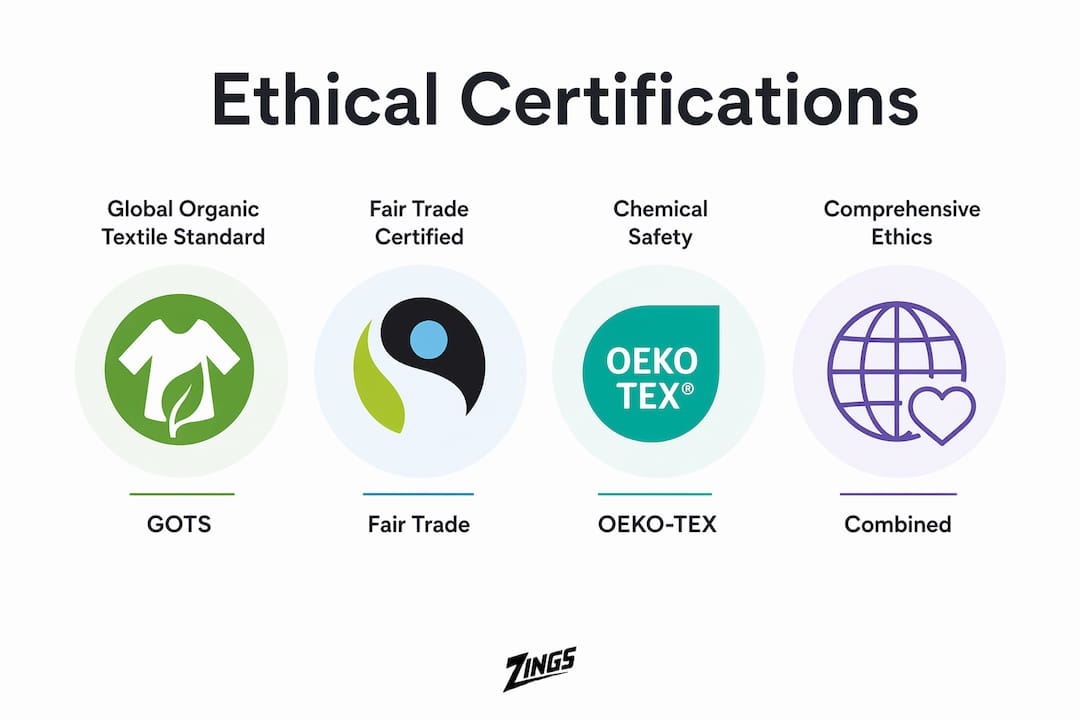
Fair Trade certification operates at the enterprise level rather than the fiber level. Fair Trade standards focus on worker protections, dignified contracts, non-exploitative labor practices, and environmental care verified through a guarantee system. A Fair Trade certified brand has demonstrated that its business model supports the people making its products. This certification is especially relevant when buying from brands that source from developing countries.
OEKO-TEX Standard 100 works differently from both. It certifies finished textiles for harmful chemical residues in the final product, but it does not address upstream production conditions or labor practices. A shirt can carry an OEKO-TEX label and still be made in a factory with poor working conditions. That distinction is critical and frequently misunderstood.
| Certification | Primary focus | Covers labor? | Covers chemicals? | Scope |
|---|---|---|---|---|
| GOTS | Organic fiber + social criteria | Yes | Yes | Full supply chain |
| Fair Trade | Worker rights + fair wages | Yes | Partial | Enterprise level |
| OEKO-TEX Standard 100 | Chemical safety in finished product | No | Yes | Product level |
Pro Tip: Match your ethical concern to the right certification. If you care most about chemical safety in the fabric touching your skin, look for OEKO-TEX. If you want full labor and environmental coverage, prioritize GOTS. If you want to know workers were paid fairly, look for Fair Trade.
Because certifications cover different aspects, the strongest ethical brands typically hold more than one. A brand with both GOTS and Fair Trade certification has addressed organic sourcing, chemical safety, and labor rights simultaneously.
How do ethical clothing brands demonstrate transparency and social responsibility?
Certifications confirm a standard was met at a point in time. Transparency is what shows a brand is maintaining that standard continuously. The two practices work together, and neither is sufficient without the other.
Brands that operate with genuine transparency do several things consistently:
- They publish their factory names and locations, not just country of origin
- They share audit results, including findings and corrective actions taken
- They disclose cost breakdowns so consumers understand where their money goes
- They report on environmental metrics like water use, carbon emissions, and waste
- They update this information regularly rather than posting a one-time sustainability report
Everlane built its reputation specifically on transparent cost breakdowns, showing customers the exact cost of materials, labor, and markup for each product. That practice set a new expectation in the industry. Consumers who saw it once started asking why other brands couldn’t do the same.
Independent audits are the verification layer that makes transparency credible. A brand can write anything on its website. An audit by a recognized third party, such as Bureau Veritas or SGS, means an external organization has physically inspected factories and reviewed payroll records. Brands that welcome audits and publish results are demonstrating accountability. Brands that only reference internal audits are asking you to take their word for it.
Pro Tip: Before trusting a brand’s sustainability claims, search for its most recent audit report or supplier list. If neither exists publicly, treat the brand’s ethical marketing as unverified.
What materials and production methods align with ethical fashion?
Material choice is where environmental responsibility becomes concrete. The fiber a garment is made from determines its water use, chemical load, biodegradability, and carbon footprint across its entire life.
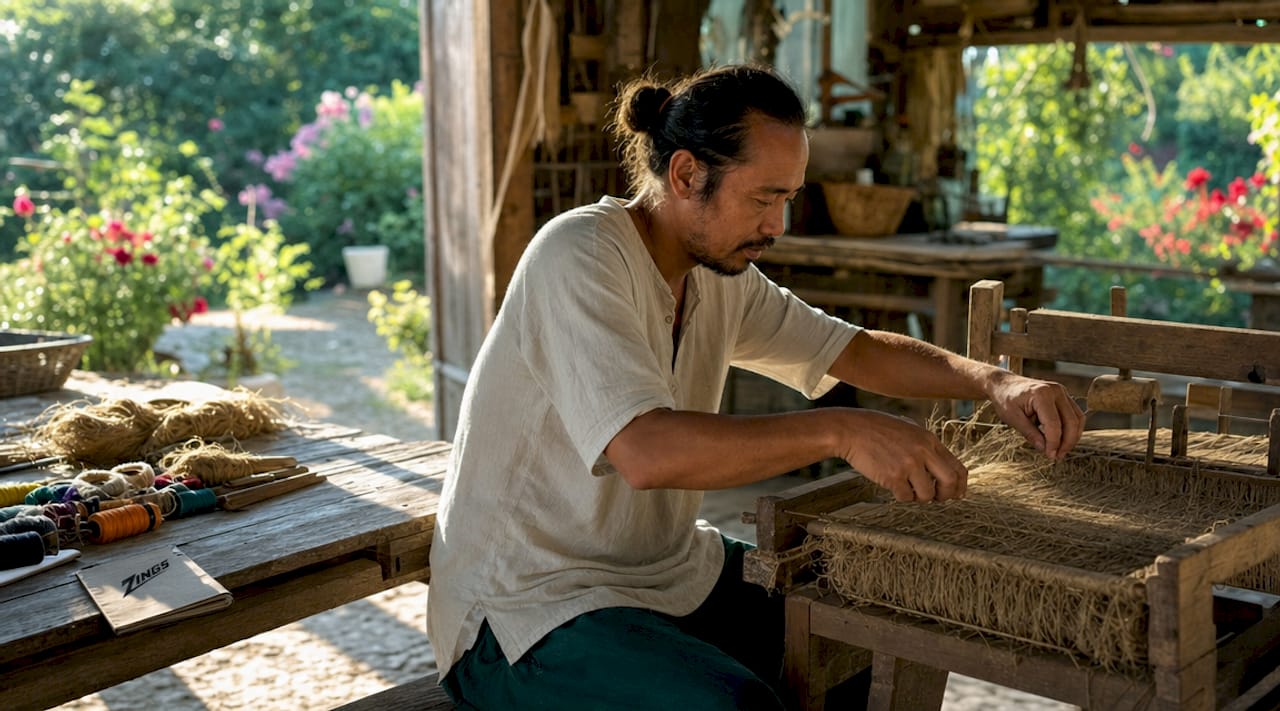
Natural fibers like organic cotton, hemp, and linen paired with ethical production processes reduce environmental impact compared to conventional alternatives. Organic cotton uses no synthetic pesticides and significantly less water than conventional cotton. Hemp requires minimal water and no pesticides. Linen, made from flax, is one of the lowest-impact fibers available. Recycled fabrics, particularly recycled polyester made from plastic bottles, reduce virgin material demand but still shed microplastics during washing.
The risks with synthetic “eco” claims are real. A brand marketing a jacket as sustainable because it contains 20 percent recycled polyester is technically accurate but practically misleading. Polyester does not biodegrade, sheds microplastics with every wash, and is derived from fossil fuels. Consumers should treat recycled synthetics as a partial improvement, not a full solution.
Handcrafted textile production supports artisan communities and preserves traditional skills, but it requires verification. Handmade claims can be used to justify premium pricing without guaranteeing fair wages to the artisans involved. The same principle applies to small-batch production. The method alone does not confirm ethical practice.
Garment durability and longevity are the most underrated factors in ethical fashion. A well-made shirt worn 200 times has a lower per-wear environmental impact than a cheap shirt worn 10 times before it falls apart. Buying quality over quantity is not just a financial strategy. It is a direct reduction in consumption and waste.
Secondhand and vintage clothing represent the most resource-efficient option available. No new fiber, water, or energy is required. Platforms like ThredUp, Depop, and The RealReal have made secondhand shopping accessible at scale, removing the barrier of needing to find a physical thrift store.
How to choose ethical clothing brands: a practical checklist
Identifying genuinely ethical brands requires a short verification process. The following steps apply whether you are shopping for sustainable fashion options online or in a physical store.
- Check for named certifications. Look for GOTS, Fair Trade, or OEKO-TEX labels and verify them on the certifying body’s official database. A logo on a website is not the same as a current, verifiable certificate.
- Determine the scope of the certification. A brand logo may not guarantee that all products comply. Check whether the certification applies to the full company, a specific product line, or individual shipments.
- Ask where the garment is made. Country of origin is a starting point, not a conclusion. Factory-level disclosure is the standard that ethical brands meet.
- Review the brand’s transparency page. Look for supplier lists, audit summaries, and environmental data. If the page contains only aspirational language and no data, treat it with skepticism.
- Prioritize durability over price. A higher upfront cost for a well-made garment is almost always the more ethical and economical choice over time. Use resources like smart sizing guides to buy correctly the first time and avoid returns.
- Use ethical fashion rating tools. Apps and sites like Good On You rate brands on labor, environment, and animal welfare using publicly available data and direct brand surveys.
- Consider secondhand first. Before buying new, check whether the item you need exists secondhand. This applies to everyday basics as much as statement pieces.
Note that fast fashion brands occasionally join ethical initiatives. H&M’s participation in the Ethical Trading Initiative shows progress is possible, but membership in an initiative does not guarantee fully ethical production across all products. Consistent, verifiable practice matters more than organizational membership.
Key takeaways
Ethical clothing brands are verified by a combination of independent certifications, transparent supply chain disclosure, responsible material choices, and consistent auditing practices.
| Point | Details |
|---|---|
| Certifications signal verified ethics | GOTS covers labor and environment; Fair Trade covers worker rights; OEKO-TEX covers chemical safety only. |
| Scope matters as much as the logo | A certification may apply to one product line, not the entire brand catalog. |
| Transparency is the ongoing proof | Brands that publish supplier lists and audit results demonstrate accountability beyond a one-time label. |
| Material choice drives environmental impact | Organic cotton, hemp, and linen have lower impact than virgin synthetics; durability reduces total consumption. |
| Secondhand is the most ethical option | Buying pre-owned clothing requires no new resources and extends garment life significantly. |
Why certifications alone won’t make you a smarter ethical shopper
I’ve spent years watching the responsible fashion space evolve, and the single biggest mistake I see consumers make is treating a certification logo as a final answer. It isn’t. It’s a starting point.
Certifications have genuinely improved. GOTS has tightened its chemical restrictions and expanded its social criteria over successive versions. Fair Trade has strengthened its guarantee system. These are real improvements that matter. But the gap between what a certification covers and what a consumer assumes it covers remains wide.
The brands I trust most are the ones that make transparency uncomfortable for themselves. Publishing a supplier list is easy when every factory is perfect. Publishing one when you’re still working through corrective actions takes actual commitment. Everlane did this. Patagonia does this. The brands worth supporting are the ones that treat their supply chain as a work in progress rather than a marketing asset.
My practical advice: spend less time reading brand sustainability pages and more time reading their audit summaries and supplier disclosures. If those documents don’t exist publicly, the brand has made a choice about what it wants you to know. That choice tells you something. Buy quality, buy less, and use smart shopping strategies to make every purchase count.
— TONY
Shop ethically made fashion at Zings365

Zings365 carries a catalog of men’s and women’s clothing built around quality construction and considered design. For consumers who want style without compromising on responsible production, the Fall men’s British casual fashion shirt is a strong starting point. It combines a slim fit, jacquard check fabric, and long-sleeve construction in a piece designed to last across multiple seasons. Zings365 makes it straightforward to find well-made clothing at accessible prices, with new arrivals updated regularly so you can shop with both style and conscience in mind.
FAQ
What are ethical clothing brands in simple terms?
Ethical clothing brands prioritize fair wages, safe working conditions, and environmentally responsible production across their full supply chain. They back these commitments with third-party certifications and transparent supplier disclosure rather than marketing claims alone.
How do I know if a brand is truly ethical or just greenwashing?
Check for verifiable certifications like GOTS or Fair Trade on the certifying body’s official database, and look for published supplier lists and independent audit results. Brands that only use vague language like “eco-conscious” without supporting documentation are likely greenwashing.
Does OEKO-TEX certification mean a brand is fully ethical?
No. OEKO-TEX Standard 100 certifies that a finished textile is free from harmful chemical residues, but it does not cover labor conditions or upstream production practices. A garment can carry an OEKO-TEX label and still be made in a factory with poor working conditions.
Are fast fashion brands ever ethical?
Some fast fashion brands participate in ethical initiatives, but participation does not guarantee fully ethical production. Consistent, audited practice across all product lines is the standard that matters, and most fast fashion business models make that standard structurally difficult to meet.
What is the most sustainable way to buy clothing?
Buying secondhand is the most resource-efficient option because it requires no new fiber, water, or energy. When buying new, prioritizing durable, quality garments from certified brands reduces total consumption and environmental impact over time.
