

TL;DR:
- Clothing comfort is a vital aspect of physical and psychological well-being, affecting daily choices and overall health.
- Proper fabric selection, fit, and testing during real activities ensure long-term comfort across different environments and routines.
Clothing comfort is defined as a state of physical and psychological sensory equilibrium between the body and a garment. It is a fundamental consumer need tied directly to survival, wellbeing, and quality of life. Most people treat comfort as a bonus. The science says it is a baseline requirement. When you understand why consider clothing comfort matters at every level, from fabric friction to mental focus, you make better choices every day.
Why consider clothing comfort: the physical foundations
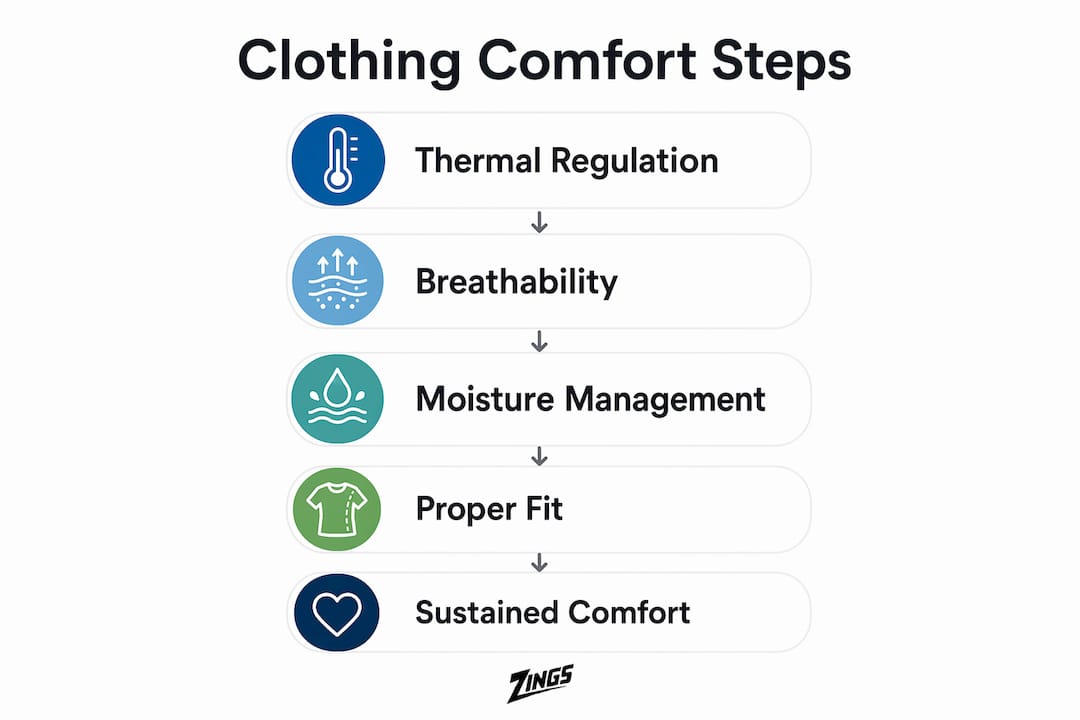
Clothing comfort operates on two distinct levels. The micro level covers localized factors like thermal regulation and textile-to-skin contact. The meso level covers integrated effects during movement, including fit stability and freedom of motion during activity.
Thermal regulation is the most measurable factor. ISO-based protocols for evaluating cooling garments allow a maximum 0.2°C deviation between manikin and human skin temperature. That level of precision shows how sensitive the body is to even minor changes in garment thermal performance. A shirt that traps heat by just a fraction of a degree shifts your comfort perception noticeably.
Breathability and moisture management work alongside thermal regulation. Fabrics that wick sweat away from the skin maintain a stable microclimate between the body and the garment. Cotton excels at softness but absorbs moisture slowly. Merino wool manages moisture and temperature simultaneously. Synthetic blends like polyester-spandex move moisture fast but can feel less natural against the skin.
Fit matters as much as fabric. Meso-level studies show that movement and recovery characteristics of knitwear influence comfort perception more than construction type alone. A garment that fits well at rest but restricts your shoulder rotation during a commute fails the real comfort test.
| Fabric feature | Comfort benefit | Best use case |
|---|---|---|
| Breathability | Reduces heat buildup | Active wear, warm climates |
| Moisture management | Keeps skin dry | Sports, high-activity days |
| Softness | Minimizes skin irritation | Everyday wear, sensitive skin |
| Thermal insulation | Maintains body warmth | Cold environments, outerwear |
| Stretch and recovery | Supports freedom of motion | Office wear, casual daily wear |
Pro Tip: Test any new garment during your typical daily movements, not just while standing still in a fitting room. Sit, reach, and bend to check how the fabric and fit perform under real conditions.
How does clothing affect mood, confidence, and productivity?
Comfortable clothing does more than protect the body. It directly shapes psychological readiness and emotional equilibrium. Sportswear research links breathable, moisture-managing fabrics to increased athletic participation and intrinsic motivation. The same principle applies outside the gym.
When clothing distracts you with tightness, itching, or overheating, your brain allocates attention to managing that discomfort. That attention comes at a cost to focus and task performance. Removing physical discomfort frees cognitive resources for the work in front of you. The benefits of comfortable clothing on productivity are not abstract. They are a direct result of reducing sensory interference.
Confidence follows a similar path. Clothing that fits well and feels good creates a sense of physical ease. That ease translates into more confident posture and more relaxed social interaction. Studies on comfort and motivation show that comfort perception in sportswear relates to psychological factors like task commitment and failure avoidance, not just physical sensation. The same dynamic plays out in everyday clothing choices.
The psychological benefits of comfortable attire include:
- Reduced mental distraction from physical irritation or restriction
- Increased confidence through physical ease and better posture
- Greater task commitment when clothing supports rather than hinders movement
- Lower stress responses linked to thermal discomfort or poor fit
- Improved mood stability throughout the day
Pro Tip: When you need to perform at your best, whether in a meeting or a workout, selecting comfort-focused clothing acts as a quiet confidence booster. It removes one source of friction before the day even starts.
Choosing comfortable clothing for different daily activities
The importance of clothing comfort shifts depending on what you are doing and where you are doing it. A garment that works perfectly in an air-conditioned office may fail outdoors in summer. Matching clothing insulation to your environment is a practical skill with measurable results.
Clothing insulation levels shift perceived thermal sensation, changing the optimal comfortable temperature by approximately 0.9–2.5°C. That range is significant. It means you can resolve indoor comfort conflicts through clothing choices rather than adjusting the thermostat. A lightweight linen shirt in a warm office does more for your comfort than any HVAC setting.
Sleepwear is a category where comfort choices have direct physiological consequences. Wearing far-infrared emitting garments during sleep improves thermal comfort and increases REM sleep percentage without changing total sleep time. Significant reductions in tympanic temperature and sweating rates during sleep were noted. That finding shows that sleepwear comfort is not just about feeling cozy. It actively shapes sleep quality at a physiological level.
Evaluating sleepwear comfort requires integrating physiological measures like skin temperature and sweating rate alongside subjective feedback. In practical terms, this means choosing sleepwear made from natural or temperature-regulating fabrics rather than defaulting to whatever feels soft in the store.
| Activity | Recommended fabric | Key comfort priority |
|---|---|---|
| Daily casual wear | Cotton, linen blends | Softness, breathability |
| Office environment | Merino wool, cotton blends | Thermal regulation, fit |
| Sports and exercise | Polyester-spandex, moisture-wicking synthetics | Moisture management, stretch |
| Sleep | Natural fibers, temperature-regulating fabrics | Thermoregulation, skin contact |
| Outdoor cold weather | Wool, insulated synthetics | Thermal insulation, wind resistance |
Understanding fabric types before you buy gives you a practical framework for matching garments to your actual daily routine.
How to evaluate and maintain clothing comfort over time
First impressions of a garment are unreliable. Comfort changes over time and with activity level. A garment that feels comfortable initially may fail to maintain that comfort during sustained wear or higher metabolic load. Continuous physiological monitoring in comfort studies confirms that thermal comfort depends on both time and activity intensity.
The practical takeaway is to evaluate clothing across a full day of wear, not just at the point of purchase. Wear a new shirt through a full workday before deciding it works. Take new activewear through a complete workout. Comfort that holds up over hours and across different activity levels is the standard worth setting.
Fabric care directly affects long-term comfort. Washing cotton at high temperatures causes shrinkage and stiffness. Over-drying synthetic blends degrades their stretch and moisture-wicking properties. Following care labels preserves the fabric qualities that made the garment comfortable in the first place. The role of fabric choice in maintaining comfort over time is as important as the initial selection.
Common mistakes to avoid when selecting comfortable clothing:
- Buying based on appearance alone without testing fit during movement
- Ignoring fabric composition labels and defaulting to price as a quality signal
- Choosing garments that fit tightly at rest, assuming they will stretch in
- Skipping care label instructions, which degrades fabric performance quickly
- Selecting sleepwear based on softness only, without considering thermoregulation
- Overlooking seam placement, which causes friction during extended wear
Key Takeaways
Clothing comfort is a measurable, science-backed factor that directly shapes physical wellbeing, psychological focus, and daily lifestyle satisfaction across every activity and environment.
| Point | Details |
|---|---|
| Comfort is physical and psychological | Sensory equilibrium involves both thermal regulation and mental ease, not just fabric softness. |
| Fabric choice drives performance | Breathability, moisture management, and stretch determine how well a garment performs across activities. |
| Insulation affects perceived temperature | Clothing insulation shifts your comfortable temperature range by 0.9–2.5°C, making fabric selection a practical tool. |
| Sleepwear impacts sleep quality | Temperature-regulating sleepwear improves REM sleep and reduces nocturnal sweating at a physiological level. |
| Comfort must be tested over time | A garment that feels good at rest may fail during sustained wear. Test across a full day and full activity range. |
Comfort is not a compromise: a perspective worth holding
The fashion industry has spent decades treating comfort and style as opposing forces. That framing is outdated and, frankly, counterproductive. The science on thermal regulation, psychological readiness, and sleep physiology makes a clear case. Comfort is not the soft option. It is the informed one.
What I find most striking is how few people apply the same rigor to clothing that they apply to nutrition or sleep. You would not eat food that made you feel unwell just because it looked appealing. Yet people wear garments that restrict movement, trap heat, and disrupt sleep because the visual presentation won them over at the point of purchase.
The integration of comfort with style is not a future trend. Brands that understand fabric science, fit engineering, and thermoregulation are already building garments that deliver both. The challenge for consumers is learning to read those signals. Fabric composition, construction quality, and fit across movement are the real indicators of a garment worth buying.
Sustainability adds another layer. Garments built for comfort tend to last longer because they are made from better materials and constructed with more care. A quality-focused approach to buying clothing reduces the cycle of replacing cheap, uncomfortable pieces every season. That is better for your wardrobe, your budget, and the environment.
The readers who get the most from this are the ones who stop treating comfort as a preference and start treating it as a criterion. Set a standard. Test garments properly. Read the fabric label. Your body will register the difference within a single day of wear.
— TONY
Comfortable, stylish clothing at Zings365
Zings365 carries a range of casual and everyday garments built with both comfort and style in mind.

The men’s casual fashion shirt combines a slim fit with a resort-style cut, making it a practical choice for daily wear that moves with you. For cooler days, the men’s casual mid-length cotton jacket delivers thermal coverage without bulk. Women looking for layering options will find the oversized cardigans and women’s track suits well-suited for both active and relaxed daily routines. Zings365 updates its catalog regularly with new arrivals across casual, office, and activewear categories.
FAQ
What is clothing comfort, exactly?
Clothing comfort is a state of physical and psychological sensory equilibrium between the body and a garment. It involves thermal regulation, fabric-to-skin interaction, fit, and freedom of movement.
Why does fabric choice matter for daily comfort?
Fabric determines breathability, moisture management, and stretch, all of which directly affect how a garment performs across different activities and temperatures. Choosing the right fabric for daily wear is the single most effective step toward sustained comfort.
How does clothing affect sleep quality?
Sleepwear made from temperature-regulating fabrics reduces nocturnal sweating and tympanic temperature, which increases REM sleep percentage. The physiological impact of sleepwear comfort goes well beyond subjective feel.
Can comfortable clothing improve productivity?
Comfortable clothing reduces sensory distraction, freeing cognitive resources for focus and task performance. Research on sportswear links comfort perception to increased motivation and task commitment, a dynamic that applies equally to everyday wear.
How do I know if a garment will stay comfortable over time?
Test the garment through a full day of typical activity, not just at the point of purchase. Comfort that holds across sustained wear and varying activity levels is the reliable standard. Follow care instructions to preserve fabric performance over repeated washing.
