

TL;DR:
- Accessorizing casual wear involves selecting and layering key accessories to enhance simple outfits and create polished looks. A structured workflow, focusing on one focal accessory and 2-3 supporting pieces, ensures balanced and intentional style. Prioritizing quality, personal expression, and adherence to the visual thirds rule results in consistent, effortless accessorizing.
Accessorizing casual wear is the practice of selecting and layering accessories to transform simple outfits into polished, personality-driven looks. A structured accessorizing casual wear workflow removes guesswork from daily dressing and replaces it with repeatable decisions that consistently produce better results. Accessories account for up to 30% of an outfit’s visual impact. That figure means a plain white tee and jeans can read as either forgettable or intentional based entirely on what you add. Fashion editors from Diana Vreeland to the current team at Vogue have long treated accessories as the finishing layer that defines a look, not decorates it. The right workflow makes that finishing layer feel effortless every time.
What are the best accessories for casual wear?
The foundation of any casual outfit accessories strategy starts with a short list of high-impact staples. Crossbody bags, minimalist jewelry, scarves, statement sunglasses, and white sneakers are the top performers for casual looks. Each one adds refinement without competing with the outfit itself. The key is choosing pieces that serve both function and style at the same time.
Here are the core casual accessories worth owning:
- Minimalist jewelry: Thin gold or silver chains, small hoop earrings, and stacking rings add visual interest without weight or noise.
- Crossbody bags: Structured crossbody bags in neutral tones anchor a casual outfit and keep proportions balanced.
- Scarves: A lightweight scarf works as a neck wrap, bag tie, or hair accessory, giving you three styling options from one piece.
- Sunglasses: A single quality frame in a classic shape (aviator, wayfarer, or round) reads as a style statement on its own.
- White sneakers: Brands like Nike Air Force 1 and Adidas Stan Smith function as accessories in their own right, grounding casual looks with clean lines.
- Hats and beanies: A well-fitted baseball cap or knit beanie adds structure to relaxed outfits and signals intentional styling.
- Belts: A leather or woven belt defines the waist on oversized pieces and adds a finishing detail to jeans or trousers.
Quality beats quantity in every case. Two or three well-made pieces outperform a drawer full of cheap options every time. Investing in fewer items also makes your workflow faster because you are choosing from a curated set rather than a cluttered one. Check out casual outfit ideas to see how these staples work across different settings.
Pro Tip: Pick accessories that work in at least two different outfit combinations before buying. If a piece only works with one look, it is a costume prop, not a wardrobe tool.
How do you build a step-by-step accessory workflow?
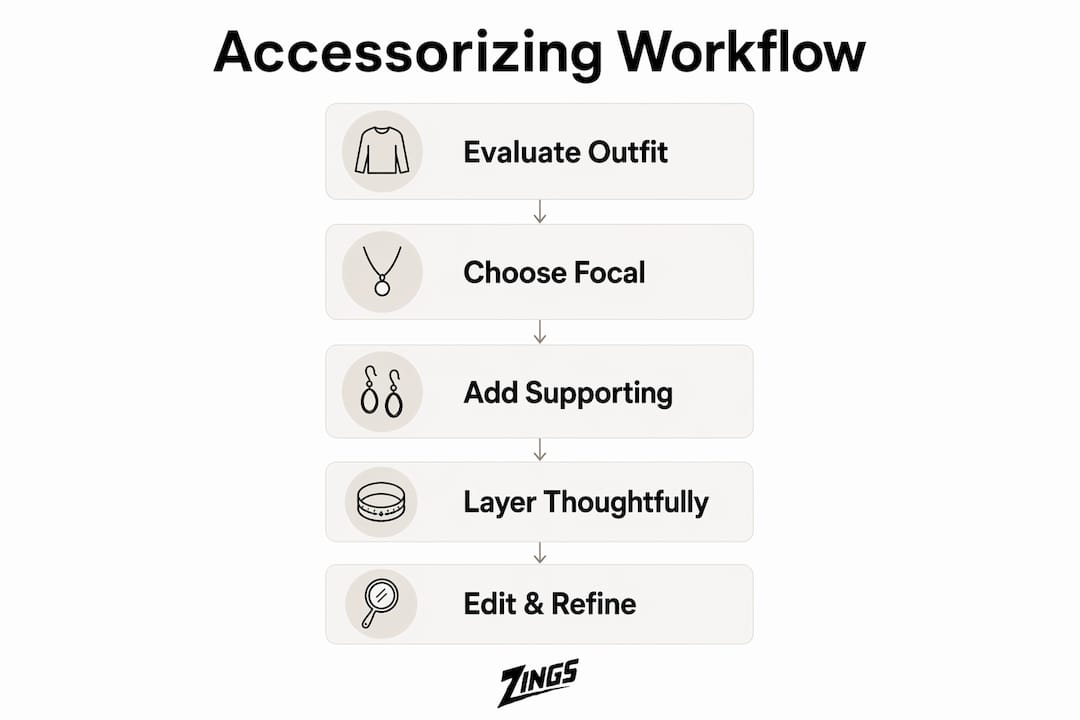
A reliable workflow for accessorizing casual outfits follows four sequential steps. Skipping any step is where most styling mistakes happen.
-
Evaluate the outfit first. Look at fabric weight, color palette, silhouette, and occasion. Tailored clothing pairs best with structured accessories, while soft fabrics like jersey or linen call for delicate jewelry and relaxed bags. A structured tote with a flowy linen dress creates a visual clash. A woven bag or simple chain does not.
-
Choose one focal accessory. The focal piece is the item the eye lands on first. It could be a statement necklace, a bold hat, or a patterned scarf. Everything else you add should support it, not compete with it. A single focal accessory is the defining principle of balanced accessorizing.
-
Add 2–3 supporting pieces maximum. Stylists recommend 2–3 thoughtfully selected accessories for casual looks. More than that and the outfit starts to feel cluttered. Supporting pieces should be quieter than the focal item in color, size, or texture.
-
Apply the visual thirds rule. Placing statement pieces in the top, middle, or bottom third of your outfit creates harmony and prevents competing focal points. A bold hat (top third) pairs well with simple shoes (bottom third) and a plain belt (middle third). This rule produces professional-looking results without requiring formal training.
The table below maps outfit types to the right accessory approach:
| Outfit Type | Focal Accessory | Supporting Pieces |
|---|---|---|
| White tee and jeans | Statement sunglasses | Thin chain necklace, white sneakers |
| Oversized hoodie | Structured crossbody bag | Simple hoop earrings, clean belt |
| Linen shirt and trousers | Woven hat | Minimalist bracelet, leather sandals |
| Casual dress | Bold earrings | Dainty ring, neutral sneakers |
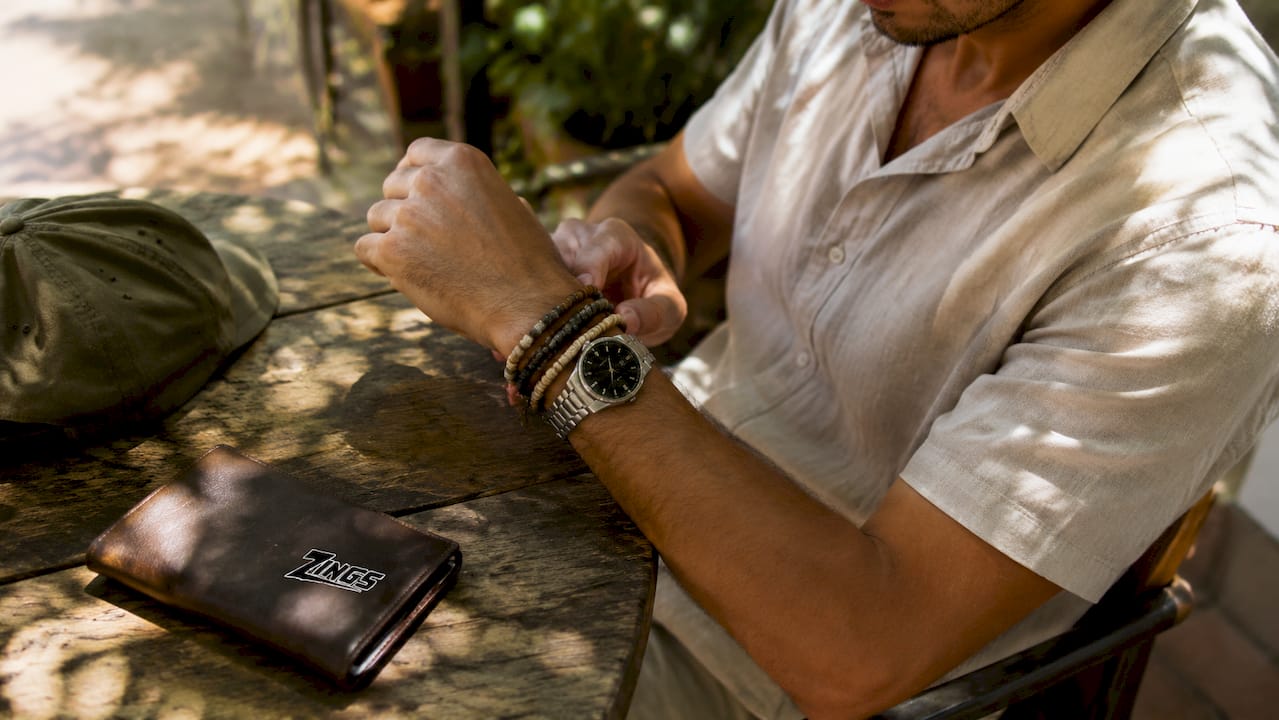
Layering accessories adds depth to casual looks. Mixing metals is acceptable when you keep the scale consistent. Pairing a fine gold chain with a chunky silver cuff creates tension. Pairing two fine chains in different metals reads as intentional and modern. Texture mixing follows the same logic. A leather bag with a knit scarf works. A leather bag with a leather belt and leather boots in the same shade reads as monotone.
Pro Tip: Build your outfit from the inside out. Clothes first, focal accessory second, supporting pieces third. Reversing this order leads to over-accessorizing almost every time.
What mistakes should you avoid when accessorizing casual wear?
Most accessorizing errors fall into three categories: too much, wrong match, and wrong context. Recognizing them early saves you from leaving the house in a look that feels off.
Common mistakes and how to fix them:
- Over-accessorizing: If you cannot identify one clear focal point, the outfit is over-accessorized. Remove pieces one at a time until the focal item becomes obvious again.
- Mismatched formality: A structured leather briefcase with a graphic tee and joggers creates a formality clash. Match the accessory’s weight and finish to the outfit’s register. Casual clothes call for casual accessories.
- Ignoring comfort: An accessory that shifts, pinches, or requires constant adjustment will affect how you carry yourself. Confidence is part of style. Choose pieces you can forget you are wearing.
- Ignoring weather and movement: A long scarf is impractical in humid heat. Dangling earrings are a poor choice for a day of physical activity. Accessories should fit the day’s demands, not just the outfit.
“Before you leave the house, look in the mirror and take one thing off.” — Coco Chanel
Coco Chanel’s rule is the most practical accessorizing test ever articulated. It forces you to edit rather than add, which is the harder and more valuable skill. Apply it every time you feel uncertain about a look.
For budget-conscious shoppers building a smarter accessory collection, these fashion shopping tips cover how to buy well without overspending.
How does accessory styling differ by gender and personal expression?
Accessory styling is not one-size-fits-all. Gender, personal identity, and lifestyle all shape which pieces work and how to wear them.
For men, casual accessories are frequently underused. Men’s accessories like bracelets, hats, and belts bring personality and style impact to casual outfits. A plain navy crewneck and chinos becomes a considered look when you add a leather watch, a simple bracelet, and clean white sneakers. The pieces are minimal. The effect is not. Many men underestimate how much a single well-chosen accessory shifts the perception of an entire outfit.
For women, the challenge is often editing down rather than adding up. The instinct to layer more is natural, but restraint produces cleaner results. A silk scarf tied to a bag handle, a pair of gold hoops, and a structured tote is a complete accessory story. Nothing more is needed.
Gender-neutral accessory strategies worth considering:
- Caps and beanies work across all gender expressions and add structure to relaxed silhouettes.
- Minimalist chains in gold or silver read as polished on any body and any outfit.
- Canvas or leather tote bags function as both practical tools and style anchors.
- Sunglasses are the single most universally flattering accessory category regardless of gender or style identity.
Personal expression matters more than trend alignment. Accessories are the part of your outfit where individual identity shows most clearly. A vintage pin on a denim jacket, a handmade bracelet, or a scarf from a specific trip all communicate something about who you are. Trends offer starting points, not rules. The casualwear layering process at Zings365 covers how to build outfits that reflect your personal style from the ground up.
Pro Tip: Choose one accessory that has personal meaning to you and build the rest of the look around it. Style that connects to identity always reads as more authentic than style that chases trends.
Key takeaways
A consistent accessorizing casual wear workflow produces better results than instinct alone because it applies the same proven principles to every outfit decision.
| Point | Details |
|---|---|
| Accessories drive visual impact | Accessories account for up to 30% of an outfit’s visual impact, making them the highest-return styling tool. |
| One focal piece is the rule | Choose one statement accessory per outfit and let every other piece support it quietly. |
| Limit to 2–3 accessories | Stylists consistently recommend 2–3 pieces for casual looks to maintain balance and avoid clutter. |
| Match accessories to fabric and occasion | Structured accessories suit tailored clothes; soft fabrics call for delicate, relaxed pieces. |
| Edit before you leave | Apply Coco Chanel’s mirror test and remove one item whenever a look feels overdone. |
Why i think most people accessorize backwards
Most people I observe reach for accessories after they are already dressed and treat them as an afterthought. That is the wrong sequence. The focal accessory should inform the rest of the outfit, not react to it. I learned this the hard way after years of adding a watch or a necklace at the last second and wondering why the look never felt complete.
The visual thirds rule changed how I approach every outfit. Once you start thinking in thirds, you stop stacking accessories in the same zone and start distributing visual weight deliberately. It takes about two weeks of practice before it becomes automatic.
The other shift worth making is separating trend accessories from signature accessories. Trend pieces have a short shelf life and often feel forced. Signature pieces, the ones you reach for repeatedly because they feel like yours, are what make a style look personal rather than assembled. My advice is to spend more on two or three signature pieces and spend almost nothing on trend items. The jewelry styling guidance from USA Jewels is one of the better resources I have found for understanding how to choose pieces that last beyond a single season.
The goal of any accessory workflow is to make good decisions faster. When the process becomes second nature, getting dressed stops feeling like a problem to solve and starts feeling like something you are actually good at.
— TONY
Find your next signature piece at Zings365
Zings365 carries casual accessories and clothing designed to work with the workflow described above. The range includes pieces that function as both focal accessories and supporting items across a variety of casual looks.

The Fashion Stretchy Satin Lined Beanie is currently available at 40% off with code DEAL. It works as a top-third focal accessory on any casual outfit and pairs cleanly with minimalist jewelry and a crossbody bag. For men building a casual wardrobe with accessories in mind, the Men’s Casual Jacket at Zings365 provides a structured layer that pairs well with belts, watches, and simple chains. Browse the full catalog at Zings365 to find pieces that fit your personal accessory workflow.
FAQ
What is the accessorizing casual wear workflow?
The accessorizing casual wear workflow is a four-step process: evaluate the outfit, choose one focal accessory, add 2–3 supporting pieces, and apply the visual thirds rule for balanced placement. Following this sequence produces consistent, polished results.
How many accessories should you wear with a casual outfit?
Stylists recommend 2–3 accessories for casual looks. More than three pieces typically creates visual clutter and removes the clear focal point that makes an outfit feel intentional.
What are the best accessories for everyday casual style?
The top accessories for everyday style are crossbody bags, minimalist jewelry, scarves, sunglasses, white sneakers, hats, and belts. Each one adds polish to casual basics without requiring a formal outfit to justify them.
How do men accessorize casual outfits effectively?
Men’s casual accessorizing works best with three to four understated pieces: a leather watch, a simple bracelet, a clean belt, and a hat or cap. Bracelets, hats, and belts are the highest-impact starting points for men new to accessorizing.
What is the visual thirds rule in accessorizing?
The visual thirds rule divides the body into top, middle, and bottom zones and places accessories in different zones to avoid stacking visual weight in one area. Placing statement pieces across thirds creates harmony and prevents competing focal points.
