

TL;DR:
- Price influences fashion choices by signaling quality and shaping perceptions of social identity. Budget shoppers benefit most by focusing on cost-per-wear, which helps prioritize value over price alone. Clothing has low price sensitivity, making style and brand perception critical factors in purchase decisions.
Price is the single most powerful filter shaping fashion choices, determining not just what you can afford but what you believe a garment is worth. The role of price in fashion choices goes beyond budget math. It shapes perceived quality, signals social identity, and drives the timing of every purchase you make. A survey from april 2026 found that 48% of consumers are actively cutting fashion spending, while 22% are shifting toward value purchases. That shift reflects a broader truth: price and style are inseparable, and understanding how they interact gives budget-conscious shoppers a real advantage.
How does price influence fashion choices?
Price functions as a quality signal long before you touch the fabric. Higher prices create perceptions of luxury and emotional attachment that lower prices simply cannot replicate. This is the core of what retail analysts call price psychology, the study of how cost shapes consumer perception beyond its role as a financial barrier.
The effect works in both directions. A $15 t-shirt triggers fast, low-risk decisions. A $150 shirt triggers deliberation, comparison, and a stronger emotional investment in the outcome. Neither response is irrational. Each reflects how your brain uses price as a proxy for information it does not otherwise have.
“Price in fashion serves as a subtle yet powerful message shaping consumer identities and perceptions beyond mere affordability.”
Mid-range pricing occupies a particularly interesting position. It balances aspiration with approachability, making shoppers feel they are getting quality without overpaying. Brands that price in the $40–$90 range for casual wear consistently attract buyers who want style credibility without the guilt of a luxury purchase. That psychological sweet spot drives repeat buying more reliably than either extreme.
Lower prices do speed up decisions, but they also reduce long-term loyalty. When a garment costs very little, you attach less meaning to it. You replace it faster. You care less if it wears out. That cycle keeps budget shoppers buying volume instead of value, which is exactly the trap that smart wardrobe budgeting is designed to break.
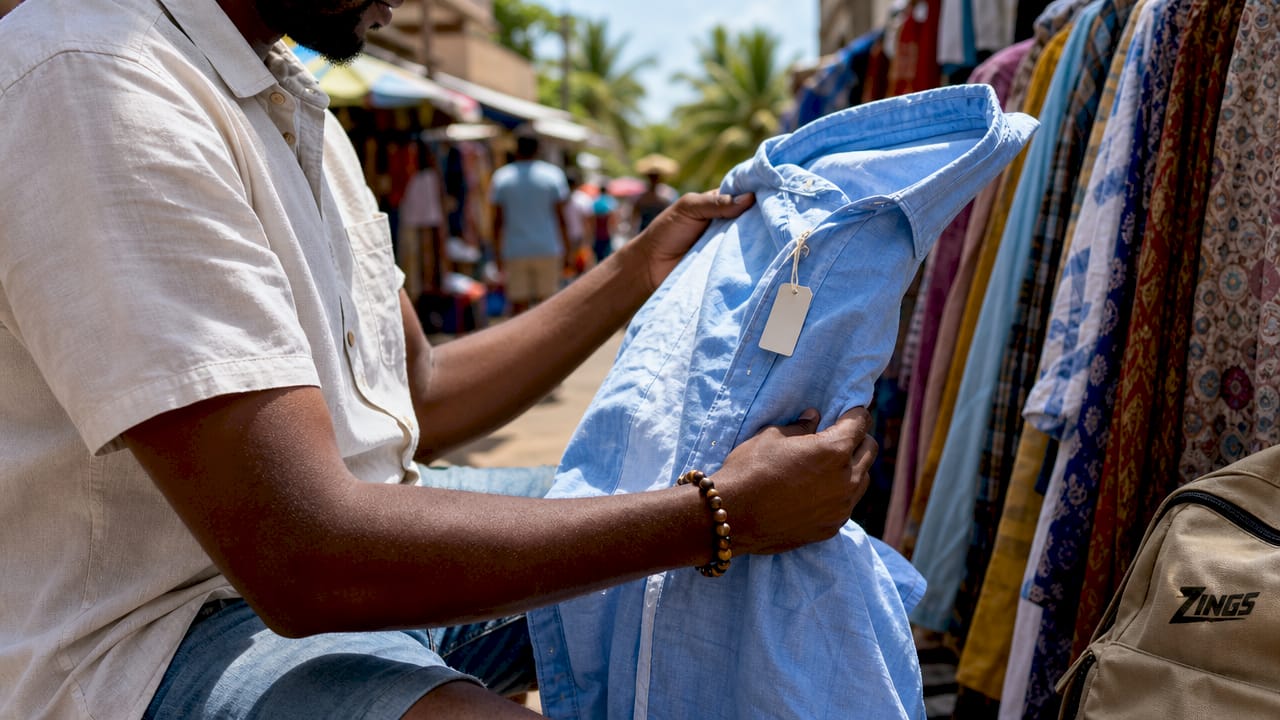
How can budget-conscious shoppers manage price impacts strategically?
The most effective tool for budget shoppers is not a discount code. It is the cost-per-wear calculation. Cost-per-wear divides the price of a garment by the number of times you wear it. A $200 jacket worn 150 times costs roughly $1.30 per wear. A $40 top worn twice costs $20 per wear. The expensive jacket is the better financial decision by a wide margin.
This reframe changes how you shop. Instead of asking “Is this cheap enough?” you ask “Will I wear this enough?” That single question eliminates most impulse purchases and redirects spending toward pieces with real staying power.
Here are four strategies that put this thinking into practice:
- Calculate cost-per-wear before buying. Divide the price by a realistic estimate of how often you will wear the item per year, multiplied by how many years it will last. Anything above $5 per wear deserves a second look.
- Buy off-season deliberately. Seasonal inversion buying means purchasing winter coats in july and summer pieces in september. Retailers discount aggressively to clear inventory, and the quality is identical to full-price stock.
- Concentrate spending on high-visibility pieces. Invest in outerwear, well-fitting jeans, and versatile shirts. Economize on basics like plain undershirts and socks where quality differences are minimal.
- Understand outlet versus main line quality. Factory and outlet versions of clothing often use lower-grade fabrics and looser stitching than the same brand’s main collection. The lower price reflects a real quality difference, not just a markdown.
Pro Tip: Before any fashion purchase, check the care label and fabric composition. Garments with higher natural fiber content, such as cotton or wool, typically outlast synthetic blends and deliver better cost-per-wear value.
Targeted spending beats volume buying every time. Buying three well-chosen pieces that you wear constantly beats buying ten cheap items that rotate out of your wardrobe within a season. The affordable fashion guide at Zings365 breaks this down by category, which makes it easier to prioritize where your budget does the most work.
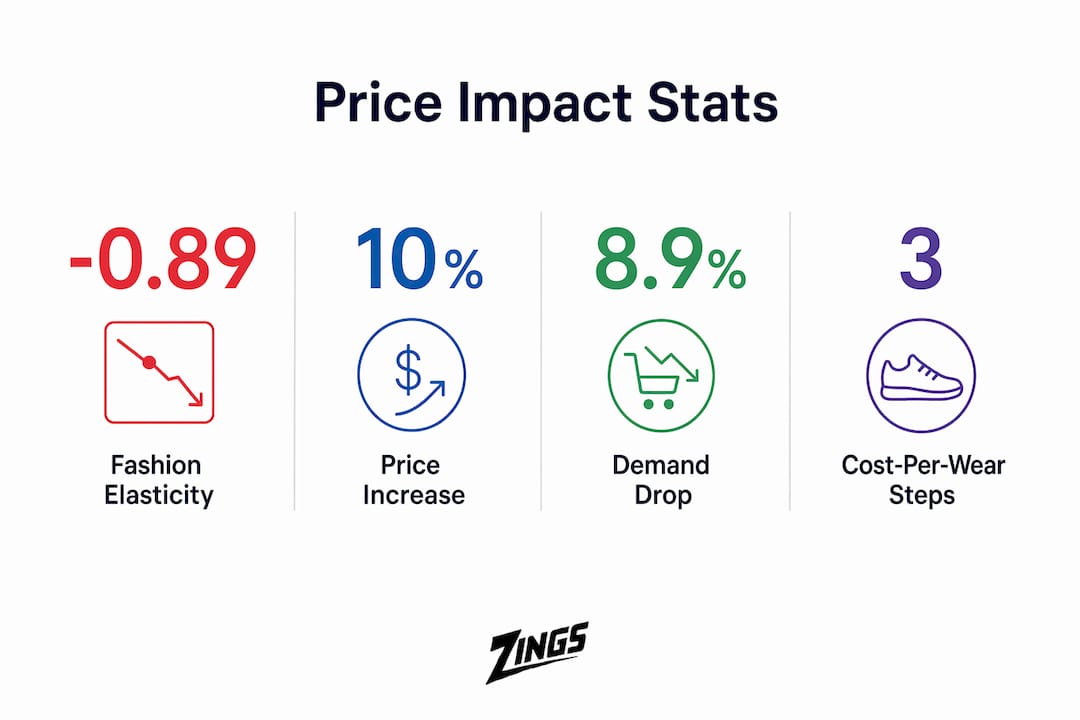
What does price sensitivity data tell us about fashion behavior?
Fashion apparel has a price elasticity of -0.89, meaning a 10% price increase reduces demand by roughly 8.9%. That is significantly less sensitive than electronics, which sits at -1.72, or groceries at -1.41. Fashion buyers are less likely to abandon a purchase because of a price increase than buyers in almost any other retail category.
| Category | Price Elasticity | Sensitivity Level |
|---|---|---|
| Fashion apparel | -0.89 | Low |
| Groceries | -1.41 | Moderate |
| Electronics | -1.72 | High |
This matters for shoppers because it explains why fashion sales and discounts work differently than grocery promotions. A 20% discount on cereal drives immediate volume. A 20% discount on a premium casual jacket may not move the needle much if the brand has strong identity. The purchase decision in fashion is driven more by style fit and brand perception than by price alone.
Brand identity reduces pure price competition in fashion more than in almost any other category. That is why premium casual brands rarely need to discount aggressively. Their buyers are not primarily price-motivated. Budget-conscious shoppers can use this insight to their advantage: when a brand does run a sale, it is often a genuine opportunity rather than a sign of declining quality.
Common misconceptions about price and value in casual fashion
The biggest myth in budget fashion is that a lower price always means lower quality or less style. That is false, and the data on fashion spending habits supports a more nuanced picture. Price timing, not price level, is often the real variable.
Several misconceptions consistently cost budget shoppers money:
- Cheap equals unfashionable. Trend cycles move fast. A $25 shirt in the right silhouette can look as current as a $150 version. Style is about proportion, fit, and color, not price tags.
- Expensive always means durable. Premium pricing reflects brand investment and marketing as much as material quality. A mid-range piece from a reliable retailer can outlast a luxury item with poor construction.
- Sales are always the best time to buy. Retailers mark up prices before promotional events. Waiting a few days after a sale ends can sometimes yield better deals as prices fluctuate on remaining inventory.
- Budget fashion is a compromise. Effective budget fashion strategy means investing in key pieces with perfect fit while spending less on items that matter less to your overall look.
Pro Tip: Try a new budget piece in a low-stakes context before committing to it as a wardrobe staple. Wear it on a casual errand day. If you reach for it again within a week, it has earned its place.
Experimenting with affordable pieces also reduces financial risk when testing new styles. If a trend does not suit you, a $30 experiment costs far less than a $200 mistake. That freedom to try is one of the genuine advantages of shopping trendy clothing at accessible price points.
Key Takeaways
Price shapes fashion choices through psychology, budget constraints, and perceived value, making cost-per-wear the most reliable measure of what any garment is actually worth.
| Point | Details |
|---|---|
| Price signals quality | Higher prices create perceptions of quality and loyalty; lower prices speed up decisions but reduce attachment. |
| Cost-per-wear is the key metric | Divide garment price by expected wears to find true value, not just sticker price. |
| Fashion has low price sensitivity | At -0.89 elasticity, fashion buyers respond less to price changes than grocery or electronics shoppers. |
| Off-season buying saves money | Buying winter clothes in summer and summer clothes in fall delivers steep discounts on identical quality. |
| Outlet quality differs from main lines | Factory versions often use lower-grade materials, so the lower price reflects a real quality gap. |
My honest take on price and personal style
Spending years watching how people shop casual fashion, one pattern stands out clearly. The shoppers who look best on a budget are not the ones who spend the least. They are the ones who spend most intentionally.
I have seen people drop $300 on a haul of fast fashion pieces and look forgettable within a month. I have also seen someone build a genuinely sharp wardrobe around six well-chosen items that cost less combined. The difference is not money. It is the decision to ask “do I actually need this, and will I actually wear it?” before every purchase.
The emotional pull of a sale is real. Retailers design it that way. A discount triggers urgency, and urgency bypasses the rational calculation you would otherwise make. Recognizing that mechanism does not make you immune to it, but it does give you a half-second pause that can save you from a lot of purchases you will regret.
My practical rule: if I cannot picture myself wearing something in three specific situations within the next 30 days, I do not buy it. That filter alone has cut my fashion spending significantly while improving how I actually look day to day. Price matters, but intention matters more.
— TONY
Casual style at Zings365 that works for your budget
Budget-conscious shoppers do not have to choose between style and value. Zings365 carries casual men’s pieces designed to deliver both, with pricing that makes cost-per-wear math work in your favor.

The Fall Men’s British Casual Shirt is a strong example: a versatile, slim-fit long-sleeved shirt that works across multiple settings, which is exactly the kind of piece that earns its price through frequency of wear. For outerwear, the Men’s Casual Jacket offers a modern silhouette at a price point that fits a real wardrobe budget. Zings365 also updates seasonal collections regularly, so checking back during off-season windows gives you access to the best value timing on new arrivals.
FAQ
What is the role of price in fashion choices?
Price acts as both a budget filter and a quality signal in fashion. It shapes what consumers buy, how quickly they decide, and how much emotional value they attach to a garment.
Does a higher price always mean better quality in clothing?
Not always. Premium pricing reflects brand investment and marketing as much as material quality. Outlet and factory versions of the same brand often use lower-grade materials, but high-street pricing does not guarantee superior construction either.
What is cost-per-wear and why does it matter?
Cost-per-wear divides a garment’s price by the number of times you wear it. A $200 jacket worn 150 times costs about $1.30 per wear, making it a better value than a $40 item worn only twice.
How price-sensitive are fashion consumers compared to other shoppers?
Fashion apparel has a price elasticity of -0.89, lower than groceries at -1.41 and electronics at -1.72. Fashion buyers are less likely to change their purchase decision based on price alone.
When is the best time to buy clothes on a budget?
Buying off-season delivers the steepest discounts on current-quality stock. Purchasing winter clothing in summer and summer pieces in early fall consistently yields the best savings without sacrificing style or durability.
