

TL;DR:
- Versatile clothing includes garments with neutral colors, timeless silhouettes, and durable fabrics suitable for multiple settings. Building a wardrobe of 30–40 well-chosen pieces enables hundreds of outfit combinations while reducing costs and decision fatigue. Key tools for selecting versatile outfits include compatibility checks, the 3-switch method, and focusing on high-quality basics like shoes and layering accessories.
Versatile clothing is defined as garments designed to work across multiple occasions, seasons, and settings with minimal restyling effort. The industry term for this approach is “capsule dressing,” and it centers on neutral colors, timeless silhouettes, and durable fabrics that hold their shape over time. A well-built versatile wardrobe cuts your morning routine, reduces spending on single-use pieces, and gives you more outfit combinations from fewer items. Brands like Cedar & Lily Clothier and style guides from Westwood Hart consistently point to blazers, white button-down shirts, dark wash jeans, tailored trousers, and neutral sweaters as the foundation of any adaptable closet.
What is versatile clothing, and what makes a piece truly adaptable?
Versatile clothing works across multiple settings because of specific design choices, not accident. Cut, fabric, color, and proportion all determine whether a piece earns its place in your rotation or sits unused after one wear.
The core features that define a versatile garment are:
- Neutral color palette. Colors like white, navy, gray, camel, and black pair with almost anything. They do not compete with other pieces, which makes mixing and matching effortless.
- Timeless silhouette. A well-fitted blazer or straight-leg trouser does not go out of style after one season. Trend-driven cuts limit a garment’s lifespan.
- Durable fabric. Merino wool and high-quality cotton blends retain their shape and formality over time. Poor fabric choices cause quick wear and make pieces look casual even when you need them to look polished.
- Clean finish and sharp detailing. According to Cedar & Lily Clothier, cut, texture, and finish are what give a versatile piece personality. A garment can be adaptable without being boring.
- Compatibility with your existing wardrobe. A piece is only versatile if it works with what you already own. Buying in isolation creates gaps, not options.
Pro Tip: Before buying any new piece, hold it against three items already in your closet. If it pairs naturally with all three, it earns a spot. If it only works with one, leave it on the rack.
The 70–80% rule is a useful framework here. Most items in your wardrobe should sit within a limited, compatible color palette. That foundation is what makes every piece feel like it belongs together.
What are the real benefits of a versatile wardrobe?
Building a wardrobe around versatile pieces delivers measurable advantages. The benefits go beyond saving closet space.
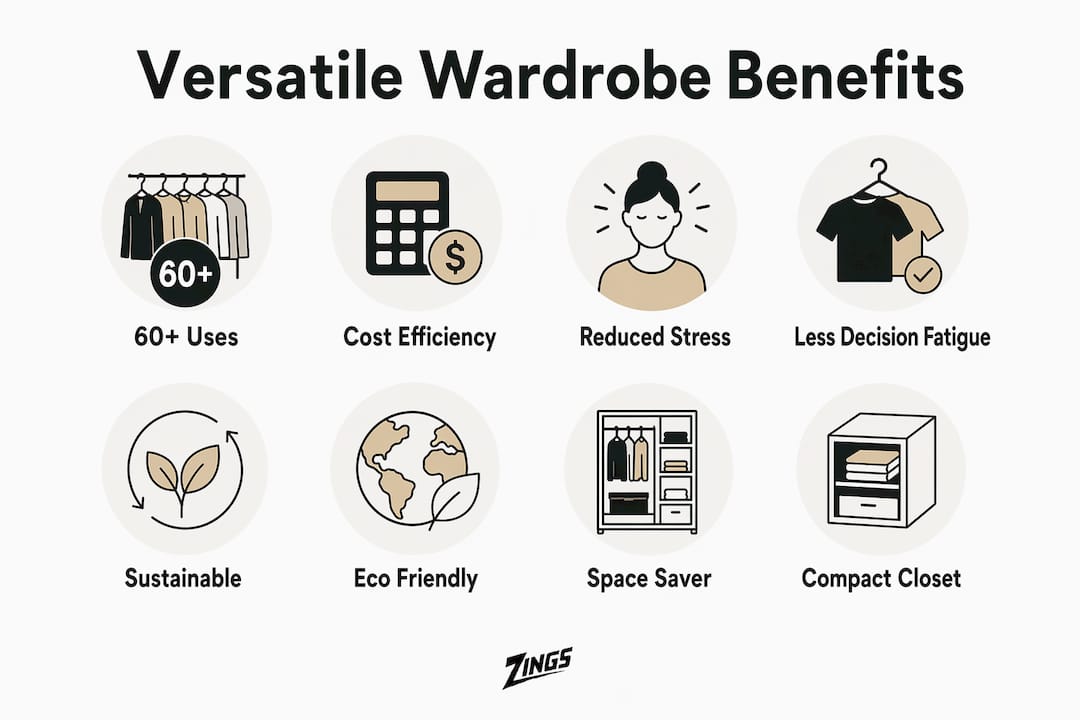
Lower cost per wear is the most direct financial gain. A $120 blazer worn 60 times costs $2 per wear. A $40 trend piece worn twice costs $20 per wear. Focusing on quality over quantity reduces impulsive buying and cuts long-term spending.
Reduced decision fatigue is a real cognitive benefit. When every piece in your closet works with every other piece, choosing an outfit takes seconds instead of minutes. That mental clarity adds up across a week.
Environmental impact matters too. Fast fashion produces enormous textile waste. A sustainable wardrobe built in 2026 around durable, adaptable pieces reduces how often you discard and replace clothing.
The numbers below show the practical difference between a typical wardrobe and a curated versatile one:
| Wardrobe Type | Approximate Pieces | Outfit Combinations | Daily Decision Time |
|---|---|---|---|
| Typical mixed wardrobe | 80–120 items | Hundreds, but many unwearable | 10–20 minutes |
| Curated versatile wardrobe | 30–40 items | Hundreds of functional options | Under 5 minutes |
A curated wardrobe of 30–40 pieces generates hundreds of outfit options when built around a cohesive color palette. That is the core argument for quality over volume.
Versatile clothing examples and how to style them
The most effective versatile pieces share one trait: they transition between contexts without requiring a full outfit change. Here are the strongest examples, with styling notes for each.
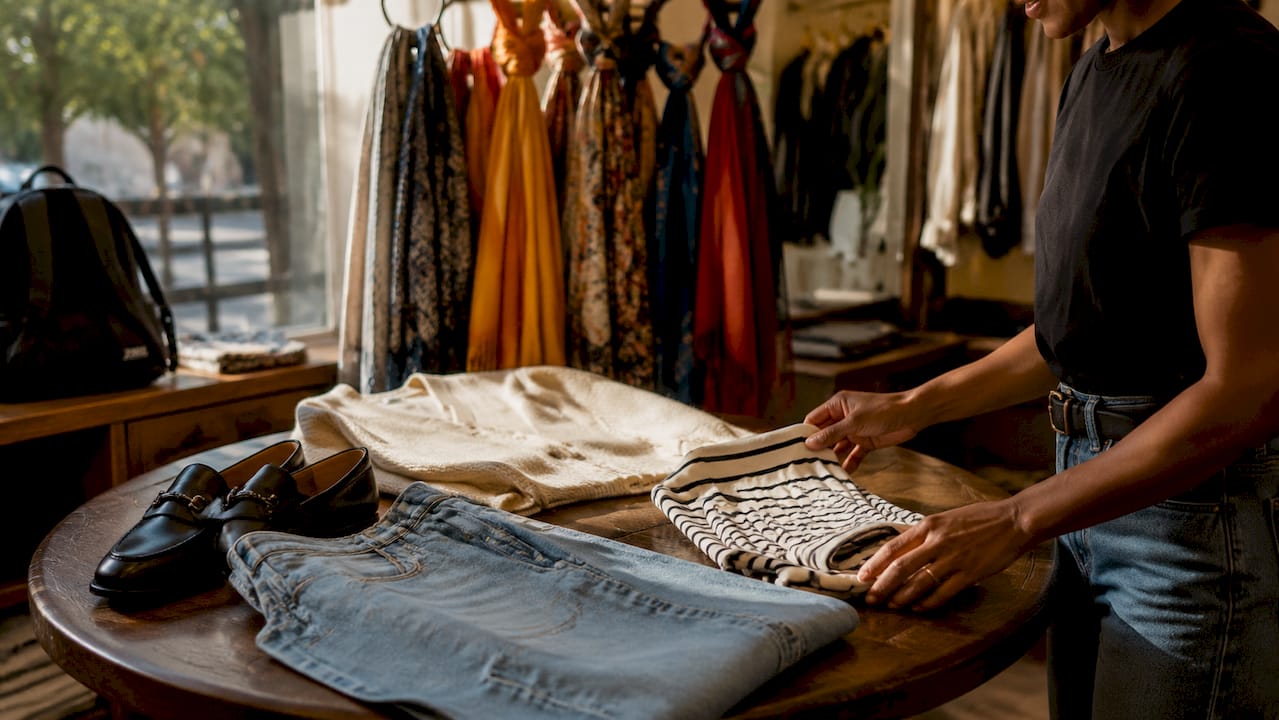
| Piece | Casual Styling | Work Styling | Evening Styling |
|---|---|---|---|
| Navy blazer | Over a white tee and jeans | With tailored trousers and a button-down | Paired with dark chinos and loafers |
| White button-down shirt | Untucked with straight-leg jeans | Tucked into trousers with a belt | Half-tucked under a blazer for dinner |
| Dark wash jeans | With a neutral sweater and sneakers | With a blazer and leather shoes | With a structured top and ankle boots |
| Tailored trousers | With a relaxed knit top | With a crisp shirt and blazer | With a silk blouse and heels |
| Neutral sweater | With jeans and white sneakers | Layered over a collared shirt | With tailored trousers and a statement bag |
Color choice within these pieces matters more than most people realize. Navy blazers offer broader versatility than black ones. Black blazers face real limits in daytime styling but excel in evening wear. Navy works from a Saturday brunch to a client meeting without looking out of place.
The base of white sneakers, dark jeans, and a blazer alone can generate dozens of distinct outfits. That is the practical power of building around proven versatile pieces rather than chasing seasonal trends.
Pro Tip: Learn to mix and match clothes systematically. Lay out your core pieces and photograph every combination that works. You will find options you never noticed before.
How to choose versatile outfits: a practical selection process
Choosing versatile outfits is a skill, not an instinct. Most people buy pieces they love in isolation and then wonder why nothing in their closet works together. A structured approach fixes that.
Follow these steps when evaluating any new purchase:
- Check compatibility first. Lay the new piece next to five items you already own. It should pair naturally with at least three of them without forcing a color or style clash.
- Run a 30-day trial with basics. A slow, deliberate 30-day trial period with foundational pieces helps identify what you actually need. Buy nothing new for 30 days and track which items you reach for most. That data tells you where your real gaps are.
- Anchor with footwear. One pair of quality shoes shifts an outfit’s formality more than swapping the clothes themselves. Loafers or sleek leather boots can take the same outfit from a casual Friday to a dinner reservation. Invest in footwear before adding more clothing.
- Avoid impulse buys on poorly compatible items. A bold print or highly specific silhouette may look great on its own but work with nothing else you own. That piece will sit unworn. Check compatibility before you check the price tag.
- Use accessories and layering to extend range. A scarf, structured bag, or watch changes the register of an outfit without requiring new clothing. Layering a denim jacket over a neutral base creates a third look from two existing pieces.
The 3-switch method is the most practical tool for testing versatility before you buy. Change the shoes, the outer layer, and one accessory on a base outfit. If those three switches produce three distinct looks, the base outfit is genuinely versatile. If the outfit only works one way, it is a costume, not a wardrobe piece.
Pro Tip: Read up on fabric types before committing to a purchase. Fabric determines how long a piece stays versatile. A cotton-polyester blend wrinkles fast and loses its shape. Merino wool or a quality cotton twill holds structure across dozens of wears.
The fashion shopping tips that actually save money all point to the same principle: buy less, buy better, and test compatibility before you commit.
Key takeaways
Versatile clothing is the most cost-effective and practical approach to building a wardrobe that works across every setting you face.
| Point | Details |
|---|---|
| Definition matters | Versatile clothing is defined by neutral colors, timeless cuts, and durable fabrics. |
| The 70–80% rule | Keep most wardrobe items within a limited, compatible color palette for maximum outfit combinations. |
| 30–40 pieces is enough | A curated wardrobe of 30–40 items generates hundreds of functional outfit options. |
| Footwear is the multiplier | One quality shoe shifts outfit formality more than swapping clothing pieces. |
| The 3-switch test | Changing shoes, outer layer, and one accessory creates three distinct looks from one base outfit. |
Why I stopped chasing trends and started buying for range
I spent years buying pieces I genuinely loved and then standing in front of a full closet with nothing to wear. The problem was not quantity. It was compatibility. Every purchase was a solo decision, not a wardrobe decision.
The shift happened when I started treating my closet like a system. Every new piece had to earn its place by working with at least three things I already owned. That one rule cut my spending and tripled my actual outfit options within a single season.
What surprised me most was how much personality you can pack into a neutral, versatile wardrobe. Many people assume versatility means boring. It does not. Cut, texture, and finish carry the character. A structured navy blazer in a quality wool blend looks nothing like a boxy fast-fashion version, even if both are technically “navy blazers.” The details are where the style lives.
The environmental case for intentional wardrobe building also became real to me over time. Buying fewer, better pieces and wearing them for years is not a sacrifice. It is a more satisfying way to dress. You stop managing clutter and start actually using what you own.
My honest advice: do the 30-day trial before you buy anything new. You will learn more about your real wardrobe needs in one month than you will from any style guide.
— TONY
Build your versatile wardrobe with Zings365
Zings365 carries a strong selection of adaptable pieces built for real-world wear across multiple occasions. Whether you are filling a gap in your wardrobe or starting fresh, the catalog covers the core versatile pieces that deliver the most range.

The men’s casual jacket works as an outer layer across casual, smart-casual, and weekend settings. The British casual fashion shirt transitions from a relaxed Friday to a dinner out without a second thought. Both pieces are built around the principles this article covers: clean cuts, compatible colors, and fabrics that hold their shape. Browse the full Zings365 catalog at zings365.com to find pieces that work harder for your wardrobe.
FAQ
What is versatile clothing in simple terms?
Versatile clothing refers to garments that work across multiple occasions, seasons, and settings without requiring major restyling. Common examples include blazers, white button-down shirts, dark wash jeans, and tailored trousers.
How many pieces does a versatile wardrobe need?
A curated versatile wardrobe typically includes 30–40 pieces. That range generates hundreds of functional outfit combinations when built around a cohesive, compatible color palette.
What colors are most versatile for clothing?
Neutral colors including white, navy, gray, camel, and black offer the broadest versatility. They pair naturally with each other and with most accent colors, reducing the risk of incompatible combinations.
Does versatile clothing mean boring style?
Versatile clothing does not mean boring. Cut, texture, and finish carry the personality of a garment. A structured, well-detailed piece in a neutral color can look far more distinctive than a trend-driven item with a short style lifespan.
What is the 3-switch method for outfit versatility?
The 3-switch method involves changing your shoes, outer layer, and one accessory to shift a base outfit across casual, dinner, and event settings. It is the fastest way to test whether a core outfit is genuinely versatile before committing to a purchase.
