

TL;DR:
- Seasonal collections are a fundamental part of the fashion industry’s planning and trend creation process. They significantly influence consumer behavior, brand revenue, and inventory management, although their traditional calendar is now evolving toward more flexible, demand-driven models. Understanding this shift allows shoppers to make smarter purchase decisions aligned with genuine needs rather than marketing pressure.
Seasonal collections are often dismissed as a retailer’s calendar trick, a way to push new styles and get you spending. The reality is far more structured. The role of seasonal collections reaches into every corner of the fashion industry, from how designers forecast trends months in advance to how you decide what to buy and when. They shape inventory decisions, drive brand identity, and directly influence what ends up in your closet. Understanding how this system actually works gives you a real edge as a shopper and a much clearer picture of why fashion moves the way it does.
Table of Contents
- Key takeaways
- The role of seasonal collections in fashion’s structure
- How seasonal collections shape trends and buying decisions
- Business challenges and the shift to adaptive models
- Smart ways to shop seasonal collections
- What seasonal collections look like beyond 2026
- My take on seasonality as a real business tool
- Build your seasonal wardrobe with Zings365
- FAQ
Key takeaways
| Point | Details |
|---|---|
| Seasonal collections drive revenue | Major brands derive 60 to 70% of annual revenue from seasonal drops, making them a core business tool. |
| Fashion seasons differ from weather | Spring collections shown in September only reach retail in January, so shopping timing requires planning ahead. |
| Urgency is built by design | Seasonal drops use scarcity psychology to push full-price purchases within narrow selling windows. |
| The two-season model carries risk | Traditional cycles achieve only 50 to 60% full-price sell-through, forcing markdowns that cut into profits. |
| Adaptive models are gaining ground | Capsule drops and demand-driven releases are replacing rigid seasonal calendars for many forward-thinking brands. |
The role of seasonal collections in fashion’s structure
Fashion does not run on four equal seasons. The industry follows its own calendar, and understanding it explains a lot about why collections feel disconnected from the weather outside your window.
The traditional framework centers on two primary collections: Spring/Summer (SS) and Autumn/Winter (AW). Runway shows for Spring/Summer typically happen in September and October, while Autumn/Winter shows run in February and March. The clothes you see on the runway then reach retail months later, usually January or February for Spring collections. This gap exists because production requires months of lead time after the designs are finalized.
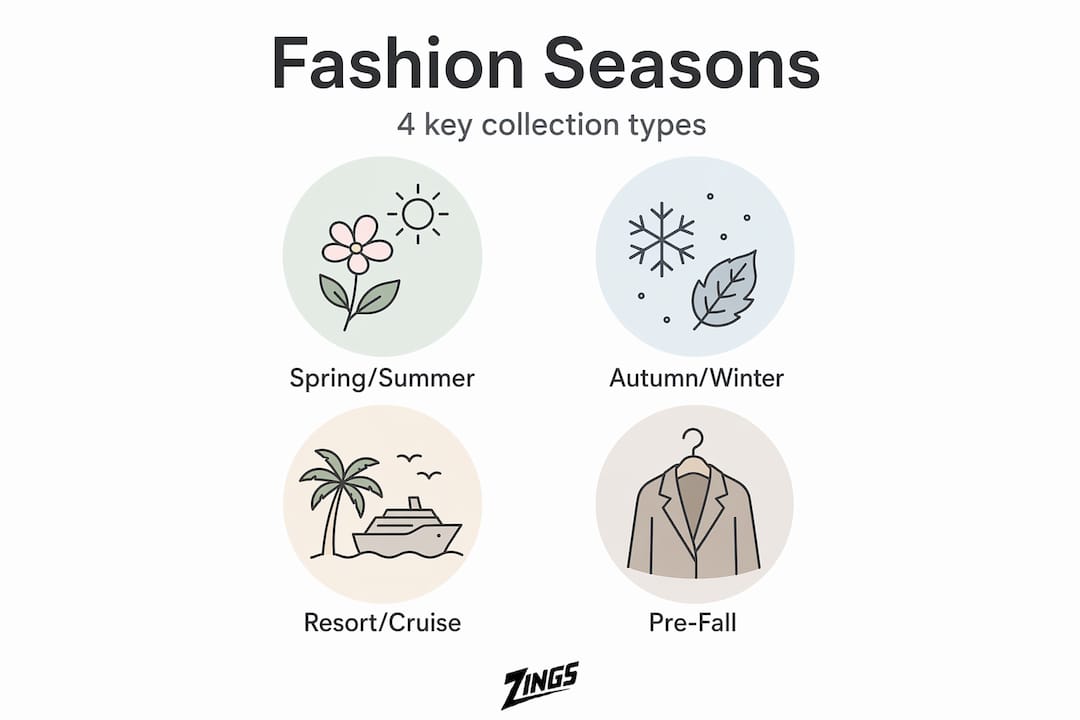
Beyond the two main seasons, brands also produce transitional lines. Resort collections (sometimes called Cruise) land between Autumn/Winter and Spring/Summer, typically around November to December. Pre-Fall arrives between Spring/Summer and Autumn/Winter, roughly in June. These transitional collections serve a practical purpose: they fill the retail floor when the primary collections are sold out but the next main drop has not arrived yet. They also cater to customers whose climate does not match the traditional Northern Hemisphere seasonal rhythm.
The reasons brands stick to this structure, even with its well-documented challenges, come down to planning discipline. Seasonal collections function as a year-round growth engine, aligning product launches to cultural moments, holidays, and consumer spending cycles. A strong product calendar that maps design, production, marketing, and retail release keeps everything on schedule.
Pro Tip: When browsing new arrivals, check the season label carefully. A “Spring 2026” tag on a coat in October likely means it shipped early for transitional wear, not that someone made a production error.
How seasonal collections shape trends and buying decisions
This is where the role of seasonal collections becomes genuinely interesting. Collections do not just reflect what is trending. They create the trends.
Designers make color, fabric, and silhouette decisions 12 to 18 months before you see the pieces in stores. Those choices, repeated across multiple brands after they absorb runway signals, become the color palette you notice everywhere by mid-season. Brands like Gucci and Prada have shifted toward data-informed collection strategies, using trend forecasting software that tracks search behavior, social media signals, and sales data to guide design decisions.
The psychological side of seasonal collections is equally deliberate. Seasonal drops are structured as limited-edition triggers, creating urgency and FOMO to push consumers toward full-price purchases within narrow windows. When a brand announces that a colorway or silhouette is exclusive to one season, it is not just a creative choice. It is a sales mechanism.
Here is what that looks like in practice for shoppers:
- Color urgency: A specific shade, say sage green or warm terracotta, gets positioned as “the color of the season.” Shoppers who want it know it will not be restocked after the season ends.
- Fabric cues: Lightweight linens signal Spring/Summer; heavier wools and fleeces mark Autumn/Winter. Collections train consumers to associate textures with timing.
- Event alignment: Collections time their drops to cultural moments. Back-to-school, holiday party season, and vacation travel all influence what lands on the rails and when.
- Wardrobe psychology: Shoppers buy ahead of the season, not during it. A coat purchased in September gets worn all winter. Collections capitalize on this anticipatory buying behavior.
“Seasonal collections represent both an art and science. Designers forecast weather and cultural moods months ahead to create cohesive brand stories that feel relevant the moment they hit the floor.” — BonewsNG
Understanding why seasonal collections work this way helps you spot when you are responding to a genuine need versus a manufactured one. Knowing how to spot fashion trends before they peak gives you a significant advantage in both timing and budget.
Business challenges and the shift to adaptive models
The importance of seasonal collections to revenue is undeniable. 60 to 70% of annual revenue for major brands flows through seasonal drops. But the traditional two-season model carries serious operational risks that the industry has struggled with for decades.
The core problem is forecasting. Brands must commit to production quantities 12 to 18 months before they know what demand will actually look like. Traditional seasonal cycles achieve only 50 to 60% full-price sell-through, meaning nearly half of all inventory gets marked down. Those markdowns compress profit margins and, at scale, create enormous financial exposure. H&M’s operating profit dropped 62% after the company overestimated demand and was left holding $4.3 billion in excess inventory. That is what overforecasting looks like at the brand level.
| Model | Lead time | Inventory risk | Markdown exposure | Flexibility |
|---|---|---|---|---|
| Traditional two-season | 12 to 18 months | High | High | Low |
| Capsule / micro-drop | 4 to 8 weeks | Low | Low | High |
| Demand-driven / weekly drops | 1 to 4 weeks | Very low | Minimal | Very high |
The response from forward-thinking brands has been a shift toward smaller, more frequent drops. Flexible, demand-led models reduce inventory risk by placing smaller bets more often rather than large bets twice a year. Capsule collections, which are tightly edited drops of 10 to 20 pieces built around a specific theme or occasion, give brands creative flexibility without the overhead of a full seasonal line.
Sustainability is also pushing this change. High-end fashion houses have moved toward seasonless, quality-focused collections, prioritizing fewer pieces made from better materials over large-volume seasonal assortments. This connects directly to consumer demand for clothing that lasts beyond a single season.
Pro Tip: When a brand releases a “limited capsule” outside its usual schedule, that is usually a demand test. If the pieces sell out fast, expect a fuller drop or a restock. If they linger, you may find them discounted within weeks.
Smart ways to shop seasonal collections
Knowing the business logic behind seasonal collections changes how you approach shopping. The goal is to use the system rather than be used by it.
- Buy transitional pieces first. Resort and Pre-Fall collections are often the most wearable across multiple seasons. A light knit or a versatile button-down shirt works in September as well as it does in March. These pieces extend your cost-per-wear dramatically. Check out the men’s spring and autumn button-down shirt as a practical example of a transitional item that earns its place through multiple seasons.
- Understand the retail calendar. Spring collections hit stores in January. If you need a light jacket for March, buying in January gives you full selection and full-price options. Waiting until March means limited sizes and styles. Shopping ahead requires planning but rewards you with more choice.
- Separate trend items from core items. Seasonal marketing pushes the boldest, most trend-forward pieces because they photograph well and generate buzz. But most of your wardrobe should anchor in pieces that do not expire with the season. Think building your everyday wardrobe around reliable basics, then layering in two or three seasonal statement pieces.
- Spot the scarcity tactic. “Limited edition” and “seasonal exclusive” language is designed to trigger urgency. Ask yourself whether you genuinely need the piece or whether the deadline is doing the work for you.
- Check fabric and construction. Sustainability-conscious brands that have moved toward fewer, better pieces tend to invest more in material quality. Clothing material choices directly affect how long a garment lasts, which is the real measure of value in a seasonal buy.
Pro Tip: The best time to buy a premium seasonal piece is at the start of the season at full price, not at the end on markdown. Markdowns mean your size is likely gone and the piece was probably made in excess quantities. Scarcity and full-price launches often mean the opposite: a well-planned, limited item worth owning.
What seasonal collections look like beyond 2026
The structure of seasonal collections is under more pressure now than at any previous point in modern fashion history. Several converging forces are reshaping what seasonality means.
- Continuous drops are normalizing. Weekly and bi-weekly micro-drops, pioneered by fast-fashion players, are now being adopted by mid-market and even premium brands. The psychological logic of seasonal urgency is being applied at higher frequency and smaller scale.
- AI is compressing lead times. Adaptive, data-powered forecasting integrated early in the design process reduces overstock and lets brands optimize assortments by region. A brand can now read social media trend signals in near-real time and adjust production orders before the season begins.
- Globalization is complicating traditional season logic. A brand selling into both Sydney and Stockholm faces opposite seasonal needs at the same time. Truly global retail increasingly requires either flexible collections or region-specific drops rather than one global calendar.
- Sustainability is shrinking collection sizes. Sustainability in seasonal collections now focuses on fewer pieces, recycled materials, zero-waste production, and longer-lasting garments. Brands competing on this axis are actively reducing the volume of seasonal output rather than increasing it.
- Consumer identity is reshaping seasonality. Shoppers increasingly treat seasonal buying as personal expression rather than calendar obligation. A consumer in a warm climate who loves knitwear buys it regardless of whether it fits a traditional season. Personalization tools and direct-to-consumer channels are making this level of customization possible.
My take on seasonality as a real business tool
I’ve spent a significant amount of time studying how fashion brands manage and communicate seasonal strategy, and the thing that consistently surprises me is how many shoppers still treat collections as purely aesthetic events.
The brands that do this well know that seasonality is a proactive discipline, not a marketing calendar. They plan cultural relevance, production timelines, and consumer psychology simultaneously. The ones that struggle treat each season as a reset rather than a step in a continuous commercial conversation.
What I find genuinely worth paying attention to is the capsule model. Not because it is new, but because it resolves the core tension in seasonal collections: the conflict between creative coherence and operational efficiency. A well-edited capsule tells a cleaner story, moves faster, and wastes less. For shoppers, it also produces better pieces.
My honest advice for anyone who follows fashion closely is to shop smarter by going trendy without letting seasonal urgency override practical judgment. Seasonal collections are a useful framework. They are not a purchase mandate.
— TONY
Build your seasonal wardrobe with Zings365
Knowing how seasonal collections work is only useful if it changes what you actually buy. Zings365 keeps its catalog updated with pieces that reflect real seasonal transitions rather than trend-chasing for its own sake.

For Autumn/Winter, the men’s woolen coat is a direct example of a core seasonal investment: a piece built for the season rather than around it. For year-round versatility, the all-season polo shirt and the casual stretch trousers represent exactly the kind of transitional, multi-season pieces that deliver the best cost-per-wear. Zings365 makes it straightforward to find quality seasonal pieces without overpaying for trend markup.
FAQ
What is the role of seasonal collections in fashion?
Seasonal collections structure the fashion industry’s design, production, and retail cycles. They drive the majority of brand revenue, set trend direction for each period, and shape when and how consumers shop throughout the year.
Why do fashion seasons not match actual weather?
Spring collections shown in September reach retail only in January or February because production requires months of lead time after runway presentations. Fashion seasons are logistical frameworks, not weather calendars.
How do seasonal collections influence consumer buying behavior?
Collections use scarcity and limited-edition framing to trigger urgency, pushing consumers to buy at full price within a narrow window. Seasonal drops are designed to connect products to cultural moments, weather shifts, and personal milestones.
What are the main risks brands face with seasonal collections?
The biggest risk is overforecasting demand 12 to 18 months in advance. Traditional cycles achieve only 50 to 60% full-price sell-through, leaving significant inventory to be marked down and eroding profit margins.
Are seasonal collections becoming less relevant?
Not less relevant, but more flexible. Brands are shifting toward capsule drops and demand-driven models while retaining the psychological benefits of seasonal timing. The structure is evolving rather than disappearing.
