

TL;DR:
- Fabric blends combine multiple fibers to enhance performance, durability, and ease of care in casualwear. They often cost less to produce and wear longer than pure natural fibers while offering better shape retention and moisture management. Reading the full fiber composition on labels helps consumers make informed choices based on desired fit, durability, and sustainability.
Fabric blends are defined as textiles made by combining two or more fiber types, such as cotton, polyester, and elastane, to produce a single material with stronger performance than any one fiber alone. Understanding fabric composition is the foundation of every smart casualwear purchase. A 60/40 cotton/polyester shirt, for example, delivers the softness of cotton alongside the shape retention of polyester. Knowing why care about fabric blends matters means recognizing that the fiber ratio on a care label is not a technicality. It is a direct indicator of how a garment will feel, last, and behave after dozens of washes.
Why care about fabric blends for casualwear performance
The functional case for fabric blends starts with what single fibers cannot do alone. Pure cotton is soft and breathable, but it stretches out, shrinks, and holds moisture against your skin. Pure polyester resists wrinkles and dries fast, but it traps heat and feels synthetic. Blended fabrics combine softness and stretch with durability, producing a result that neither fiber achieves independently.
The benefits of fabric blends become clearest in three performance areas:
- Strength and abrasion resistance. Polyester fibers have higher tensile strength than cotton. A 65/35 polyester/viscose blend is an industry standard for durability and shape retention, used widely in uniforms and casualwear alike. Adding polyester to cotton reduces the rate at which fabric thins and tears at stress points like collars and cuffs.
- Moisture management. Cotton-synthetic blends wick sweat away from the skin, unlike pure cotton, which absorbs moisture and becomes heavy and clingy. This makes blended tees and casual shirts far more practical for all-day wear.
- Stretch and shape retention. Adding even 2–5% elastane (also called spandex) to a cotton or polyester base gives a garment two-way stretch without losing its original shape. Jeans with elastane recover after sitting. T-shirts with elastane hold their cut after washing.
Understanding fabric composition at this level helps you predict how a garment will perform before you ever wear it. A casual shirt with 95% cotton and 5% elastane will feel natural against your skin and move with your body. A 100% cotton version of the same shirt will feel stiffer and bag out at the elbows over time.
Pro Tip: Check the fiber breakdown on the label, not just the dominant material. A shirt labeled “cotton” could legally contain a significant synthetic percentage. Read the full composition to understand what you are actually buying.
Do fabric blends make clothing more affordable?
The economic logic behind fabric blending is direct. Blending expensive natural fibers with cheaper synthetics offsets raw material costs and allows brands to hit accessible price points without sacrificing the look or feel of premium fabrics. This is why fabric blend advantages extend beyond performance into your wallet.
Here is how blending drives value in casualwear production:
- Cost reduction through fiber substitution. Wool and silk are expensive to source and process. Blending either with polyester or nylon reduces the raw material cost per yard while preserving the visual texture and drape that make those fibers desirable.
- Design flexibility at scale. Blended yarns are easier to dye uniformly and can be woven or knit into more complex patterns than many pure fibers. This gives designers more options without increasing production complexity.
- Faster manufacturing cycles. Synthetics in a blend reduce the time needed for drying and finishing during production. Faster throughput means lower labor costs per unit, which feeds into retail pricing.
- Accessible luxury aesthetics. A wool-polyester blend coat carries the visual weight and texture of pure wool at roughly half the price. Consumers get the luxurious appearance at accessible prices that pure natural fibers cannot deliver at the same cost.
The impact of fabric materials on retail pricing is real and measurable. When you see two similar casual shirts at different price points, the fiber composition is often the primary variable. The blend ratio tells you exactly what trade-offs the brand made to reach that price.
How do fabric blends affect garment care and longevity?
Fabric blend performance extends directly into how long a garment lasts and how easy it is to maintain. Blends generally reduce care complexity compared to pure natural fibers. Polyester additions minimize wrinkles and speed up drying, which means less time ironing and shorter cycles in the dryer.
| Care Factor | Pure Cotton | Cotton/Polyester Blend |
|---|---|---|
| Shrinkage risk | High, especially in hot water | Low to moderate |
| Wrinkle resistance | Low | High |
| Drying time | Slow | Fast |
| Shape retention | Degrades over time | Stable through multiple washes |
| Pilling risk | Low | Moderate to high |
The table above shows why blends dominate casualwear. Dimensional stability is the technical term for a garment holding its size and shape through repeated washing. Cotton-synthetic blends deliver significantly higher dimensional stability than pure cotton, which is why a blended casual shirt looks the same after 50 washes as it did on day one.
One trade-off worth knowing: pilling risk and fabric aging differ by blend composition. High-cotton garments soften naturally over time, developing a worn-in texture many people prefer. Polyester-heavy blends tend to pill after repeated wash cycles, creating small fiber balls on the surface that affect appearance. A 50/50 cotton/polyester blend sits in the middle, offering reasonable durability without aggressive pilling.
Care labels always reflect the most delicate fiber in the blend. A garment that is 80% polyester and 20% silk will carry silk care instructions. Follow the label for the blend, not for the dominant fiber.
Pro Tip: Turn blended garments inside out before washing. This reduces friction on the outer surface and slows pilling, especially in polyester-heavy blends.
Pure fibers vs. fabric blends: what do you actually gain?
The comparison between 100% natural fibers and blended fabrics comes down to specific trade-offs across four dimensions. Neither option is universally better. The right choice depends on what you prioritize in a given garment.
| Factor | 100% Natural Fiber | Fabric Blend |
|---|---|---|
| Breathability | High (cotton, linen) | Moderate |
| Durability | Moderate | High |
| Wrinkle resistance | Low | High |
| Cost | Higher | Lower |
| Stretch and fit | Limited | Better with elastane |
| Care ease | More demanding | Simpler |
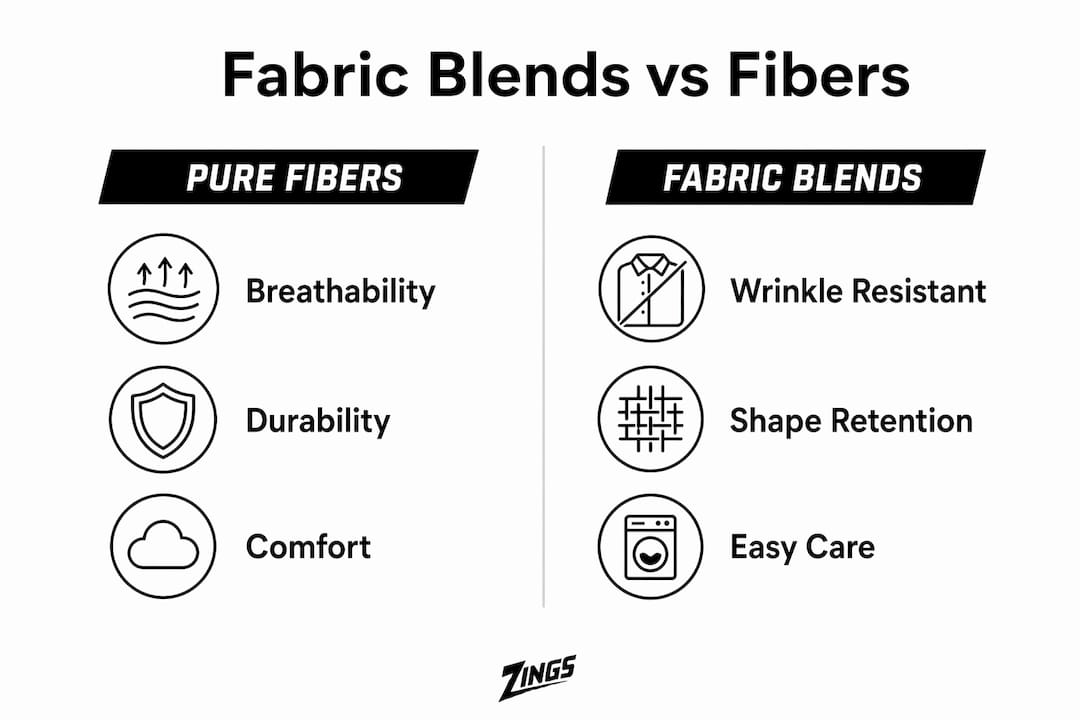
The fabric blend advantages in casualwear are strongest in the durability and care categories. Consumers expect clothes to be durable, easy to care for, comfortable, and stylish across various activities. Blends meet all four expectations simultaneously, which pure fibers rarely do.
There are genuine reasons to choose 100% natural fibers. Pure linen breathes better than any blend in extreme heat. Pure merino wool regulates temperature more effectively than a wool-polyester mix. For specific use cases, the single-fiber option wins on its primary attribute.
The trade-off worth noting: most blended casualwear is not recycled effectively because recycling infrastructure cannot separate tightly intertwined fibers. If end-of-life disposal matters to you, this is a real consideration when choosing between a pure fiber and a blend. For everyday casualwear focused on comfort, style, and longevity, blends remain the practical standard.
- Blends outperform pure fibers in stretch, shape retention, and wash durability.
- Pure fibers outperform blends in breathability and recyclability.
- The best choice depends on the garment type, your climate, and how you plan to care for it.
- Reading the full fabric composition before purchasing gives you a complete picture of what you are getting.
Key takeaways
Fabric blends outperform single-fiber textiles in casualwear because they combine the comfort of natural fibers with the durability, stretch, and care ease of synthetics.
| Point | Details |
|---|---|
| Blends improve performance | Combining polyester, cotton, and elastane produces stronger, more flexible fabric than any single fiber. |
| Economic value is built in | Blending expensive natural fibers with synthetics lowers production costs and retail prices. |
| Care is simpler with blends | Polyester additions reduce shrinkage, wrinkles, and drying time compared to pure cotton. |
| Trade-offs exist | Polyester-heavy blends pill over time; pure fibers breathe better and are easier to recycle. |
| Labels tell the full story | The fiber percentage breakdown on a care label predicts comfort, durability, and maintenance needs. |
The blend myth i keep seeing in casualwear
Most people I talk to still assume that 100% cotton is automatically the better choice. The logic sounds right: natural equals better. The reality is more specific than that.
A 100% cotton t-shirt will feel great on day one. By month six, it has likely shrunk a size, bagged at the collar, and takes twice as long to dry as a cotton-polyester blend. That is not a failure of cotton. It is a mismatch between the fiber’s properties and what everyday casualwear actually demands.
The blends I find most reliable for daily wear sit in the 60/40 to 80/20 cotton-to-polyester range. You get the natural feel of cotton with enough polyester to hold shape and resist wrinkles. Add 3–5% elastane and the garment moves with you without losing its cut. That combination covers most casualwear scenarios better than any pure fiber can.
The one area where I think blends get unfairly dismissed is texture. People assume blended fabrics feel synthetic or cheap. That is a quality issue, not a blend issue. A well-constructed cotton-elastane fabric from a brand that invests in fabric choice feels as good as most pure-cotton options and outlasts them by a significant margin.
Read the label. Know the ratio. The fiber breakdown is the single most useful piece of information on any garment tag, and most people skip it entirely.
— TONY
Quality casualwear built on the right fabric blends at Zings365
Zings365 carries casualwear designed with fabric composition in mind, from shirts to jackets built for everyday comfort and durability.

The Fall Men’s British Casual Fashion Shirt at Zings365 uses a blended construction that delivers wrinkle resistance and shape retention through repeated wear. For outerwear, the Men’s Casual Jacket combines stretch and structure in a blend suited for all-day movement. Both pieces reflect the practical logic behind fabric blending: better performance, easier care, and a fit that holds. Browse the full Zings365 catalog to find casualwear where the fiber composition matches the way you actually live.
FAQ
What is a fabric blend in clothing?
A fabric blend is a textile made from two or more fiber types woven or knit together, such as cotton and polyester or cotton and elastane. The combination produces a fabric with performance characteristics that no single fiber delivers alone.
Why do most casual shirts use fabric blends instead of pure cotton?
Blends provide higher dimensional stability and moisture management than pure cotton, making them more practical for all-day casualwear. Pure cotton shrinks, bags, and holds sweat; a cotton-polyester blend resists all three.
What does elastane do in a fabric blend?
Elastane (spandex) adds two-way stretch and shape recovery to a blend. Even a 2–5% elastane content allows jeans and shirts to move with your body and return to their original shape after washing.
How do i read a fabric blend label correctly?
The care label lists fiber percentages in descending order, with the dominant fiber first. Legal standards allow garments to carry a fiber name even when a significant synthetic percentage is present, so reading the full breakdown matters more than the headline fiber name.
Are fabric blends harder to care for than pure fibers?
Blends are generally easier to care for than pure natural fibers. They resist wrinkles, dry faster, and shrink less. The care label reflects the most delicate fiber in the blend, so always follow those instructions for the full garment.
