

TL;DR:
- Organic fabrics offer genuine environmental benefits in reducing chemical pollution and supporting soil health, but their full impact varies regionally and depends on supply chain practices. Certification standards like GOTS and OEKO-TEX help verify sustainability claims, with GOTS providing broader oversight over farming and processing methods. For wearers, organic textiles can improve skin health and comfort, especially when properly certified and well-maintained for durability.
Most people assume that anything labeled “organic” is automatically the more sustainable, healthier choice. The reality is more specific than that. Understanding why choose organic fabrics means separating certified benefits from marketing claims, and knowing which advantages are real versus regional. This guide looks at what the science actually says about organic textiles, how certifications like GOTS and OEKO-TEX differ, and where organic fabric advantages are most meaningful. You will leave with the information you need to make purchases that match your actual values.
Table of Contents
- Key takeaways
- Why choose organic fabrics: what the science says about environmental impact
- Health and comfort advantages
- Understanding organic fabric certifications and labels
- Organic vs conventional and synthetic fabrics
- Practical tips for selecting and caring for organic fabrics
- My take on organic fabrics after watching the industry evolve
- Organic fabric clothing at Zings365
- FAQ
Key takeaways
| Point | Details |
|---|---|
| Certification matters most | GOTS and OEKO-TEX serve different purposes; checking which label a product carries tells you what is actually guaranteed. |
| Environmental benefits are real but variable | Organic farming reduces chemical pollution and supports soil health, but lifecycle impacts depend heavily on region and farming system. |
| Skin and health benefits are most consistent | Reduced pesticide residues and restricted processing chemicals offer the clearest, most direct advantages for wearers. |
| Organic does not mean microplastic-free synthetics | Natural organic fibers avoid synthetic microplastic shedding, a problem that affects all polyester and nylon garments. |
| Durability amplifies every benefit | A long-lasting organic garment outperforms a short-lived one in total environmental impact, regardless of certification. |
Why choose organic fabrics: what the science says about environmental impact
The most common argument for organic textiles starts with farming. Organic cotton is grown without synthetic pesticides or fertilizers, which directly reduces chemical runoff into soil and waterways. That is a genuine, measurable benefit. Organic farming also supports biodiversity and soil health by relying on crop rotation and natural inputs, which improve ecological resilience over time.
Where things get complicated is in the full lifecycle assessment, or LCA. An LCA measures total environmental impact across every stage of a product’s life, from fiber growth through manufacturing, use, and disposal. The Textile Exchange’s cotton LCA research stresses that cotton’s environmental impact varies significantly by cultivation system, nitrogen management, irrigation method, and regional energy sources. Organic farming can reduce water use and chemical load under the right conditions, but those results are not universal. A farm in a water-stressed region using flood irrigation, even under organic rules, may carry a higher water impact than a conventional farm using drip irrigation elsewhere.
A 2026 comparative study made this complexity concrete. Organic cotton trousers scored 12.23 kg CO2e in carbon footprint, higher than polyester-cotton blends in the same study, largely because of supply chain differences. That does not make organic cotton worse overall. It does mean carbon footprint alone is not the right metric to evaluate organic fabrics.
Here is what the evidence most consistently supports for organic vs conventional fabrics:
- Reduced chemical pollution: No synthetic pesticides means less contamination of surrounding soil, water, and wildlife habitats.
- Soil health: Organic practices build organic matter over time, reducing erosion and improving long-term land productivity.
- Biodiversity: Farms avoiding synthetic inputs support greater insect and plant diversity in surrounding ecosystems.
- Variable water and carbon outcomes: These depend on farming location, irrigation type, and supply chain energy sources. Organic is not automatically lower on either metric.
- Land use: Organic cotton typically requires more land per unit of fiber than conventional, which is a real tradeoff.
The honest takeaway: organic fabrics carry genuine environmental advantages in specific categories, particularly chemical pollution and soil health. Claims about water savings or carbon reductions need regional context to be meaningful.
Health and comfort advantages
This is where organic fabric advantages are most direct and most consistent for the person wearing the clothes. Conventional cotton farming uses significant pesticide volumes, and residues can persist through processing into finished fabric. Organic cotton grown without synthetic pesticides offers fewer chemical residues in the final fiber, which matters most for people with sensitive skin or chemical sensitivities.

Processing chemicals are a separate concern. Even organic fibers can pick up harsh substances during dyeing, finishing, and bleaching. This is where certification becomes the deciding factor. GOTS restricts hazardous chemicals during textile processing, so a GOTS-certified garment has both organic fiber content and limits on processing chemicals. OEKO-TEX Standard 100, by contrast, tests the finished fabric for harmful substance levels. A fabric can carry OEKO-TEX certification without any organic fiber at all.
Understanding fabric types and certifications helps you read labels accurately rather than relying on packaging claims that may not tell the full story.
Pro Tip: If skin sensitivity is your primary concern, look for GOTS certification rather than OEKO-TEX alone. GOTS controls what goes into the fabric during manufacturing; OEKO-TEX just confirms the end result meets a chemical threshold.
The practical benefits for wearers include:
- Lower chemical residue exposure: Especially relevant for babies, people with eczema or contact dermatitis, and anyone who reacts to synthetic finishes.
- Softer texture: Organic cotton is often processed with fewer harsh treatments, which can result in a softer feel against skin.
- Breathability: Natural organic fibers like cotton and linen allow better airflow than synthetic alternatives, reducing heat and moisture buildup.
- Reduced synthetic fragrance: Many conventional fabrics include chemical finishes that cause reactions; GOTS-certified fabrics restrict these.
For everyday items worn close to skin, including underwear, t-shirts, and bedding, the health case for organic textiles is the most concrete reason to pay attention to fiber and certification labels.
Understanding organic fabric certifications and labels
Two certifications come up most often when shopping for organic fabrics. They are not interchangeable, and knowing the difference prevents you from being misled by labels that sound more protective than they are.
| Certification | What it covers | Fiber requirement | Key limitation |
|---|---|---|---|
| GOTS (Global Organic Textile Standard) | Full supply chain: farming, processing, dyeing, finishing, and social criteria | Minimum 70% certified organic fiber | Does not test finished product chemical levels independently |
| OEKO-TEX Standard 100 | Tests finished textile for harmful substance levels | None — can apply to synthetic fabrics | Does not certify organic farming or processing methods |
GOTS requires 70% or more organic fiber and audits the entire supply chain, including processing criteria and social standards. That makes it the most meaningful label for someone who cares about why use organic textiles from field to finished product. OEKO-TEX Standard 100 is still useful as a product safety marker, but it tells you nothing about farming practices or supply chain conditions.
A product can carry both certifications, which provides the strongest combined assurance. It can also carry neither while still being marketed as “natural” or “eco-friendly,” which is where greenwashing begins.
To verify authenticity, look for the certification number on the label and check the issuing organization’s public database. Both GOTS and OEKO-TEX maintain searchable online registries where any certified product or facility can be confirmed. Understanding textile labeling and fashion terminology is one of the more practical skills for making confident purchases.
One more detail worth checking: since GOTS permits blends with a 70% organic fiber minimum, a garment labeled GOTS-certified may still contain up to 30% conventional or synthetic fiber. For most shoppers, this is acceptable. For those with severe sensitivities or strict sustainability criteria, reviewing the full fiber composition matters.
Organic vs conventional and synthetic fabrics
Conventional cotton is not a neutral baseline. It accounts for a disproportionate share of agricultural pesticide use globally, and production is concentrated in regions where chemical regulation and water management practices vary widely. The difference between organic and conventional cotton at the farm level is significant in terms of chemical inputs, biodiversity impact, and soil practices.
Synthetic fabrics introduce a different set of tradeoffs. Polyester and nylon can require less water to produce than cotton in some lifecycle models, but they carry a problem that organic cotton does not: microplastic shedding. Organic cotton fibers do not shed synthetic microplastics, which enter waterways through washing and accumulate in aquatic ecosystems. This is increasingly recognized as a serious environmental concern, and it is one area where natural organic fibers have a clear, unambiguous advantage over synthetics.
Carbon footprint comparisons between organic and synthetic fabrics are less straightforward. Polyester production is petrochemical-based and energy-intensive, but a single garment’s carbon score also reflects its supply chain, use frequency, and lifespan. The LCA data shows that no single fiber type wins across every impact category. The most honest way to evaluate eco-friendly fabric choices is to look at specific categories rather than a single score.
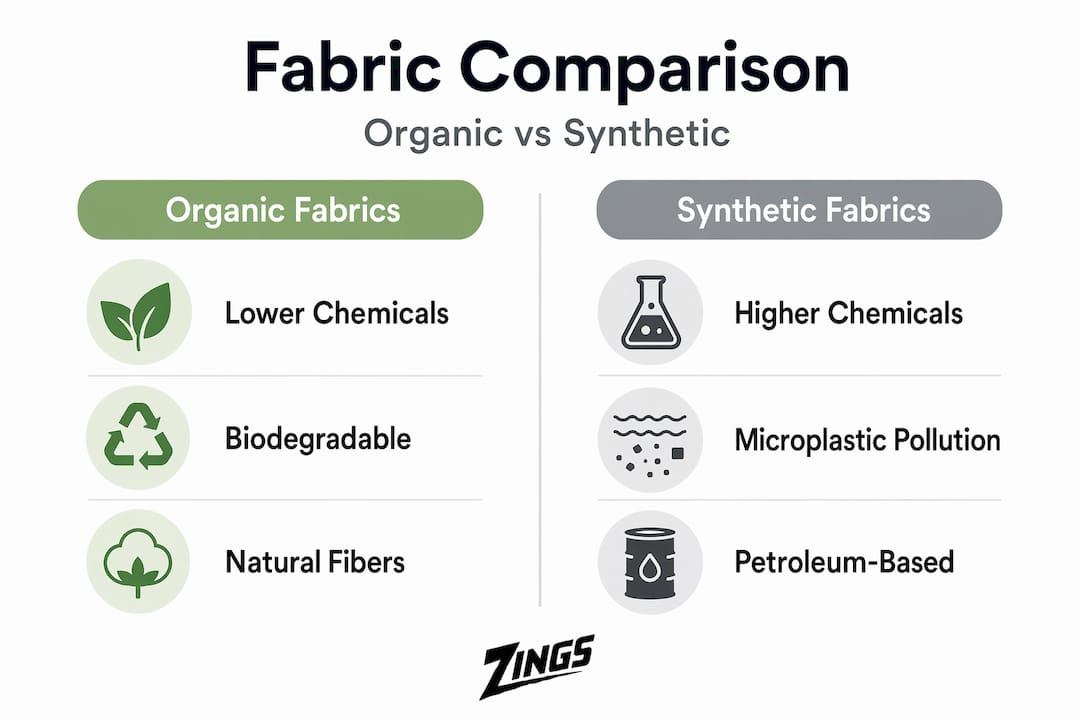
Pro Tip: When comparing fabric options, ask yourself two separate questions: What happens during production? And what happens during use and disposal? Organic cotton scores better on the first; synthetics can score differently on the second depending on durability and microplastic risk.
Fabric durability significantly influences overall sustainability. A well-made organic cotton t-shirt worn 200 times has a much lower per-wear environmental cost than a cheaper garment worn 20 times. Certification is one part of the picture. How long the item lasts is another. Understanding why quality matters in clothing helps put both factors together.
Practical tips for selecting and caring for organic fabrics
Knowing the benefits means little if you do not know how to shop and care for what you buy. These steps make your organic fabric choices more effective and longer lasting.
- Prioritize certified products. Look for GOTS or OEKO-TEX labels and verify them using the issuing organization’s public database before purchasing. Marketing terms like “natural,” “eco,” or “green” carry no legal standard.
- Focus on high-contact items first. Underwear, t-shirts, bedding, and baby clothing offer the greatest skin-contact benefit from organic fabrics. These are the most practical starting points if budget is a consideration.
- Check fiber composition thresholds. A GOTS label allows up to 30% non-organic fiber. Read the full composition label to understand exactly what you are buying.
- Verify brand transparency. Credible brands can trace their supply chain and will share that information. Vague claims about “sustainability” without certification details are a signal to look closer. Shopping for sustainable fashion becomes easier when you know what questions to ask.
- Wash in cold water. Hot water accelerates fiber breakdown and increases energy use. Cold washing extends garment life and reduces the per-wear environmental cost significantly.
- Line dry when possible. Tumble drying puts mechanical stress on fibers and uses substantial energy. Air drying organic cotton and linen garments extends their lifespan noticeably.
- Use gentle detergents. Harsh detergents strip natural fiber finishes over time. A mild, fragrance-free detergent preserves both the fabric and your skin.
- Invest strategically. Organic fabric clothing typically costs more. Spend on items you wear frequently and use longer. A quality organic garment worn regularly delivers more value per dollar than a cheap fast-fashion piece worn briefly.
My take on organic fabrics after watching the industry evolve
I have spent years reading supply chain reports, LCA studies, and certification audits. What I have found is that organic fabrics occupy a genuinely important place in sustainable fashion, but only when paired with realistic expectations.
The biggest mistake I see is treating “organic” as a pass or fail test. A GOTS-certified garment worn twice and discarded is not a sustainability win. A conventional denim jacket worn for a decade carries a far lower per-wear footprint. What I have learned is that organic certification and durability work together. One without the other delivers partial benefits at best.
I have also seen greenwashing get more sophisticated. Vague “organic cotton content” claims without certification numbers are now common across mid-range retailers. My rule: if a brand cannot tell you which certification body audited their supply chain and give you a number to verify, the claim is marketing, not fact.
The real advantage of understanding why organic fabrics matter is that it helps you ask better questions. Not “is this organic?” but “what is certified, by whom, and to what standard?” That shift in thinking separates shoppers who genuinely reduce their impact from those who feel good about purchases that may not change much.
Certification clarity, realistic durability expectations, and proper care together deliver the actual benefits of eco-friendly fabric choices. That combination is what I recommend every time.
— TONY
Organic fabric clothing at Zings365

Zings365 carries a curated selection of men’s and women’s casual clothing that prioritizes fabric quality and construction you can trust. For eco-conscious shoppers, the starting point is choosing well-made pieces built to last. These casual stretch trousers are a strong example: quality construction, versatile styling, and the kind of durability that reduces replacement frequency and total wardrobe footprint. Explore the full collection at Zings365 to find garments designed for real wear. When you buy better and buy less, every purchase works harder for both your wardrobe and the planet.
FAQ
What does GOTS certification actually guarantee?
GOTS certifies that a textile contains at least 70% organic fiber and meets strict chemical restrictions throughout the supply chain, from farming through processing. It is the most thorough certification for organic textiles.
Is organic cotton always lower in environmental impact?
Not universally. Lifecycle assessments show that carbon and water impacts vary significantly by region, irrigation method, and supply chain. Organic cotton consistently reduces chemical pollution but does not automatically score lower on every environmental metric.
Do organic fabrics prevent microplastic pollution?
Yes, for natural organic fibers like cotton and linen. Unlike polyester and other synthetic fabrics, organic cotton does not shed synthetic microplastics during washing, making it a better choice for reducing waterway contamination.
What is the difference between GOTS and OEKO-TEX Standard 100?
GOTS audits the entire supply chain and certifies organic fiber content and processing methods. OEKO-TEX Standard 100 tests the finished product for harmful substance levels but does not require any organic fiber content or certify farming practices.
Are organic fabrics worth the higher price?
For high-contact items worn frequently, yes. The health benefits from reduced chemical residues are most direct for sensitive skin, and a durable organic garment worn many times over has a lower per-wear environmental cost than a cheaper garment replaced frequently.
