

TL;DR:
- Choosing sustainable fashion reduces environmental harm by promoting durable, low-impact clothing and responsible manufacturing. It also encourages consumers to buy less, wear more, and focus on quality over quantity for long-term savings. Fabric choices involve trade-offs, so evaluating brands holistically and prioritizing full supply chain transparency is essential.
Sustainable fashion is the practice of designing, producing, and consuming clothing in a way that minimizes harm to the environment and society. The reasons why choose sustainable fashion matter are grounded in hard data: the global fashion industry accounts for 2–8% of annual carbon emissions, and 85% of all textiles produced end up in landfills or incinerators each year. That scale of waste is not a side effect. It is a structural problem built into how conventional fashion operates. Choosing eco-friendly clothing is one of the most direct ways consumers can push back against that system. This guide covers the environmental, economic, and practical reasons to make the shift, with real data and no filler.
Why choose sustainable fashion for the environment
Conventional fashion carries a massive ecological cost, and most of it happens before a garment ever reaches a store shelf. Manufacturing a single t-shirt accounts for 60.1% of that garment’s total carbon footprint. That means the production phase alone, not shipping or retail, drives the majority of fashion’s climate damage.
Water use compounds the problem. Growing conventional cotton requires enormous irrigation volumes. Synthetic fibers like polyester shed microplastics into waterways during washing. Dyeing and finishing processes release chemical pollutants into rivers across major production regions in South and Southeast Asia.
Recycling has not solved the problem at scale. Only 8% of fiber production comes from recycled sources, and textile-to-textile recycling sits below 1%. That gap represents more than $100 billion in lost material value every year. Sustainable fashion addresses these gaps by prioritizing lower-impact materials, cleaner production processes, and longer garment lifespans.
| Environmental Problem | Conventional Fashion | Sustainable Approach |
|---|---|---|
| Carbon emissions | 2–8% of global total | Lower-impact materials and processes |
| Textile waste | 85% to landfill or incineration | Durability, repair, and take-back programs |
| Fiber recycling | Less than 1% textile-to-textile | Recycled and organic material sourcing |
| Water and chemical use | High irrigation and pollutant discharge | Certified cleaner production standards |
Pro Tip: Look for brands that publish factory-level emissions data, not just fiber certifications. Manufacturing is where most of the carbon damage happens, so that is where transparency matters most.
What are the economic benefits of sustainable clothing?
Sustainable clothing costs more upfront. That is true. But cost per wear is the metric that actually determines value, and durable garments win that calculation every time.
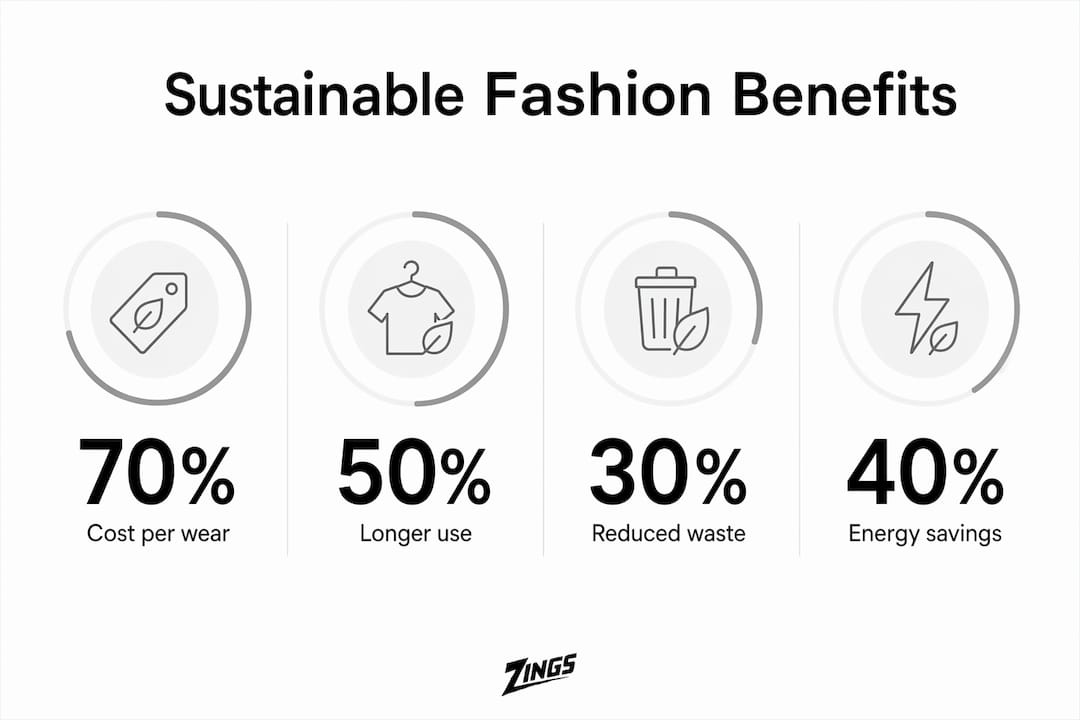
Cost per wear is simple: divide the price of a garment by the number of times you wear it. A $120 jacket worn 200 times costs $0.60 per wear. A $30 fast fashion jacket worn 15 times before falling apart costs $2.00 per wear. The cheaper item costs more in practice.
The economic advantages of sustainable style go beyond individual purchases:
- Longer garment lifespan. Quality construction and durable fabrics reduce how often you replace items, cutting total annual clothing spend over time.
- Repair services. Many quality-focused brands offer repair programs that extend garment life at low cost, protecting your original investment.
- Buy-back and resale programs. Some brands accept worn garments for store credit, giving you financial return on pieces you no longer wear.
- Versatile wardrobe pieces. Buying fewer, more adaptable items means less spending on occasion-specific clothing that rarely gets used.
- Reduced impulse buying. Choosing versatile wardrobe staples naturally reduces the cycle of trend-chasing purchases.
The financial case for ethical clothing is not idealistic. It is arithmetic. Consumers who shift their buying habits toward durability and versatility consistently spend less on clothing over a three to five year period than those cycling through fast fashion.
Pro Tip: Before buying any garment, ask yourself how many times per month you will realistically wear it. If the answer is fewer than four, reconsider the purchase regardless of the price tag.
How do fabric choices affect sustainable fashion decisions?
There is no single best fabric for sustainable fashion. Every material involves trade-offs, and consumers who evaluate sustainability by fiber type alone miss most of the picture.
Organic cotton reduces pesticide use compared to conventional cotton, but it still requires significant water. Recycled polyester diverts plastic waste from landfills, but it still sheds microplastics during washing. Bamboo fabric is marketed heavily as eco-friendly, and bamboo fabric does offer genuine benefits including fast growth and low pesticide need. However, the chemical processing used to convert bamboo into soft fiber can offset some of those gains if not managed carefully.
The right approach is to evaluate brands holistically, not just their fiber claims. A brand using organic cotton but manufacturing in facilities with no emissions controls or labor protections is not a sustainable brand. Sustainability claims must be supported by verifiable supply chain data, not just marketing language. Look for third-party certifications like GOTS (Global Organic Textile Standard) or bluesign, which audit production conditions beyond the fiber itself.
Understanding clothing material choices at a deeper level helps you ask better questions when shopping. The goal is not to find a perfect fabric. The goal is to find brands that are honest about their full impact and working to reduce it.
Why wearing habits matter as much as what you buy
The most underrated factor in sustainable fashion is not what you buy. It is how often you wear it. The environmental impact of a garment depends directly on how many times it is worn. Wearing a piece more often offsets its production carbon footprint substantially.
Here is a practical framework for building a wardrobe that actually reduces your environmental impact:
- Count your wears. Track how often you wear each item for one month. Anything worn fewer than four times in that period is a candidate for removal or replacement with something more versatile.
- Buy for your actual life. Purchase clothing that fits your real daily routine, not an aspirational version of it. Clothes bought for occasions that rarely happen sit unworn and waste their production footprint.
- Prioritize versatility. A neutral-colored, well-made shirt that works for work, weekends, and casual evenings delivers three times the wear of a single-use statement piece.
- Wash less, wash cold. Frequent washing degrades fabric faster and adds to a garment’s lifetime carbon footprint. Washing in cold water and air drying extends garment life significantly.
- Repair before replacing. A loose button or small tear does not require a new purchase. Basic repairs extend garment life by months or years and cost almost nothing.
No magic number of garments defines a sustainable wardrobe. The right size depends on your climate, lifestyle, and laundry habits. Someone in a four-season climate needs more variety than someone in a consistent warm climate. Sustainability is more about buying durable, versatile pieces and wearing them often than owning any specific number of items.
Key Takeaways
Choosing sustainable fashion reduces environmental harm, saves money over time, and requires smarter buying habits rather than simply switching to different fabrics.
| Point | Details |
|---|---|
| Environmental cost is real | Fashion produces 2–8% of global carbon emissions and sends 85% of textiles to waste. |
| Manufacturing drives most damage | A t-shirt’s production phase accounts for 60.1% of its total carbon footprint. |
| Cost per wear beats sticker price | Durable garments cost less per use than cheap items replaced frequently. |
| No fabric is universally best | Every material has trade-offs; evaluate brands by full supply chain transparency. |
| Wear frequency is the key metric | Wearing clothes more often offsets their production footprint more than any other single action. |
The uncomfortable truth about sustainable fashion
I have been watching the sustainable fashion conversation for years, and the biggest mistake I see is treating it as a shopping category rather than a behavior change. Consumers swap their fast fashion hauls for “sustainable” hauls, spending just as much, buying just as often, and wondering why it does not feel different. It does not feel different because the problem was never the brand. It was the volume.
The brands doing real work are the ones that publish factory audits, show their emissions data, and actively discourage you from buying more than you need. That last part is the tell. A brand that profits from volume has a structural conflict with genuine sustainability, regardless of what fiber they use.
The practical shift that actually works is simpler than most people expect. Buy less. Wear what you have more. When you do buy, choose quality over trend. I have worn the same five or six core pieces hundreds of times each. That is where the environmental math actually works in your favor. Checking ethical clothing brand credentials before purchasing is a good habit, but it is secondary to the fundamental question: do I actually need this?
The sustainable fashion movement gets this right in theory. The consumer behavior side still has a long way to go.
— TONY
Quality wardrobe pieces at Zings365
Zings365 carries a selection of durable, versatile pieces built for repeated wear across seasons. The catalog includes well-constructed options for both men and women, from everyday casual shirts to outerwear designed to last beyond a single trend cycle.

The men’s casual jacket is a strong example of a high-wear, high-value piece. It is the kind of garment that earns its cost per wear quickly. For a lighter layer, the knit V-neck t-shirt for women offers a versatile base that pairs across multiple outfit combinations. Zings365 also stocks seasonal check shirts and sport suits that prioritize fabric quality and fit over disposable trend appeal. Browse the full catalog at Zings365 to find pieces worth wearing for years.
FAQ
What is sustainable fashion exactly?
Sustainable fashion is the design, production, and consumption of clothing that minimizes environmental and social harm. It covers materials, manufacturing conditions, garment lifespan, and end-of-life disposal.
Is sustainable fashion actually worth the higher price?
Yes, when measured by cost per wear. Durable garments worn frequently cost less per use than cheap items replaced often, making sustainable clothing the better long-term financial choice.
Which fabric is the most sustainable?
No single fabric is universally best. Every material involves trade-offs between water use, chemical processing, and carbon emissions. Evaluating the full brand supply chain matters more than fiber type alone.
How many clothes do I need for a sustainable wardrobe?
There is no fixed number. The right wardrobe size depends on your climate, lifestyle, and how often you do laundry. Wearing each item frequently matters more than owning a specific quantity.
How can I tell if a brand is genuinely sustainable?
Look for third-party certifications like GOTS or bluesign, and check whether the brand publishes factory-level data. Brands that rely only on fiber claims without supply chain transparency are likely using sustainability as a marketing tool rather than a verified practice.
