

TL;DR:
- Slow fashion emphasizes quality, ethical production, and environmental sustainability over speed and volume. Many consumers, especially Gen Z, now prefer buying fewer, better-made garments from transparent brands to reduce waste and support social justice.
Slow fashion is defined as an approach to clothing that prioritizes quality, ethical production, and sustainability over speed and volume. Prof. Kate Fletcher coined the term in 2007, and the core philosophy centers on respecting both people and the planet across the entire supply chain. A 2022 Momentive study found that more than 70% of Americans want their clothing ethically and sustainably produced. That number signals a genuine shift in how consumers think about what they wear and why. Slow fashion offers a clear alternative to the disposable, trend-driven cycle that defines fast fashion.
What is slow fashion, and what principles define it?
Slow fashion is not simply about producing clothes more slowly. Ethical production means fair wages, safe working conditions, and a transparent supply chain from raw material to finished garment. The slow fashion definition covers a set of values that shape every decision a brand makes, from fabric sourcing to packaging.
The core principles of slow fashion include:
- Ethical labor: Workers receive living wages and operate in safe conditions.
- Sustainable materials: Brands use organic, recycled, or biodegradable fabrics rather than synthetic, petroleum-based textiles.
- Small batch or made-to-order production: Manufacturing only what sells reduces overstock and landfill waste.
- Timeless design: Garments are built to outlast seasonal trends, not replace them.
- Garment care and repair culture: Slow fashion encourages mending, tailoring, and extending the life of each piece.
Slow fashion brands often pay living wages, use natural or recycled materials, and produce in small batches. That combination justifies a higher price per piece, but it also means buying less overall.
Pro Tip: Look for certifications like GOTS (Global Organic Textile Standard), Fair Trade, or B Corp when evaluating a brand’s slow fashion credentials. These third-party standards verify claims that marketing copy alone cannot.
What are the benefits of slow fashion?
Slow fashion delivers measurable benefits across three areas: the environment, society, and your own wallet.
Environmental benefits
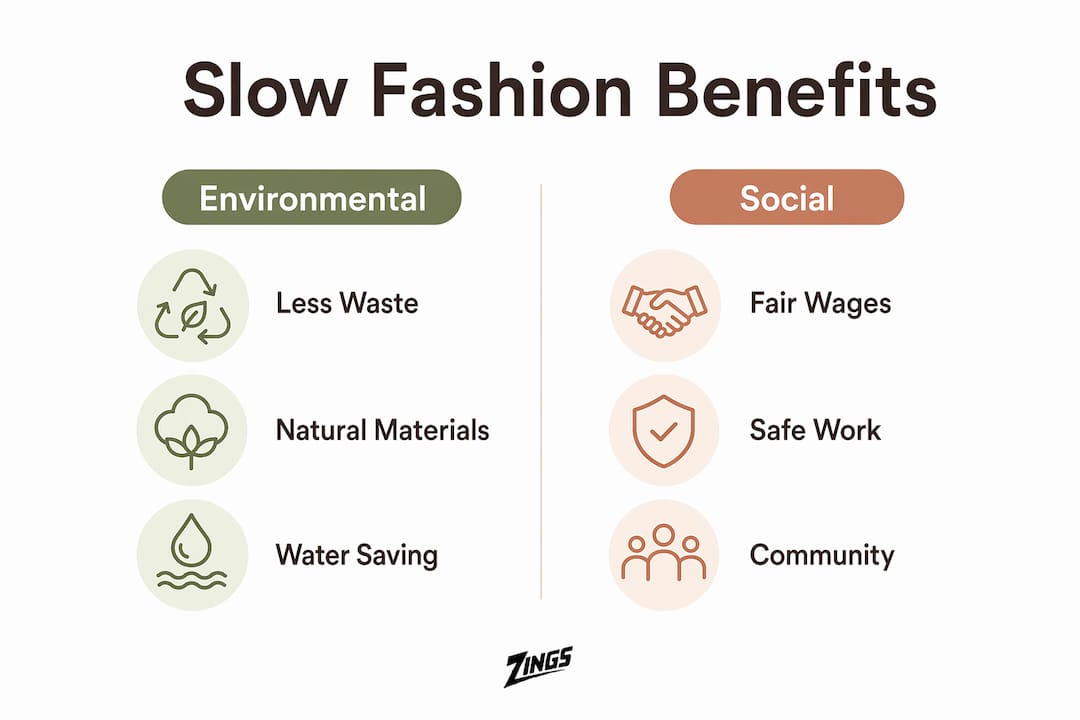
Fast fashion generates enormous textile waste and relies heavily on synthetic dyes and water-intensive crops. Slow fashion reduces that damage by using sustainable materials, producing fewer units, and designing for durability. Fewer garments produced means a lower carbon footprint at every stage of the supply chain. Understanding sustainable material choices is the first practical step toward reducing your personal fashion footprint.
Social benefits
Ethical production standards protect garment workers from unsafe conditions and poverty wages. Slow fashion brands commit to fair labor practices, which directly improves lives in manufacturing communities across South and Southeast Asia. When you buy from a brand with verified ethical practices, your purchase funds those standards.
Consumer benefits
A well-made slow fashion garment lasts years longer than a fast fashion equivalent. That longevity translates to real cost savings over time, even when the upfront price is higher. The financial contrast with fast fashion is stark. 1 in 8 UK young people have faced debt collectors due to Buy Now, Pay Later purchases for apparel. Impulsive, trend-driven buying creates financial risk. Slow fashion’s emphasis on intentional purchasing breaks that cycle.
Common misconceptions about slow fashion vs fast fashion
The biggest misconception is that slow fashion is only for wealthy shoppers. Slow fashion is part of the broader slow movement, which focuses on quality-based mindful consumption rather than simply slowing down manufacturing speed. Secondhand shopping, clothing swaps, and thrift stores are all legitimate slow fashion practices. They make the philosophy accessible at any budget.
Another misconception is that slow fashion means rejecting all trends entirely. The actual goal is choosing pieces with staying power over items designed to be discarded after one season.
The table below contrasts slow fashion and fast fashion across key criteria:
| Criteria | Slow fashion | Fast fashion |
|---|---|---|
| Production model | Small batch or made-to-order | Mass production at high volume |
| Materials | Organic, recycled, or natural fibers | Synthetic, petroleum-based fabrics |
| Garment lifespan | Years to decades | Weeks to months |
| Labor standards | Living wages, safe conditions | Often low wages, poor oversight |
| Price per piece | Higher upfront cost | Low upfront cost |
| Long-term cost | Lower due to durability | Higher due to frequent replacement |
A 2025 study using structural equation modeling found that Gen Z consumers prioritize exclusivity and equity as key motivators for sustainable consumption. That finding challenges the assumption that younger shoppers only care about price. Authenticity and fairness drive their choices just as much as aesthetics.
How to practice slow fashion in daily life
Transitioning your wardrobe to slow fashion does not require replacing everything at once. The most effective approach is gradual and deliberate.
- Audit what you own. Identify which pieces you actually wear and which sit unused. This reveals your real style needs versus impulse purchases.
- Buy less, buy better. Commit to purchasing fewer items per season and spending more on quality when you do buy.
- Research brands before you buy. Check for certifications like Fair Trade or GOTS. Read about a brand’s supply chain on their website. A guide to identifying ethical clothing brands can help you evaluate claims quickly.
- Choose natural and sustainable materials. Linen, organic cotton, Tencel, and recycled wool all outperform synthetic blends in durability and environmental impact.
- Support local and small-batch producers. Smaller production runs mean less waste and often more direct accountability in the supply chain.
- Repair before replacing. Learn basic mending skills or find a local tailor. Extending a garment’s life by even one year significantly reduces its environmental cost.
- Shop secondhand. Thrift stores, consignment shops, and peer-to-peer resale platforms are all valid slow fashion channels.
Pro Tip: Before any new clothing purchase, apply the “cost per wear” calculation. Divide the price by the number of times you realistically expect to wear the item. A $120 jacket worn 60 times costs $2 per wear. A $30 top worn twice costs $15 per wear.
Practical shopping tips that align with slow fashion values can make the transition easier without sacrificing personal style.
Who is adopting slow fashion and why it matters now
Consumer adoption of slow fashion is accelerating across age groups, but Gen Z leads the shift. The 70% of Americans who want ethically produced clothing represent a mainstream demand, not a niche preference. That scale gives consumers real power to reshape industry practices.
Key motivators driving slow fashion adoption include:
- Environmental concern: Awareness of textile pollution, water use, and carbon emissions pushes consumers toward lower-impact choices.
- Social justice: Garment worker welfare and fair wages connect fashion choices to broader equity issues.
- Exclusivity and authenticity: A 2025 study found that communicating exclusivity and equity increases sustainable consumption behaviors, particularly among younger shoppers.
- Financial awareness: The debt risks associated with fast fashion impulse buying motivate more deliberate spending habits.
- Alignment with Sustainable Development Goals: Slow fashion directly supports SDG 12, responsible consumption and production.
2025 research published in the Journal of Marketing Management confirms that targeted messaging around environmental and social justice most effectively motivates consumers to shift from fast fashion to slow fashion. Brands and advocates who lead with these values reach the widest audience. For a deeper look at what makes a brand genuinely ethical, the guide to ethical fashion from The Cork Store covers the key criteria clearly.
Key Takeaways
Slow fashion is the most effective long-term response to fast fashion’s environmental, social, and financial costs, and it starts with buying fewer, better-made garments from transparent brands.
| Point | Details |
|---|---|
| Core definition | Slow fashion prioritizes quality, ethical production, and sustainability over speed and volume. |
| Environmental impact | Sustainable materials and small-batch production reduce textile waste and carbon emissions. |
| Financial case | Higher upfront cost delivers lower long-term cost through durability and fewer replacements. |
| Practical entry point | Secondhand shopping and clothing repair make slow fashion accessible at any budget. |
| Consumer power | Over 70% of Americans want ethically produced clothing, giving buyers real market influence. |
Slow fashion changed how I think about getting dressed
I used to measure a good purchase by how cheap it was. A $15 shirt felt like a win. Then I started tracking how long those shirts actually lasted, and the math stopped adding up. Most were worn out or out of style within a year. The “cheap” shirts were costing me more annually than one well-made piece would have.
What slow fashion gave me was not a moral framework. It gave me a practical one. When you know a garment was made by someone paid fairly, from a material that will hold its shape for five years, you treat it differently. You hang it up. You fix the button instead of tossing it. You stop seeing clothes as disposable.
The hardest part is not the price. It is unlearning the habit of buying for novelty. Fast fashion trains you to want something new constantly. Slow fashion asks you to find satisfaction in what you already own. That shift takes time, but it sticks.
My honest advice: start with one category. Commit to buying only slow fashion basics, like T-shirts or jeans, for six months. You will spend more per item and buy far less. At the end of those six months, check your wardrobe. The difference in quality and the reduction in clutter will make the case better than any article can.
— TONY
Quality clothing worth keeping, at Zings365
Slow fashion starts with choosing pieces built to last. Zings365 carries a range of men’s and women’s apparel designed with quality construction and durable materials in mind, the kind of wardrobe staples you reach for season after season rather than replace every few months.

The fall men’s casual shirt at Zings365 is a strong example: a well-constructed, timeless piece that fits the slow fashion principle of buying fewer, better items. Browse the full catalog at Zings365 to find pieces that align with a more intentional approach to getting dressed.
FAQ
What is the slow fashion definition in simple terms?
Slow fashion is an approach to clothing that values quality, ethical production, and sustainability over cheap, fast production. Prof. Kate Fletcher coined the term in 2007 to describe a mindful alternative to fast fashion’s disposable model.
Is slow fashion more expensive than fast fashion?
Slow fashion garments typically cost more upfront, but they last significantly longer, which lowers the cost per wear over time. Secondhand shopping and thrift stores also make slow fashion accessible at lower price points.
How does slow fashion vs fast fashion differ on environmental impact?
Fast fashion relies on mass production, synthetic materials, and short garment lifespans, all of which generate high levels of textile waste and carbon emissions. Slow fashion uses sustainable materials, small-batch production, and durable design to reduce that environmental damage.
Why do Gen Z consumers choose slow fashion?
A 2025 study found that Gen Z prioritizes exclusivity, equity, and authenticity as motivators for sustainable consumption. Social justice concerns and environmental awareness also drive their preference for ethical brands over fast fashion alternatives.
How do I start practicing slow fashion today?
Begin by auditing your current wardrobe, then commit to buying fewer items and researching brand ethics before each purchase. Incorporating secondhand shopping and basic garment repair habits are two of the fastest ways to adopt slow fashion principles without a large upfront investment.
